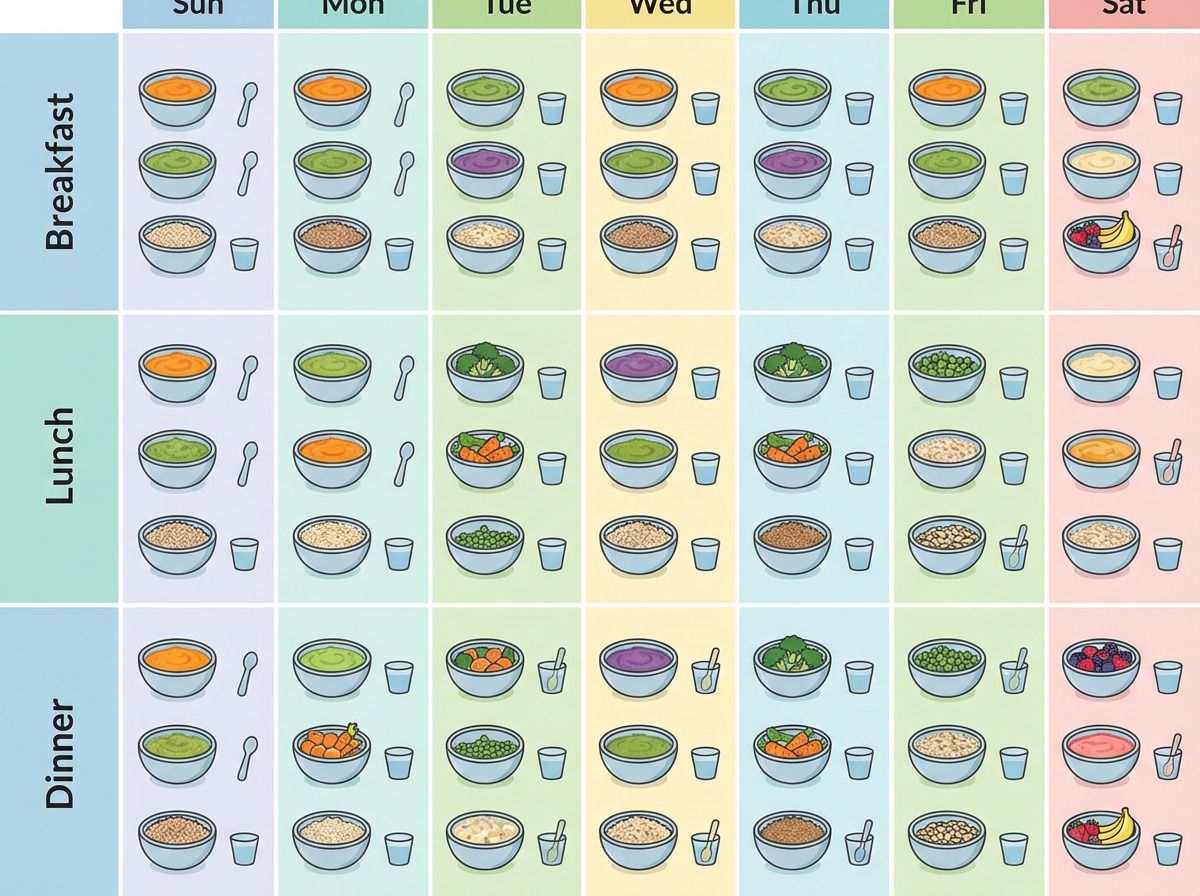
A starting solids plan in one paragraph: solids begin when your baby shows the four readiness signs, with a few spoonfuls of vegetable purée at lunch. Over the first month that grows into a full vegetable, potato and meat purée of about 7 oz (200 g); in the second month a milk and cereal porridge joins in the evening; in the third month a cereal and fruit porridge fills the afternoon. Breast milk or formula stays alongside on demand, and toward the first birthday purées give way to family food. Below you will find the plan as a month by month table, a printable sample week, and how to adapt it for baby-led weaning, allergies or twins.
Key Takeaways
- ▸ Start: by readiness signs, not by the calendar. A few spoonfuls, then milk as usual.
- ▸ Three meals in three months: lunch purée first, evening porridge about a month later, afternoon porridge another month after that.
- ▸ Target portions: lunch about 7 oz (200 g), milk porridge about 8.5 oz (240 g), cereal and fruit porridge about 7.5 oz (215 g). The ratio of ingredients stays; the amount follows appetite.
- ▸ Milk: each new meal gradually replaces one milk feed; morning and bedtime milk stay.
- ▸ Water: from a cup once the third meal is in place. No sugar, salt or honey in the first year.
Before the Plan Starts: The Readiness Signs
No plan works on a baby who is not ready, which is why this one begins with four observations rather than a date. Your baby sits upright with support and holds their head steady. They reach for food and bring things to their mouth on their own. They show real interest in what you eat. And the tongue-thrust reflex has gone, so purée is no longer pushed straight back out. Pediatric bodies add one hard limit: no solids before 4 months (17 weeks), even if a baby seems keen. Until then, and long after, milk remains the main food; solids only complement breast milk or formula at first and replace milk feeds one step at a time. Our readiness signs guide shows what to look for, and the starting solids guide covers the first spoonful.
Starting Solids Plan With Amounts: Month by Month
The table follows the German first-year feeding plan that this site is built on, which adds one meal at a time. The months count from the start of solids, not from birth, because every baby starts at a different point. All amounts are target portions for a baby who already knows the meal; at the beginning of each stage it is much less.
| Stage | Meals of the day | Texture | Amounts (guide) | Milk feeds |
|---|---|---|---|---|
| Solids month 1, weeks 1 to 2 | Lunch: plain vegetable purée (carrot, parsnip, pumpkin or zucchini), milk otherwise | smooth, on the thin side | 2 to 3 teaspoons, building to 3.5 oz (100 g) of vegetable within about a week | all as before, milk straight after the purée |
| Solids month 1, weeks 2 to 4 | Lunch: vegetable and potato purée with oil, then meat or fish and fruit juice are added | smooth | 3.5 oz (100 g) vegetable, 1.75 oz (50 g) potato, 1 oz (30 g) meat or fish, 1 tbsp canola oil, 1.5 tbsp fruit juice or purée, about 7 oz (200 g) in total | by the end of the month the midday milk feed is replaced |
| Solids month 2 | Lunch purée and new: milk and cereal porridge in the evening | creamy, fruit puréed | Evening porridge: 7 fl oz (200 ml) milk, 3 tbsp (20 g) cereal flakes, 2 tbsp fruit, about 8.5 oz (240 g). First days only 2 to 5 spoonfuls | two replaced (midday, evening); morning, mid-morning and night milk on demand |
| Solids month 3 | Lunch, evening porridge and new: cereal and fruit porridge in the afternoon, plus water in a cup | creamy, fruit mashed or grated | Afternoon porridge: 3 tbsp (20 g) cereal flakes, 3 fl oz (90 ml) water, 3.5 oz (100 g) fruit, 1 tsp canola oil, about 7.5 oz (215 g) | three replaced; morning and bedtime milk stay |
| Solids months 4 to 5 (many babies are 8 to 10 months old by now) | three solid meals plus first finger foods such as soft vegetable sticks, bread pieces or pasta | lumpier purées, soft pieces to grasp | full portions by appetite, which varies from day to day | morning and evening milk, breastfeeding on demand |
| Toward the first birthday (about 10 to 12 months) | move to family food: breakfast with bread or porridge, lunch and dinner from the family table, two small snacks | soft-cooked and cut small; purée only if your baby still likes it | by appetite, without salt, sugar or honey | morning and evening milk; whole milk from a cup with meals from around the first birthday |
The amounts come from the recipes of Germany's Gesund ins Leben network, which adds that amounts vary with age and appetite while the ratio stays. As a milk guide for formula-fed babies, the NHS suggests around 20 fl oz (600 ml) a day once a baby eats three meals, dropping to around 13.5 fl oz (400 ml) toward 12 months; breastfed babies simply feed on demand. Your baby shows you when they are full: they close their mouth, turn their head away or start playing with the spoon. That is the end of the meal, whatever is left in the bowl.
The Three Meals in Detail
1. Lunch: vegetable, potato and meat purée
3.5 oz (100 g) of vegetable such as carrot or pumpkin, 1.75 oz (50 g) of potato, 1 oz (30 g) of lean meat such as beef, 1 tablespoon of canola oil and 1.5 tablespoons of fruit juice or purée. The main iron meal of the day. Once or twice a week fish replaces the meat, and the potato can be swapped for pasta, rice or another grain.
2. Evening: milk and cereal porridge
7 fl oz (200 ml) of breast milk, formula or pasteurized whole milk, 3 tablespoons (20 g) of whole grain flakes such as oats and 2 tablespoons of fruit. No oil needed. In the first year cow's milk belongs only in this porridge, at most about 7 oz a day, never as a drink. Everything on milk, recipe and amounts is in the evening porridge guide.
3. Afternoon: cereal and fruit porridge
3 tablespoons (20 g) of whole grain flakes, 3 fl oz (90 ml) of water, 3.5 oz (100 g) of fruit such as apple or pear and 1 teaspoon of canola oil. Deliberately milk-free so the iron from the grain is absorbed better. Which grains suit which stage is in the baby cereal and porridge guide.
What applies alongside the meals
Water is only needed once the third meal is in place, then from a cup. Vitamin D drops continue through the first year as your pediatrician advises. Purées and porridge go on a spoon, never in a bottle.
Typical portion sizes month by month are in how much purée for a 7 month old, and a day with two purée meals and finger food is shown in baby food at 8 months.
Printable Sample Week
This is what a week in solids month 3 can look like, with all three meals in place. The times are examples and the vegetables and fruit change with the season. To print, simply print this page; the table fits on one sheet.
| Meal | Mon | Tue | Wed | Thu | Fri | Sat | Sun |
|---|---|---|---|---|---|---|---|
| Morning, about 7 am | Milk | Milk | Milk | Milk | Milk | Milk | Milk |
| Lunch, about noon | Carrot, potato, beef | Pumpkin, potato, turkey | Parsnip, potato, salmon | Zucchini, pasta, beef | Broccoli, potato, chicken | Sweet potato, fennel, beef | Carrot, potato, oats (vegetarian) |
| Afternoon, about 3 pm | Oats, apple | Millet, pear | Spelt, peach | Oats, banana | Semolina, apricot | Millet, apple | Oats, pear |
| Evening, about 6 pm | Oat milk porridge, apple | Semolina porridge, pear | Millet milk porridge, apple | Spelt milk porridge, banana | Oat milk porridge, peach | Semolina porridge, apple | Oat milk porridge, pear |
| Bedtime | Milk on demand | Milk on demand | Milk on demand | Milk on demand | Milk on demand | Milk on demand | Milk on demand |
Lunch always includes 1 tablespoon of canola oil and 1.5 tablespoons of fruit juice, the afternoon porridge 1 teaspoon of oil, the evening porridge none. Offer water in a cup with solid meals. In solids month 2, replace the afternoon row with a milk feed; in month 1 there is only the lunch purée.
Your solids plan, automatically tuned to your baby
The app turns this plan into a personal daily schedule: it knows your baby's age and progress with solids, suggests the next step, serves recipes with matching amounts for purées or baby-led weaning, and writes the shopping list for you.
How to Adapt the Plan
Baby-led weaning and finger foods
With baby-led weaning there are no gram counts, but the building blocks are the same: soft-cooked vegetables, potato or grains, an iron source such as tender meat, fish or beans, a little oil and some fruit. Many families mix the two approaches, purée for the iron-rich lunch and pieces to explore at the family table. Milk often stays the main source of nutrition a little longer with BLW, which is fine as long as your baby is growing well. The baby-led weaning guide and the comparison BLW or purées go deeper.
Allergies in the family
The plan does not change. The AAP finds no evidence that delaying allergenic foods prevents allergies, and the NHS advises introducing foods containing allergens one at a time and in small amounts so you can spot a reaction, then keeping them in the diet regularly. Babies with severe eczema or an existing egg allergy should have peanut products introduced with guidance from their pediatrician. A rash, vomiting or breathing trouble after eating means a call to the doctor. The top 10 allergens for babies gives the overview.
Twins and premature babies
Twins are two babies with two paces. Watch the readiness signs in each child separately and do not start both on the same day just because it would be convenient. At the table each baby gets their own spoon and bowl, which keeps portions clear and stops colds from travelling back and forth. Batch cooking and freezing in portions saves a lot of time at double quantity, see the freezing baby food guide. For premature babies, corrected age counts together with the readiness signs, and the start is agreed with the pediatrician.
Vegetarian, breastfed or formula-fed, jars
- ▸ Vegetarian: the meat in the lunch purée is replaced by 2 tablespoons (10 g) of whole grain oat or millet flakes plus vitamin C rich fruit or juice. Pediatric bodies advise against a vegan diet in infancy; families who choose it need supplements and close medical supervision.
- ▸ Breastfed or formula-fed: the plan is identical. Breastfeeding continues as long as mother and baby want, and first infant formula remains the right bottle milk for the whole first year.
- ▸ Jars and pouches: just as good, provided the ingredients match what you would cook: no salt, sugar, spices or stock, and milk cereal powders mixed with water.
What the App Does With the Plan
A plan on paper does not know your baby. The app does: you enter the birth date, the day solids started and the meals your baby already knows, and get a daily schedule that sits exactly where you are in the plan. It tells you when the next meal is due, works out amounts for the current stage, serves matching recipes for purées or baby-led weaning and writes the shopping list. The food library shows the right age, allergen status, choking risk and safe preparation for every ingredient, and the allergen tracker remembers what your baby has already tolerated.
Frequently Asked Questions
How much milk does my baby need alongside solids?
As much as they want. Each new meal replaces one milk feed and the rest stay on demand; while a portion is still small, milk follows straight after. The NHS figures above are a guide for formula, not a target, and steady growth is the real measure.
Does my baby have to finish the amounts listed?
No. They are target portions, not quotas. Amounts vary with age and appetite; only the ratio of ingredients stays. Never press a baby to finish the bowl.
When does my baby get water?
Once the third meal is in place, in solids month 3. Before that, milk covers fluid needs. Water comes in a cup, not in a bottle with a teat.
Can I change the order of the meals?
Yes. The lunch purée comes first because of its iron; after that it makes no nutritional difference whether the milk porridge or the cereal and fruit porridge comes second. Once all three are in place, spread them over the day however suits you.
When does family food start?
Toward the end of the first year, family food gradually replaces the purée stage: soft-cooked, cut small, and without salt, sugar or honey. See transitioning from purées to solids and the sample schedule for a 12 month old.
What if my baby refuses a meal?
Then the plan simply pauses one step longer. Keep offering without pressure, try a different texture or grain, and pick a time when your baby is rested. Refusal is normal and usually passes within days.
Key Takeaways
- ✓ Readiness signs decide the start, not age
- ✓ Three meals in three months: lunch, evening, afternoon
- ✓ Amounts are target portions; the ratio stays, appetite decides
- ✓ Milk stays alongside on demand; water from the third meal
- ✓ BLW, allergy risk or twins change the pace, not the building blocks
Treat the plan as a map: it shows the direction, and your baby sets the pace.
Sources
- ▸ NHS: Your baby's first solid foods (readiness signs, allergens, milk amounts by stage)
- ▸ NHS: Foods to avoid giving babies and young children
- ▸ American Academy of Pediatrics (HealthyChildren.org): Starting Solid Foods
- ▸ American Academy of Pediatrics: Sample menu for an 8 to 12 month old
- ▸ ESPGHAN Committee on Nutrition: Complementary Feeding, Position Paper (JPGN 2017)
- ▸ Netzwerk Gesund ins Leben (Germany): Ready for solids, the three-meal plan and recipe amounts (in German)
- ▸ World Health Organization: Complementary feeding