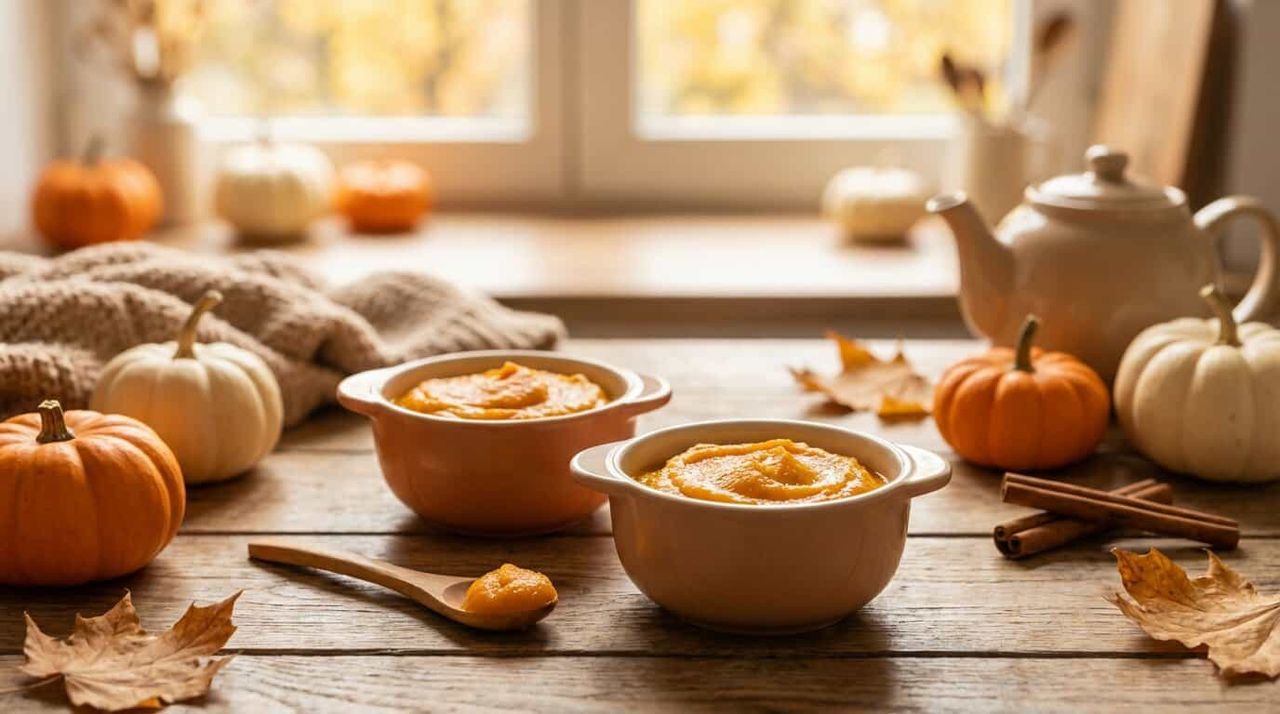
Starting solid foods is an exciting milestone for both babies and parents. Around the middle of the first year, babies begin exploring new tastes and textures beyond breast milk or formula. One of the most common questions parents ask is how many oz of puree for 7 month old babies is appropriate.
At this age, babies are still learning to eat, so purees are mainly about practice and nutrition rather than replacing milk feeds. Understanding how much puree to offer, what foods are suitable, and how feeding changes month by month can help make the transition smoother.
This guide explains how much puree a 7-month-old should eat, how feeding amounts change from 5 to 8 months, and which foods work well during this stage. For a broader overview of introducing solids, check out our complete guide to starting solids.
Key Takeaways
- ▸ A 7-month-old typically eats about 4-6 oz of puree per day
- ▸ Purees are usually spread across 2-3 small meals
- ▸ Breast milk or formula remains the main source of nutrition
- ▸ Amounts vary by baby, let hunger cues guide you
- ▸ By 8 months, most babies eat about 6-9 oz of puree per day
How Many oz of Puree for 7 Month Old Babies?
The typical amount of puree for a 7-month-old baby is around 4-6 ounces per day, usually divided into 2-3 small meals.
Each meal usually contains about:
- ▸ 2-4 tablespoons of puree (about 1-2 oz) at first
- ▸ Gradually increasing to 3-4 oz per meal depending on appetite
Some babies will eat slightly more or less, and that's completely normal. At this stage, breast milk or formula is still the main source of nutrition, usually around 24-32 ounces per day.
So if you're wondering how much food should I feed my 7 month old, a simple rule is:
- ✓ 2-3 small puree meals daily
- ✓ About 4-6 oz total puree per day
- ✓ Continue regular milk feedings
Your baby may finish everything or stop halfway. Let their hunger cues guide you.
How Much Should a Seven Month Old Eat in Total?
A typical day of feeding for a 7-month-old might look like this:
Morning
Milk feed (breast milk or formula)
Breakfast
2-3 tablespoons of puree (fruit, cereal, or yogurt)
Midday
Milk feed
Lunch
3-4 tablespoons of vegetables, grains, or protein puree
Afternoon
Milk feed
Dinner
Another small puree meal
Bedtime
Milk feed
The key thing to remember is that purees complement milk rather than replace it. If your baby eats only a few spoonfuls, that's still perfectly fine.
How much is enough? Let the app work it out
The Starting Solids app builds a personalized plan with the right portion sizes for your baby's age, and scales the amounts up as your baby grows.
How Much Puree for 6 Month Old Babies?
Most babies begin solids around 6 months old. If you are asking how many oz of puree for 6 month old babies, the answer is much smaller than at seven months.
Typical amounts at 6 months:
- ▸ 1-2 tablespoons per meal
- ▸ 1-2 meals per day
- ▸ About 1-3 oz total puree daily
At this age babies are just learning to swallow food and use a spoon. It's normal if they eat only a few bites. Parents often search for how much pureed food for 6 month old babies, but the truth is the amount varies widely.
Good starter foods include:
- • Avocado
- • Sweet potato
- • Apples
- • Pears
- • Oat cereal
For more ideas on suitable vegetables, see our guide to vegetables for 6-month-olds.
How Much Puree for 5 Month Old Babies?
Some babies begin solids slightly earlier depending on pediatric guidance. If your baby starts around five months, portions should stay very small.
Typical intake for a 5-month-old:
- ▸ 1-2 teaspoons at first
- ▸ Slowly increase to 1-2 tablespoons
- ▸ Usually once per day
- ▸ In most cases, only 1-2 oz per day or less
If you're wondering how much puree should a 5 month old eat, think of this stage as exploration rather than nutrition.
Signs a baby may be ready include:
- ✓ Good head control
- ✓ Sitting with support
- ✓ Showing interest in food
- ✓ Opening mouth when food approaches
How Much Puree for 8 Month Old Babies?
By eight months, babies become more comfortable with food and may start eating larger portions.
Typical amounts for an 8-month-old:
- ▸ 6-9 oz of puree per day
- ▸ Usually 3 meals daily
- ▸ Small snacks or finger foods may appear
- ▸ Many babies eat around 2-3 oz per meal
At this age, babies also start exploring soft finger foods. For detailed information about feeding at 8 months, see our complete guide to baby food at 8 months.
Popular finger foods at 8 months:
- • Soft banana pieces
- • Scrambled eggs
- • Steamed vegetables
- • Small pasta pieces
Food for Infants 7 Months: What Can They Eat?
When choosing food for infants 7 months old, aim for simple, soft foods that are easy to swallow.
Popular options include:
- ▸ Vegetables: Sweet potato, carrots, pumpkin, peas, zucchini
- ▸ Fruits: Banana, pear, apple, peach, mango
- ▸ Grains: Oatmeal, rice cereal, quinoa
- ▸ Protein: Chicken puree, lentils, beans, tofu
- ▸ Dairy: Plain yogurt or small amounts of cheese
Looking for recipe ideas? Check out our baby puree recipes guide.
Many babies enjoy mixed purees such as chicken and sweet potato, apple and oatmeal, lentils and carrots, or banana and avocado.
Portions that scale as your baby grows
Whether your baby is just starting with a spoonful or already up to 9 oz a day, the app shows the right portion for every age and helps you track meals along the way.
What Can a 7 Month Old Drink?
Another common question parents ask is what can 7 month old drink besides milk.
At this stage, drinks should stay very simple:
- ✓ Breast milk: Still the best nutrition source
- ✓ Infant formula: Main alternative to breast milk
- ✓ Small amounts of water: Usually 4-8 oz per day when solids begin
- ✗ Babies should avoid juice and sugary drinks during the first year
- ✗ Cow's milk should not replace breast milk or formula until after 12 months
Signs Your Baby Is Getting Enough Food
Every baby eats differently. Instead of focusing only on ounces, watch your baby's signals.
Signs your baby is full:
- ▸ Turning head away
- ▸ Closing mouth
- ▸ Pushing the spoon away
- ▸ Losing interest in eating
Signs your baby may want more:
- ▸ Leaning toward the spoon
- ▸ Opening mouth eagerly
- ▸ Watching the food closely
Responsive feeding, paying attention to your baby's hunger and fullness cues, helps babies develop healthy eating habits from the start.
Sample Feeding Day for a 7 Month Old
Here's a simple example of how feeding may look throughout the day:
Morning
Milk feed
Breakfast
Oat cereal with pear puree (2-3 tablespoons)
Late Morning
Milk feed
Lunch
Sweet potato and chicken puree (3-4 tablespoons)
Afternoon
Milk feed
Dinner
Avocado and banana mash (2-3 tablespoons)
Bedtime
Milk feed
Remember, this schedule is only a guide. Babies grow and change quickly, and their appetite may vary daily.
Key Takeaway
- ✓ 4-6 ounces of puree per day, spread across 2-3 small meals
- ✓ Continue 24-32 ounces of breast milk or formula
- ✓ Let your baby's hunger cues guide portion sizes
- ✓ Gradually increase amounts as baby approaches 8-9 months
Feeding during this stage should be relaxed and flexible. The goal is to introduce new foods, flavors, and textures while supporting your baby's growth. As your baby approaches eight and nine months, you'll gradually increase food amounts and begin offering more textured meals and finger foods.