Key Takeaways
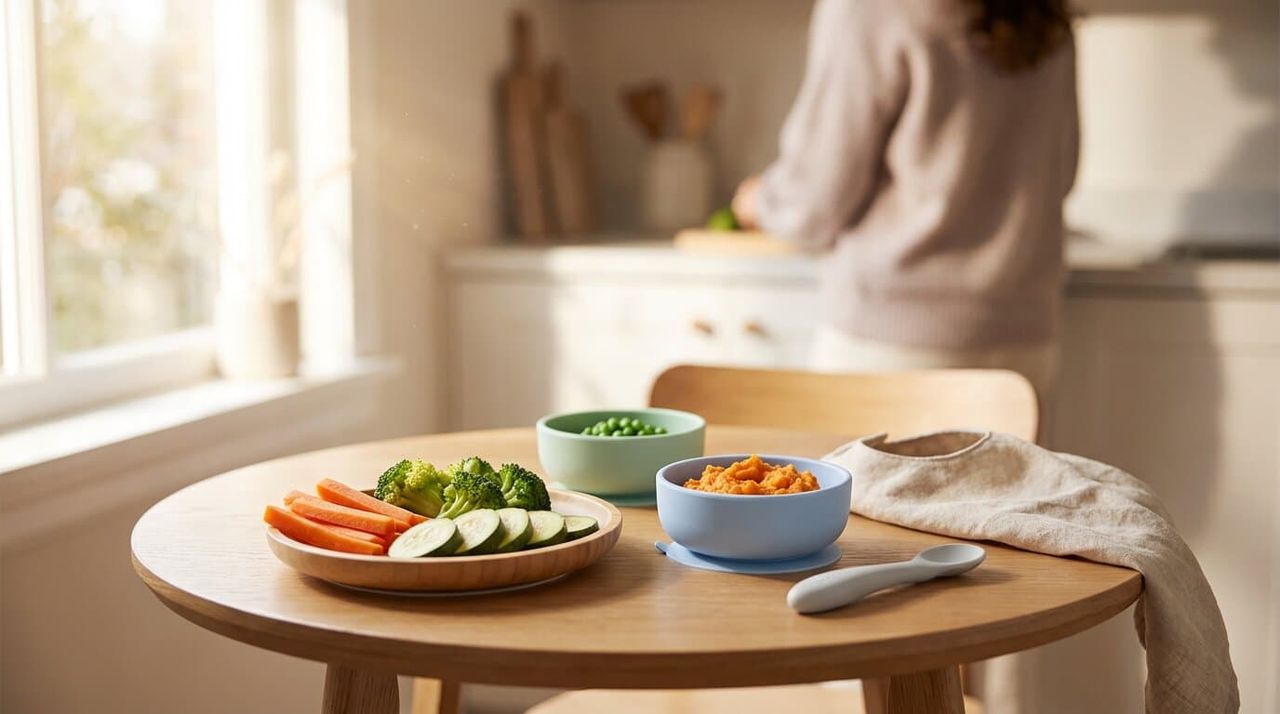
Starting solids around six months is an exciting milestone. The best vegetables for 6 month old babies include sweet potatoes, carrots, zucchini, pumpkin, peas, and green beans. Alongside vegetables, gentle fruits like pears, bananas, and avocado make excellent first foods. As your baby grows, gradually progress from smooth purees to mashed and soft finger foods by 8–9 months.
Vegetables for 6 Month Old Babies: Where to Start
Starting solids is one of the most exciting milestones in your baby's first year. Around six months, many parents begin searching for the best vegetables for 6 month old babies and wondering which foods to offer first. This stage is about more than just nutrition, it is when your child begins to explore new flavors, textures, and family mealtime routines.
Health organizations such as the World Health Organization and the American Academy of Pediatrics recommend introducing complementary foods at about six months of age while continuing breast milk or formula. Babies should show signs of readiness such as sitting with support, having good head control, and showing interest in food.
When parents ask about the best vegetables for infants, the answer is usually simple: start with soft, single-ingredient options that are easy to digest and gentle in flavor. At six months, your baby is just learning how to swallow something thicker than milk, so smooth purees or very soft mashed foods work best.
Best Starter Vegetables for 6 Month Olds
- ▸ Sweet potatoes – slightly sweet, rich in beta-carotene, often a favorite first food
- ▸ Carrots – naturally sweet and easy to blend into a smooth puree
- ▸ Zucchini – very mild, water-rich, and gentle on sensitive stomachs
- ▸ Pumpkin – filling, naturally sweet, and easy to digest
- ▸ Peas – a good source of protein and fiber for babies
- ▸ Green beans – mild flavor that introduces savory notes
Broccoli, spinach, and cauliflower are also excellent infant vegetables. They may taste stronger at first, but repeated exposure helps babies accept new flavors. If your baby makes a face after the first spoonful, that is normal, many babies need to try a new vegetable several times before they accept it.
When preparing vegetable baby food, steaming is often the best method because it preserves nutrients and softens the texture. After steaming, blend with breast milk, formula, or a little water until smooth. Avoid adding salt, sugar, or seasoning blends. For more on preparing your baby's first vegetable meals, see our vegetables for baby porridge guide.
Fruits for Infants: Gentle and Naturally Sweet
Alongside vegetables, fruits for infants provide vitamins, hydration, and fiber. Many parents wonder about the best fruits for infants and whether fruit should be introduced before or after vegetables. Either approach can work, as long as the diet stays balanced.
Best First Fruits for Baby
- • Pears – especially helpful if your baby experiences constipation
- • Apples – cooked and softened until very smooth
- • Bananas – naturally soft and easy to mash
- • Peaches – gentle flavor that babies usually enjoy
- • Avocado – rich in healthy fats that support brain development, can be mashed with a fork and served immediately
As your baby grows, you can expand infant fruits and vegetables to include mango, blueberries (mashed), plums, and apricots. Always remove seeds, pits, and tough skins, and cook firmer fruits until soft. For more on when to introduce fruit, check out our guide on when babies can eat fruit.
What Food Do Babies Love the Most?
While every baby is different, many naturally enjoy foods with mild sweetness and smooth textures. Sweet potatoes, bananas, and pears are often favorites in the early months. However, preference is not fixed. Babies can learn to love a wide variety of infant vegetables and fruits when they are offered regularly without pressure. Eating together as a family and modeling enjoyment of vegetables can strongly influence your baby's acceptance.
Best Food for 7 Month Old Baby
By seven months, most babies are ready for thicker textures and a wider variety of foods. The best food for 7 month old baby development includes iron-rich options alongside vegetables and fruits. You can combine pureed lentils with carrots, mashed beans with sweet potatoes, or soft scrambled egg with spinach.
Tips for 7 Month Feeding
- ▸ Increase meals to about two times per day
- ▸ Continue breast milk or formula as the primary nutrition source
- ▸ Start mixing baby food veggies and fruits together (e.g., apple-spinach puree or pear with peas)
Vegetables for 8 Month Old Babies
When thinking about vegetables for 8 month old babies, texture becomes just as important as variety. Around this age, many babies begin moving from smooth purees to mashed or slightly lumpy foods. For a detailed look at feeding at this stage, see our complete 8 month baby food guide.
Great Choices for 8 Month Olds
- • Soft-cooked broccoli florets
- • Diced zucchini
- • Small cubes of roasted sweet potato
- • Mashed black beans
- • Steamed carrot sticks or green bean pieces as soft finger foods
All foods at this stage should be soft enough to mash between your fingers. Always supervise closely and ensure the food passes the "squish test", meaning it flattens easily with gentle pressure.
Vegetables for 9 Month Old Babies
By nine months, babies are often more confident eaters. Vegetables for 9 month old babies can include chopped, soft pieces instead of purees. Your baby may start using a pincer grasp, picking up small bits of food between thumb and finger.
Ideas for 9 Month Olds
- • Finely chopped spinach mixed into scrambled egg
- • Small cubes of roasted pumpkin
- • Soft peas, slightly mashed
- • Adapted portions of simple family meals (e.g., vegetable soup without salt)
Texture Progression and Feeding Confidence
One common mistake is staying with smooth purees for too long. Babies benefit from learning how to manage different textures before their first birthday. Gradually moving from smooth to mashed to soft finger foods supports chewing skills and oral development.
Texture Timeline
- ▸ 6 months: Thin, smooth purees
- ▸ 7 months: Thicker mashed foods
- ▸ 8–9 months: Soft pieces that encourage self-feeding
From 6 to 9 Months: Every Stage Tracked
Log which vegetables and fruits your baby has tried at each texture stage in the Starting Solids app, and know exactly when it's time for the next step, no spreadsheet required.
Safety Tips for Baby Vegetables and Fruits
Safety is essential when offering vegetables for 6 month old babies and beyond.
- 1. Always cook firm vegetables until very soft. Avoid round, hard, or sticky foods that could block the airway.
- 2. Cut grapes lengthwise and into small pieces. Avoid raw carrots and apple chunks until much later.
- 3. No honey during the first year. Whole nuts and large seeds should also be avoided.
- 4. Wash all produce thoroughly. If possible, peel tough skins and remove seeds and pits before serving.
- 5. Nut butters can be offered in a thin layer or mixed into puree, never as a large spoonful.
Building Healthy Habits Early
The first year is about exploration. Offering a wide variety of baby vegetables, baby food fruits, and iron-rich foods builds a foundation for balanced eating. It is normal for intake to vary from day to day. Some meals will be messy, and some may seem barely eaten. That is part of learning.
Continue to watch for hunger and fullness cues. If your baby turns away, closes their mouth, or becomes fussy, they may be done. Let them guide the pace.
Final Thoughts
From vegetables for 6 month old babies to vegetables for 8 month old and 9 month old children, each stage brings new skills and flavors. By offering the best vegetables for babies, the best fruits for infants, and a range of infant fruits and vegetables in safe textures, you are supporting growth, development, and a positive relationship with food that can last a lifetime.