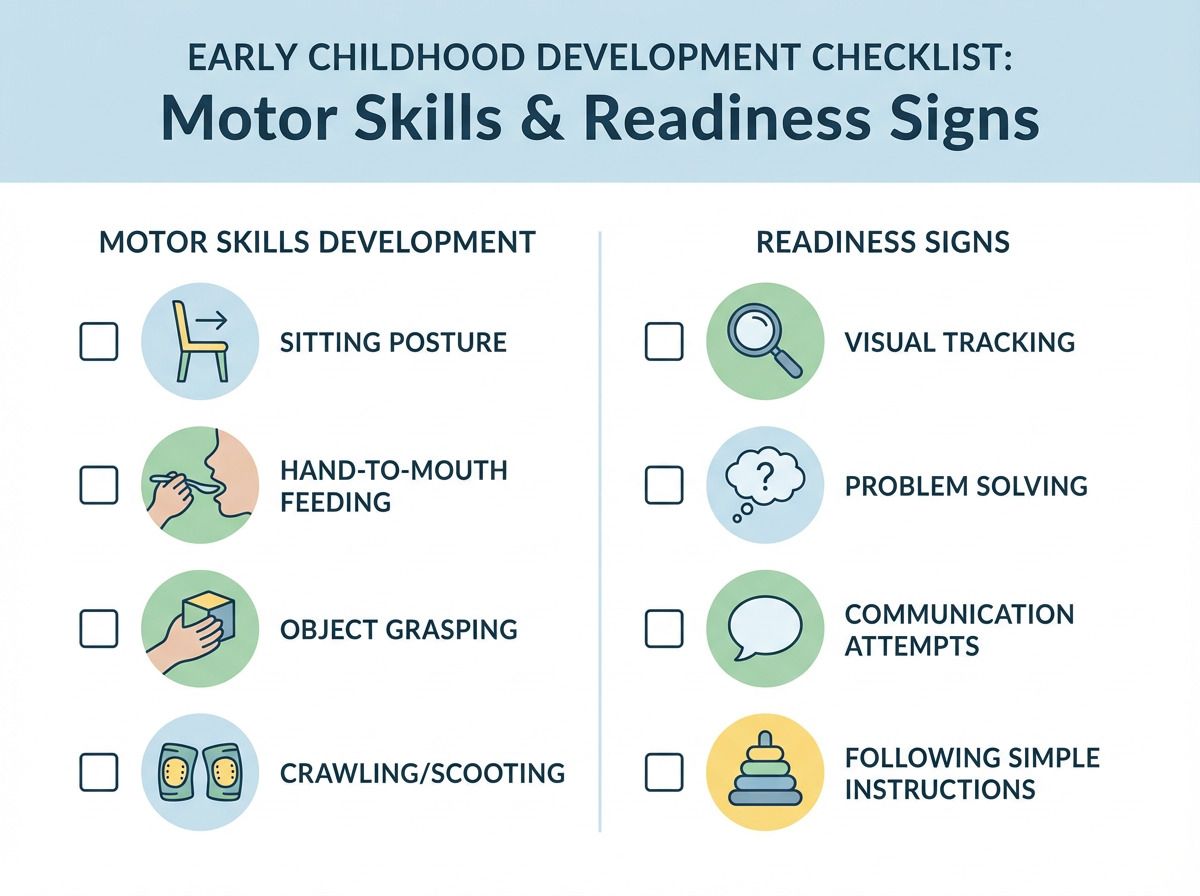
The transition from exclusive milk feeding to solid food is one of the most important developmental milestones in the first year of life. Although expert organizations like the World Health Organization (WHO), the European Food Safety Authority (EFSA), and national institutions define an introduction window between 17 and 26 weeks of life, modern pediatrics has witnessed a significant shift:
Not age, but readiness signs determine the actual starting point.
These signs indicate that your baby is organically, motorically, and psychologically ready to process foods beyond milk alone.
Why Age Alone Is Not Enough
The recommended time window is based on the maturation of internal organs:
- ▸ Before 17 weeks: The digestive system, enzyme production, and kidney function are not yet ready to handle solid foods
- ▸ After 26 weeks: Iron and zinc stores begin to decline, and breast milk or formula alone may not meet nutritional needs
However, individual readiness timelines vary greatly. That's why no baby should start solids based solely on their birth date, they should start only when readiness signs are clearly present.
The Motor Triad – Key External Readiness Signs
Motor development is the most visible indicator of whether a baby can safely handle solid food. Three criteria are central:
Head and Trunk Control
Your baby must be able to:
- ▸ hold their head stable and independently
- ▸ sit upright with minimal support
- ▸ stay stable in a high chair without slumping to the sides
Why is this important?
Only in an upright position can your baby swallow safely and actively refuse food by turning their head away. An unstable posture increases the risk of choking.
Hand-Eye-Mouth Coordination
Your baby begins to grasp objects deliberately and bring them to their mouth. This demonstrates:
- ▸ good sensorimotor integration
- ▸ the ability to explore food independently
- ▸ increased interest in foods
For babies who will later do Baby-Led Weaning, this sign is particularly important.
Loss of the Extrusion Reflex
The tongue thrust reflex, which causes babies to instinctively push anything that isn't a nipple out of their mouth, naturally diminishes around 6 months.
When this reflex fades, your baby can:
- ▸ keep soft foods in their mouth
- ▸ move food backward with their tongue
- ▸ swallow safely without choking
This is one of the clearest readiness signs.
Hidden Maturation Processes: Digestion & Kidneys
While motor skills are easily observed, several important biological developments happen behind the scenes.
Intestinal Barrier Maturation ("Open Gut")
Newborns have a very permeable intestinal barrier to allow antibodies from breast milk to enter the bloodstream. This permeability decreases around the 6-month mark.
Starting solids too early may increase the risk of:
- ▸ allergic sensitization
- ▸ unwanted proteins crossing the intestinal barrier
- ▸ infections due to inadequate gastrointestinal defense
Enzymatic Maturation
Important digestive enzymes, including amylase for complex carbohydrates, only reach functional levels in the second half of the first year.
This means: Food can only be efficiently broken down once these enzymes mature.
Kidney Development
The kidneys must be mature enough to safely filter and excrete metabolic byproducts and minerals.
Starting solids too early may lead to:
- ▸ dehydration risks
- ▸ excessive solute load
- ▸ stress on immature kidneys
Psychological and Social Readiness Signs
Psychological readiness is equally important. Your baby is psychologically ready when they:
- ▸ watch caregivers eating with fascination
- ▸ imitate chewing or "empty chewing" movements
- ▸ try to grab food from your plate
- ▸ actively participate in mealtimes
This kind of curiosity signals that your child is ready to explore new textures and flavors.
Overview: Main Readiness Signs
| Category | Readiness Sign | Significance |
|---|---|---|
| Motor | Sitting upright | Safe swallowing |
| Motor | Stable head control | Ability to refuse food |
| Oral | Absence of tongue thrust reflex | Food can be moved backward |
| Cognitive | Purposeful grasping | Self-feeding ability |
| Interest | Observing & participating | Mental readiness |
False Readiness Signs – Common Misinterpretations
Many parents misinterpret normal developmental milestones as signs of hunger or readiness. Here are three examples:
Frequent Night Waking
When a 4- or 5-month-old suddenly wakes more frequently, it's usually due to:
- ▸ neurological maturation
- ▸ separation awareness
- ▸ motor development (rolling, scooting)
This is not a sign that solids are needed.
Chewing on Fists
Babies explore their bodies through their mouth during this phase. This is a normal oral development stage, often linked to teething, not a readiness sign.
Frequent Nursing or Bottle Feeding (Cluster Feeding)
Cluster feeding often occurs during growth spurts. The solution is:
- ▸ more frequent breastfeeding
- ▸ offering formula more frequently
- ▸ Not: forcing solids introduction
Risks of Starting at the Wrong Time
Starting Too Early (Before 17 Weeks)
- ▸ higher infection risk
- ▸ increased risk of later weight gain problems
- ▸ insufficient kidney and intestinal maturity
- ▸ displacement of breast milk/formula, despite their physiological superiority
Starting Too Late (After 26 Weeks)
- ▸ risk of iron-deficiency anemia
- ▸ possible growth delays
- ▸ later difficulties with food textures ("picky eating")
- ▸ reduced acceptance of new flavors
Practical Recommendations for Parents
✔ Start calmly, without pressure
Let your child set the pace, not a recipe book.
✔ Allow for repetition
A food may need 10–15 exposures before being accepted.
✔ Respect satiety cues
These include: turning head away, closing mouth, putting hands over mouth, showing restlessness.
✔ Embrace Diversity to Build Tolerance
Current guidelines, including the S3 Allergy Prevention guideline, recommend early exposure to diverse foods, including fish, eggs, and suitable allergens, once readiness signs are present. Some parents also choose Baby-Led Weaning (BLW), which relies on these same readiness signs.
Summary
Readiness signs are not calendar dates, but rather a combination of:
- ▸ motor ability
- ▸ physiological maturity
- ▸ psychological curiosity
The widely recognized "start at 6 months" guideline is a helpful reference point, but your baby always has the final say, not the calendar.
A baby showing all readiness signs is prepared for their next major developmental milestone: the transition from a milk-fed infant to an active eater.
Sources & Scientific References
- ▸ World Health Organization (WHO) – Complementary Feeding Guidelines
- ▸ European Food Safety Authority (EFSA) – Scientific Opinion on Complementary Feeding
- ▸ Bundeszentrale für Ernährung (BZfE) – Handlungsempfehlungen zur Beikosteinführung
- ▸ Richtig essen von Anfang an (REVAN) – Austrian Complementary Feeding Recommendations
- ▸ Netzwerk Gesund ins Leben – Complementary Feeding Introduction
- ▸ UNICEF – Feeding Your Baby: When to Start Solids
- ▸ S3 Guideline on Allergy Prevention (2022)