Starting complementary feeding is a big step for both parents and baby. Once your child shows readiness signs, many parents ask:
What should baby's first porridge be? Which vegetables are really suitable for baby porridge? And: What does a good complementary feeding start plan look like?
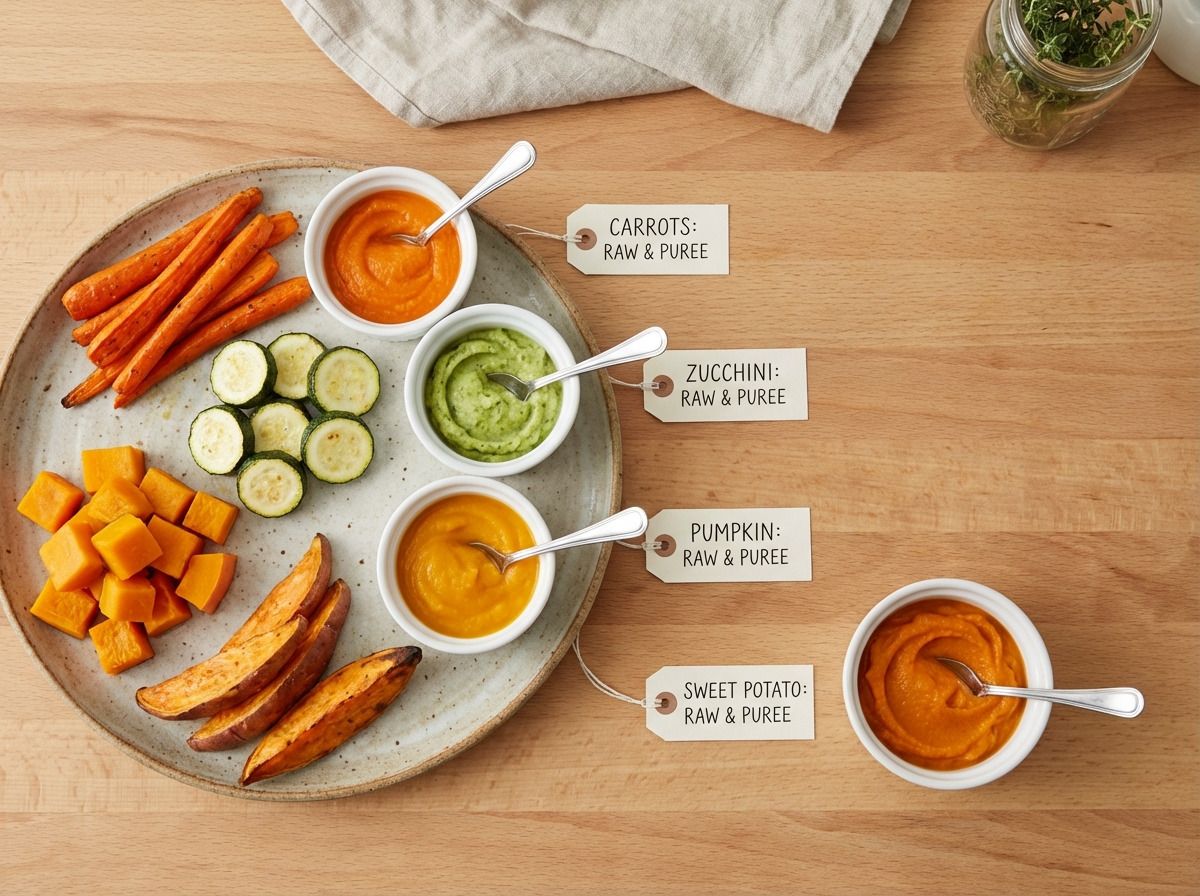
"Vegetables for baby porridge" is one of the most important topics when starting solids, because first taste experiences shape eating habits long-term. This article summarizes scientific recommendations and shows practically which vegetables work for baby porridge, how to structure a feeding start plan, and when to introduce what.
When to Start What Porridge? – The Scientific Timeline for Complementary Feeding
Expert organizations like the European Food Safety Authority (EFSA), World Health Organization (WHO), and nutrition networks recommend a complementary feeding window between: (If you're wondering whether your baby shows the necessary readiness signs for solids, check out our detailed readiness guide.)
↲ Weeks 17–26 (5–7 months)
Why not earlier?
Baby porridge at 3 months is not recommended today. Before week 17:
- ▸ Kidneys aren't fully developed to handle solid foods
- ▸ Intestinal barrier is immature
- ▸ Enzymes for starch digestion are insufficient
- ▸ The tongue thrust reflex is often still active
Starting solids too early increases the risk of:
- ▸ Infections
- ▸ Gastrointestinal problems
- ▸ Later obesity
Why not later than 6 months?
After week 26, breast milk or formula alone cannot meet all nutritional needs, especially iron.
Baby's First Porridge: The Classic Feeding Start Plan
The established complementary feeding start plan begins with midday porridge, for good reason: Parents can observe tolerance during the day, and baby has time to digest. (If you're interested in Baby-Led Weaning instead, these vegetables can also be prepared as finger-food sticks.)
Week 1: Plain Vegetable Porridge
Start with one mild vegetable:
- ▸ Amount Day 1: 2–3 teaspoons
- ▸ Increase: a little more daily
- ▸ Goal: about 100g of vegetable porridge
- ▸ After: usual milk feeding until 180–200g total is reached
Week 2: Vegetable-Potato Porridge
Now add:
- ▸ Potatoes (40–60g) for energy
- ▸ 1 teaspoon of rapeseed oil for fat-soluble vitamins
Week 3: Meat + Vitamin C
For iron supply:
- ▸ 20–30g of meat (preferably beef or lamb)
- ▸ 3–4 teaspoons of vitamin-C-rich fruit juice or puree
This structure aligns with all German and international guidelines.
Vegetables for Baby Porridge: Best Starter Varieties
Choosing appropriate vegetables for your baby is crucial. Mild, easily digestible, and well-tolerated, those are the starting criteria.
Vegetables for Baby Porridge – Guide Table
| Vegetable | Benefits | Notes |
|---|---|---|
| Carrot | Sweet, well-tolerated, rich in beta-carotene | Year-round; can be slightly binding |
| Parsnip | Mild, high fiber, very digestible | Ideal for starting, leaves few stains |
| Squash (Hokkaido) | Filling, easy to digest, naturally sweet | Perfect in fall/winter |
| Zucchini | Very mild, water-rich, easy to digest | Summer vegetable; ideal for sensitive stomachs |
| Sweet Potato | Energy & nutrient-rich, sweet taste | Helps with constipation |
Which vegetables are especially suited to starting solids:
- ⭐ Carrot
- ⭐ Parsnip
- ⭐ Squash
- ⭐ Zucchini
- ⭐ Sweet Potato
These are best-practice choices for baby's first porridge.
Complementary Feeding Vegetable Order – When to Introduce What?
After 1–2 weeks of tolerable introduction, parents can cautiously introduce variety.
Suitable after the starting phase (from about 6 months)
- ▸ Broccoli
- ▸ Cauliflower
- ▸ Fennel
- ▸ Peas (pureed)
- ▸ Potatoes (in combination)
Caution with high-nitrate vegetables
Certain vegetables naturally contain high nitrate levels:
- ▸ Spinach
- ▸ Chard
- ▸ Beets
- ▸ Kohlrabi
- ➡ Recommendation: only from 9 months, in small amounts
- ➡ Always discard cooking water
- ➡ Combine with vitamin C
Keep Track of Every New Vegetable
The app helps you keep track of which vegetables your baby has already tried and what's next in line, including tolerance notes and the right serving size for every week.
Baby Porridge Plan: Portions & Midday Meal Table
| Ingredient | Amount (homemade) |
|---|---|
| Vegetable | 90–100g |
| Potatoes | 40–60g |
| Meat | 20–30g |
| Oil (Rapeseed) | 2 teaspoons |
| Fruit juice/puree | 3–4 teaspoons |
Jar-bought portions follow similar guidelines.
When to Start Meat? When to Start Fruit?
When to introduce meat?
- ▸ 5–7 months
- ▸ 20–30g per serving
- ▸ 2–3 times per week
- ▸ Iron-rich options: Beef, lamb
When to introduce fruit?
- ▸ From the start of complementary feeding in small amounts
- ▸ Perfect for optimizing iron absorption as a dessert or porridge additive
Preparation Tips: Keeping Baby Porridge Safe and Nutritious
- ▸ Steam vegetables, don't boil away nutrients
- ▸ No added salt or sugar
- ▸ Introduce one new food per day
- ▸ Prioritize hygiene: Cool or freeze porridge quickly
- ▸ Start with smooth puree, gradually introduce chunks
Which Vegetables Work Well for 6-Month-Olds
At 6 months, most babies can handle:
- ▸ Broccoli
- ▸ Cauliflower
- ▸ Squash
- ▸ Zucchini
- ▸ Sweet Potato
- ▸ Fennel
- ▸ Parsnip
- ▸ Carrot
Conclusion: Vegetables for Baby Porridge – Variety, Patience & Readiness Signs
A good feeding introduction plan follows your baby's lead, not the calendar. Readiness signs like stable sitting, food interest, and loss of the tongue thrust reflex are key.
Whether baby's first porridge is carrot, parsnip, or squash, the best foundation includes:
- ▸ a calm feeding environment
- ▸ patience
- ▸ a structured feeding plan
- ▸ high-quality, mild vegetables
- ▸ daily repetition
This transforms the transition from nursing to family meals into a healthy, positive experience.
Sources & Scientific References
- ▸ European Food Safety Authority (EFSA) – Scientific opinion on complementary feeding
- ▸ World Health Organization (WHO) – Complementary feeding guideline
- ▸ Gesund ins Leben – Feeding recommendations 2024
- ▸ CDC – Timing of complementary feeding
- ▸ AGES – Austrian complementary feeding recommendations
- ▸ Pediatrician Network Recommendations