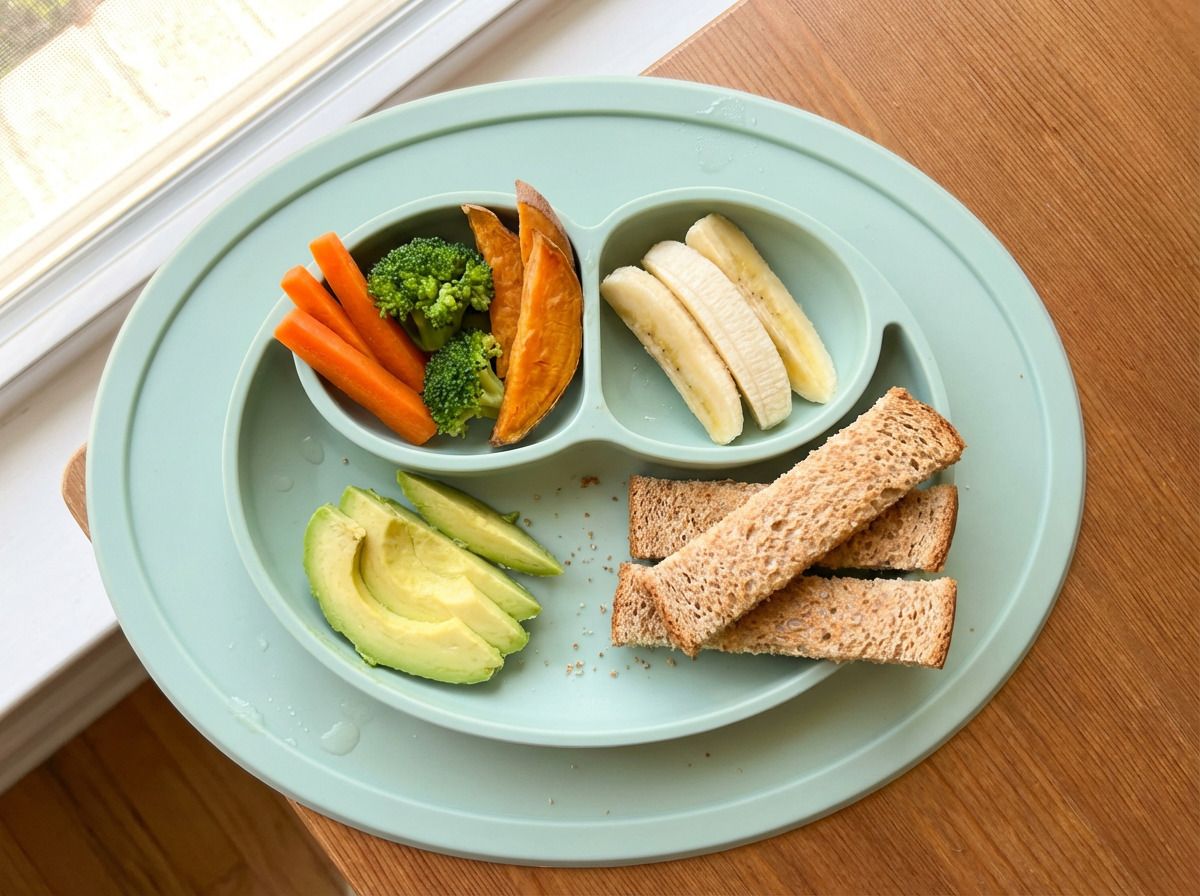
Baby-Led Weaning (BLW), also known as "baby-led complementary feeding," is a modern approach where babies independently introduce themselves to solid foods without purees. Instead of being spoon-fed, your baby decides what, how much, and at what pace to eat.
Many parents face a key decision at the start of complementary feeding:
Puree or BLW? What does BLW actually mean? When is finger food safe for babies? How do you know if your baby is ready for BLW?
This article provides a well-researched introduction to the concept, scientific background, and practical tips for safe BLW start.
What is BLW? – Meaning, Concept & Origins
BLW stands for Baby-Led Weaning – referring to baby-directed introduction to solid foods. This approach was pioneered by British midwife Gill Rapley and means that:
- ▸ your baby reaches for foods on their own
- ▸ they bring food to their mouth independently
- ▸ parents don't spoon-feed, but offer appropriate foods
- ▸ your child sets their own pace
BLW supports independence, motor development, and self-regulation, a natural extension of responsive breastfeeding or bottle-feeding.
The opposite would be traditional spoon-feeding, hence the common question: Puree or BLW? Both are possible. Many families choose a combination to optimize safety, nutrition, and independence.
BLW Start: When is Your Baby Ready?
Organizations like the World Health Organization (WHO), the European Food Safety Authority (EFSA), and the National Health Service (NHS) recommend starting around 6 months.
However, with BLW, it's very clear:
Age doesn't matter, readiness signs do.
The Three Essential BLW Readiness Signs
These mirror the general readiness signs for complementary feeding and show your baby is ready for finger foods and self-feeding:
✔ Sitting Upright
Your baby can sit stably with minimal support, and their head doesn't fall forward or to the sides.
✔ Hand-Eye-Mouth Coordination
They can grasp foods purposefully and bring them safely to their mouth.
✔ Loss of the Extrusion Reflex
The tongue thrust reflex has faded, your baby doesn't instinctively push food back out.
When these signs are present, BLW is appropriate. This typically occurs around day 180 of life.
When is Finger Food Safe for Babies?
Once your baby shows readiness signs, they can begin with finger foods. BLW foods should be:
- ▸ soft when cooked
- ▸ easy to grasp (e.g., "finger-shaped")
- ▸ easily mashed between fingers
- ▸ pose no choking risk
The Right Shape & Consistency for BLW Start
✔ Shape
- ▸ about the size of an adult finger
- ▸ or approximately baby-fist sized
- ▸ with something sticking out when baby grasps it
✔ Consistency
- ▸ soft enough to be squished between two fingers
- ▸ mashable with tongue on the roof of mouth ("mashable texture")
BLW Baby: Suitable First Foods
Vegetables (steamed & finger-shaped)
The same vegetables we recommend in our vegetable guide work wonderfully as finger-food sticks:
- ▸ Carrots
- ▸ Broccoli (with handle)
- ▸ Squash
- ▸ Parsnip
- ▸ Zucchini
Fruits (ripe & soft)
- ▸ Banana
- ▸ Avocado
- ▸ Soft pear
- ▸ Peach
- ▸ Steamed apple
Protein Sources
- ▸ Soft meat strips
- ▸ Boneless fish
- ▸ Omelet strips
- ▸ Tofu
- ▸ Lentil patties
Starch Sources
- ▸ Potatoes
- ▸ Sweet potatoes
- ▸ Soft pasta (penne, fusilli)
- ▸ Salt-free bread sticks
Safety in BLW Weaning: Gagging vs. Choking
Many parents confuse two very different things:
| Feature | Gagging | Choking |
|---|---|---|
| Sound | Loud (coughing, gagging) | Quiet or silent |
| Face Color | Red | Lips may turn blue |
| Baby's Response | Baby moves food forward | Baby cannot cough |
| Action | Observe | Immediate first aid needed |
Important:
- ▸ The gag reflex is normal and even a protective mechanism.
- ▸ Studies show: BLW doesn't lead to more choking incidents than puree, if you avoid risky foods.
Safety Tips
- ▸ Baby always sits upright
- ▸ No eating while walking, being held, or in car seats
- ▸ No hard foods (e.g., raw apples, raw carrots)
- ▸ Grapes, blueberries, tomatoes → always cut lengthwise
- ▸ Whole nuts are off-limits
Check any food's safety in seconds
Before offering a new finger food, the app shows you the right age, choking risk, and safe cutting or cooking shape for that ingredient, so BLW stays safe from the very first bite.
Nutrition: Iron & Energy in BLW
A common concern with BLW is nutritional adequacy. Iron is particularly important from 6 months onward.
The BLISS Study ("Baby-Led Introduction to Solids") shows that BLW can be just as safe and nutritious as puree, when parents consistently:
- ▸ offer iron-rich foods (e.g., meat, legumes)
- ▸ include energy-dense foods (e.g., avocado, sweet potatoes)
Bottom line: BLW is absolutely viable if you ensure each meal includes nutrient-dense components.
Puree or BLW? – Why a Mix Often Works Best
Many families combine both approaches:
BLW + Puree = flexible, safe, nutrient-rich complementary feeding
Benefits of combining:
- ▸ Finger foods train motor skills and independence
- ▸ Puree can make iron and energy delivery easier
- ▸ Baby learns different textures
- ▸ Parents can balance daily needs and circumstances better
This approach is often called "responsive feeding" and aligns with modern recommendations from many expert organizations.
Benefits of Finger Foods for Development
BLW offers more than just nutritional benefits:
✔ Motor Skills
Fine motor and grasping abilities develop dramatically.
✔ Hand-Eye-Mouth Coordination
A crucial foundation for future writing, play, and chewing.
✔ Self-Regulation
Baby eats according to hunger and fullness, important for healthy eating habits.
✔ Less Picky Eating
Early exposure to real textures and shapes helps prevent later food rejection.
Practical Tips for Starting BLW
- ▸ Eat together: Babies learn through observation.
- ▸ Avoid salt & sugar: Kidneys are still immature.
- ▸ Avoid honey: Risk of infant botulism.
- ▸ Offer variety: Include fish, eggs & legumes early, per S3 allergy prevention guidelines.
- ▸ Be patient: Acceptance often takes 10–15 tries.
- ▸ Stay realistic: Much food ends up on the floor at first. It's completely normal.
Conclusion: BLW as a Natural, Individual Path to Solids
BLW Weaning offers babies a safe, self-directed path to solid foods. Whether pure BLW or a mix of puree and finger foods, what matters most is:
- ▸ confirming readiness signs are present
- ▸ providing a safe eating environment
- ▸ offering nutrient-dense food choices
- ▸ trusting your baby's abilities
When these foundations are in place, BLW becomes a relaxed, joyful introduction to eating together.
Sources & Scientific References
- ▸ World Health Organization (WHO) – Complementary Feeding Guidelines
- ▸ National Health Service (NHS) – Starting Solids
- ▸ European Food Safety Authority (EFSA) – Scientific Opinion on Complementary Feeding
- ▸ UNICEF – Introducing Solid Foods
- ▸ Netzwerk Gesund ins Leben – Complementary Feeding Recommendations
- ▸ Cameron et al. – BLISS Pilot Study (Baby-Led Introduction to SolidS)
- ▸ Gill Rapley – Baby-Led Weaning Concept