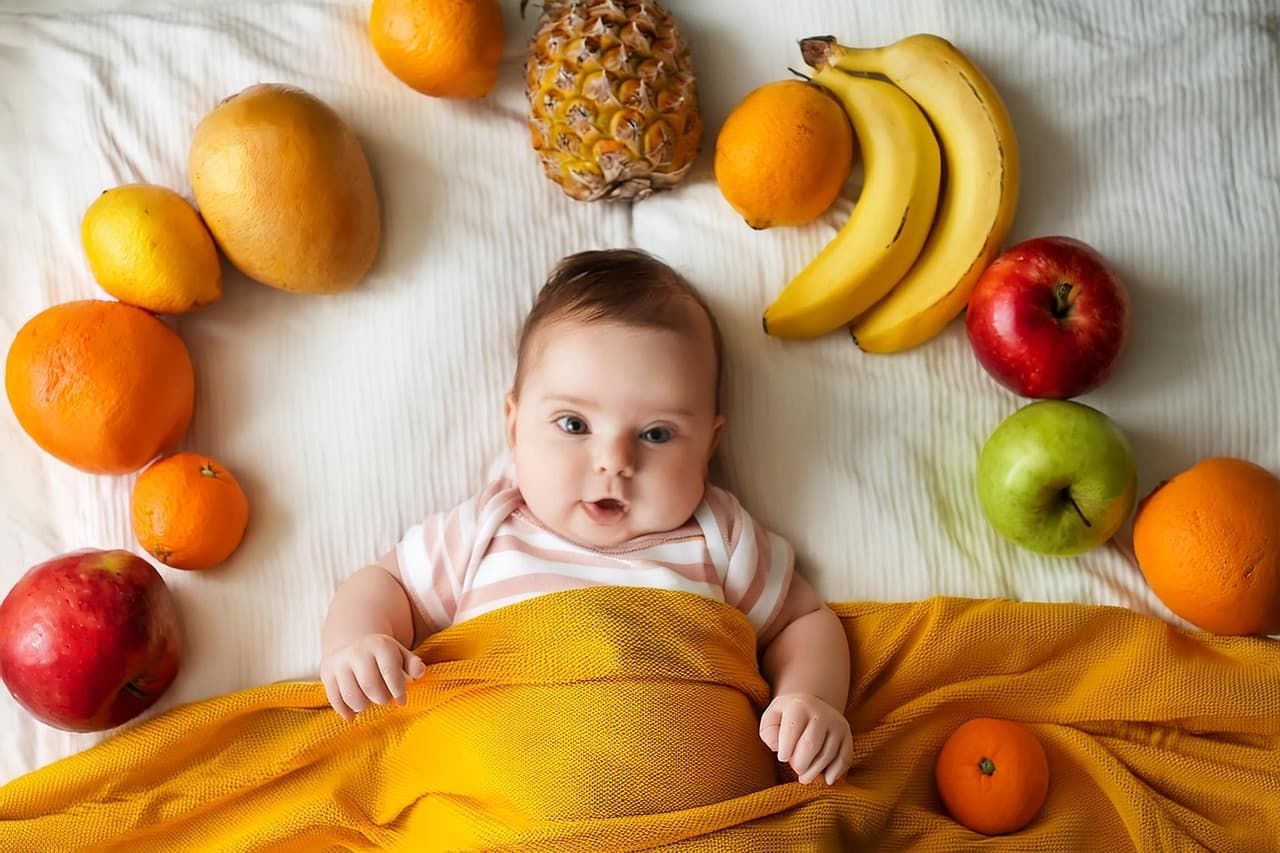
The question "When can babies eat fruit?" concerns many parents around the time of introducing solids. Fruit is rich in vitamins and fiber – but acids and sugar can strain the sensitive digestive tract. This article summarizes the most important recommendations from reputable sources such as WHO, EFSA, AAP, and national health organizations.
Key Takeaways
Fruit can be given from the start of complementary feeding (earliest at 5 months) – initially as an addition to lunch puree, later in grain-fruit puree. Mild varieties like apple, pear, banana, and avocado are ideal for starting.
When Can Babies Eat Fruit?
According to WHO, EFSA, and national health organizations, the recommended window for starting complementary feeding is between 17 and 26 weeks (5–7 months).
More important than age are the signs of readiness for solids:
- ▸ good sitting with minimal support
- ▸ stable head control
- ▸ tongue-thrust reflex has largely disappeared
- ▸ visible interest in food
- ▸ objects are deliberately brought to the mouth
Only when these signs are present can the digestive tract safely process fruit and other complementary foods.
How to Start with Fruit?
Initially, fruit is not offered as a standalone meal, but as an addition to lunch puree – mainly because of vitamin C-supported iron absorption, which is explicitly recommended by health organizations.
Important Note:
Pure grain-fruit puree is typically introduced between 7 and 9 months.
Which Fruit Varieties Are Suitable?
Excellent for Starting Solids
- • Apple (cooked) - mild and easily digestible
- • Pear - particularly gentle on the stomach
- • Banana - can also be offered raw
- • Avocado - rich in healthy fats
These varieties are considered mild, easily digestible, and well-tolerated.
From Around 7 Months
- ▸ Peach
- ▸ Apricot
- ▸ Nectarine
- ▸ Blueberries / Raspberries (small amounts)
From Around 9–10 Months
- ▸ Mango
- ▸ Papaya
Not Until End of First Year
Caution with:
- • Strawberries - histamine-releasing, increased allergy risk
- • Citrus fruits - highly acidic, can cause diaper rash
Which Fruit Already Fits Your Baby's Age?
The app shows you exactly when each fruit is ready to introduce and how to prepare it safely, so you're not left guessing every time you reach for something in the fruit bowl.
Raw or Cooked?
During the first six months of complementary feeding, the recommendation is clear:
Offer fruit cooked/steamed
Reasons according to nutritional guidelines:
- • easier to digest
- • lower risk of skin irritation
- • reduced choking hazard
Raw options suitable from the start are banana, avocado, and very ripe soft fruit.
Important:
Raw apple pieces or hard fruit varieties are not suitable in the first year of life.
Fruit with Baby-Led Weaning (BLW)
When practicing Baby-Led Weaning (BLW), fruit pieces must meet the following criteria:
- ▸ soft enough to mash with fingers
- ▸ finger-sized and elongated
- ▸ easy to grasp for little hands
Avoid Choking Hazard:
Round fruits like grapes or blueberries must always be halved or quartered.
Can Fruit Cause Diaper Rash?
Yes – especially citrus fruits, kiwi, and strawberries, as their acids can change stool composition and irritate the skin.
If redness occurs, try:
- ▸ pausing that particular fruit variety
- ▸ consistent skin care with barrier cream
- ▸ more frequent diaper changes
Mild varieties like apple, pear, avocado, and banana cause problems much less frequently.
How Much Fruit Is Appropriate?
Fruit is healthy – but babies naturally prefer sweet tastes. Therefore, health organizations recommend:
- • 1 fruit meal per day (e.g., grain-fruit puree) is sufficient
- • Don't offer fruit as a constant snack
- • Maintain vegetable priority to support broad taste development
Fruit Sauce vs. Fruit Puree: What's the Difference?
Many parents use these terms interchangeably, but there are small differences:
| Term | Description |
|---|---|
| Fruit Sauce | Pureed fruit, only from fruits, no additional ingredients |
| Fruit Puree | May contain additional ingredients like grains or yogurt |
Both forms are suitable for complementary feeding – what's important is that they contain no added sugars or spices.
Summary: When Can Babies Eat Fruit?
From the start of complementary feeding, earliest at 5 months of age, fruit can be given – initially as an addition to lunch puree, later in grain-fruit puree.
Mild varieties like apple, pear, banana, and avocado work best.
Acidic fruits should follow later and be introduced carefully with sensitive skin.
Sources (Scientific & Official)
Below are the most important sources used from international health organizations:
Official Nutritional Guidelines
- 1. WHO – World Health Organization: Complementary Feeding Guidelines
- 2. EFSA – European Food Safety Authority: Infant Nutrition
- 3. AAP – American Academy of Pediatrics: Starting Solids
- 4. NHS – National Health Service (UK): Baby Feeding Guidelines
- 5. CDC – Centers for Disease Control: Infant and Toddler Nutrition
Complementary Feeding Resources
- • Solid Starts – Evidence-based feeding guides
- • Academy of Nutrition and Dietetics – Infant feeding recommendations
- • HealthyChildren.org – AAP pediatric nutrition resources
- • La Leche League – Complementary feeding support