Somewhere around the middle of your baby's first year, something shifts nutritionally that has nothing to do with readiness cues or developmental milestones. It's a big part of the real reason iron rich foods for babies become such a frequent topic in pediatric guidance right around 6 months, not a few weeks earlier and not a few months later. Your baby was born with a private supply of iron, built up during pregnancy, and that supply is designed to carry them only so far. Understanding what's happening behind the scenes makes it much easier to see why food, not just milk, needs to start pulling real weight from this point on.
This guide walks through why iron becomes such a priority right around 6 months, why breast milk and standard formula alone can't fully cover it from here, the difference between the iron in meat and the iron in plants and why that difference matters, a simple trick for getting more out of plant-based iron, a practical list of the best iron-rich foods for babies with prep notes, meal ideas organized by age and stage, and the general signs that are worth mentioning at a checkup, without turning any of it into a source of worry.
A baby's prenatal iron stores are largely used up by around 6 months, right as breast milk and formula alone stop being enough to cover iron needs on their own. That timing is a major, often overlooked reason 6 months is the recommended starting point for solid foods, and it's why iron-rich foods deserve a regular place on the menu from the very first bites.
Why Iron Becomes a Priority Right Around 6 Months
Babies build most of their iron reserves during the final trimester of pregnancy, when a steady supply crosses from mother to baby and gets tucked away for later use. For the first several months of life, your baby draws down that reserve gradually, and for a healthy, full-term baby, it's usually enough to cover their needs almost entirely on its own. That's a big part of why iron rarely comes up as a topic in the newborn stage. It simply isn't a live issue yet.
That changes around the 4 to 6 month mark. Iron stores that felt generous at birth start running low right as your baby is also growing quickly, and a fast-growing body needs more iron, not less, to keep building blood cells, muscle, and a rapidly developing brain. The two curves cross almost exactly around 6 months for most babies, stores trending down, needs trending up. That overlap is one of two real reasons 6 months is the recommended starting point for solid foods. The one most parents hear about is developmental: your baby needs to be able to sit with support, hold their head steady, and show real interest in food. The other, quieter reason is nutritional, this is roughly when the numbers stop adding up without help from food.
Two Reasons 6 Months Is the Starting Line
- ▸Developmental readiness: sitting with support, steady head control, and genuine interest in food
- ▸Nutritional timing: iron stores built before birth are running low right as a fast-growing baby's needs are climbing, which is exactly where first foods start to matter
Why Breast Milk and Formula Alone Aren't Enough From Here
Breast milk is remarkable in almost every nutritional respect, but iron is the well-documented exception. It's naturally quite low in iron, and that stays true no matter how much iron-rich food the breastfeeding parent eats or how many prenatal vitamins they take. This isn't a flaw to fix, it's simply how breast milk is built, and it works fine for the first months precisely because your baby is living off their own iron stores during that window. The trouble starts once those stores run low and milk is still the only thing on the menu.
Standard infant formula is a different story in one specific way: it's fortified with iron by regulation in most countries, which is exactly why formula-fed babies don't face quite the same cliff edge that breastfed babies do. But fortification alone doesn't make food optional. As your baby eats more solids, they naturally drink somewhat less formula, and a baby who fills up mostly on starchy, low-iron first foods like rice cereal or plain fruit purees can still end up with a real gap even while drinking iron-fortified formula. General pediatric nutrition guidance puts a baby's daily iron need at around 11 milligrams by the time they're 7 to 12 months old, a strikingly large number for such a small person, several times what a typical adult needs relative to body weight. Meeting that mostly through breast milk alone becomes genuinely difficult, and by 9 to 11 months, complementary foods are estimated to need to supply the large majority, up to around 97 percent, of a breastfed baby's iron, according to widely cited WHO feeding guidance. That's precisely why iron rich foods for babies stop being a nice-to-have around this age and start being one of the more important jobs solid food has to do.
Iron isn't the only nutrient that shifts into the spotlight once solids start, either. Vitamin D is another one worth a separate look, since it follows its own, slightly different set of rules. But iron is the nutrient most tied to the specific timing of starting solids, which is why it's worth understanding well before the one-food-a-day stage turns into three.
This timeline is also why premature babies and babies born at a low birth weight are often treated a little differently. Since so much of that prenatal iron transfer happens in the final weeks of pregnancy, a baby born early simply has less time to build up the same reserve, and pediatricians often start iron supplementation for these babies well before the usual 6-month mark. If that applies to your baby, your pediatrician has most likely already brought it up, but it's a reasonable thing to ask about again at your next visit if it hasn't come up yet.
Heme Iron vs Non-Heme Iron, and Why the Difference Matters
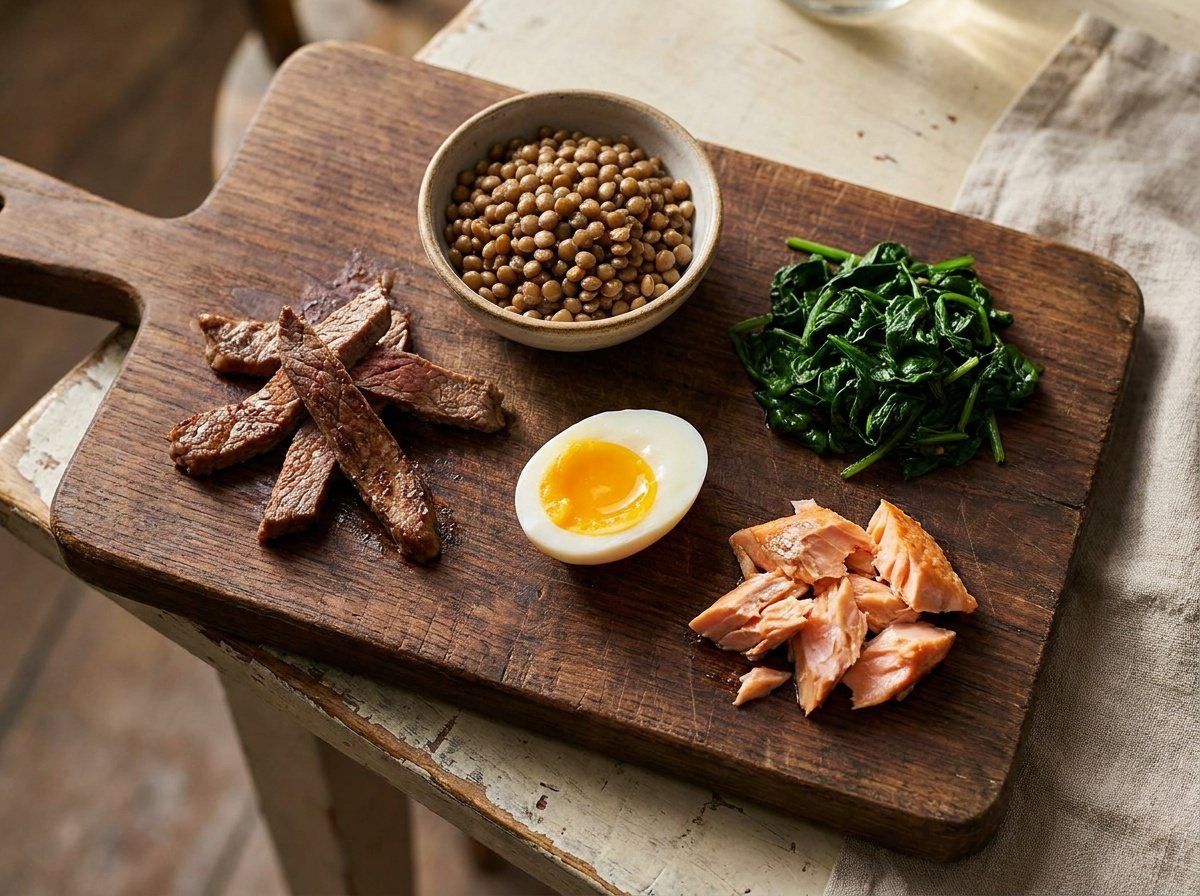
Not all dietary iron behaves the same way once it reaches your baby's gut, and understanding the split makes the rest of this guide much easier to put into practice. Iron from animal sources, red meat, poultry, fish, and egg yolk, is called heme iron. Iron from plant sources, lentils, beans, tofu, fortified oats, and dark leafy greens, is called non-heme iron. Both count toward your baby's needs. But they aren't absorbed at the same rate.
Heme iron is absorbed efficiently and fairly consistently, largely regardless of what else is on the plate. Non-heme iron is absorbed far less efficiently on its own, and how much your baby actually takes in from a lentil puree or a bowl of fortified oatmeal depends quite a bit on what else that particular meal contains. That doesn't make plant-based iron a lesser option, plenty of babies get most of their iron from non-heme sources, especially in vegetarian households, it just means non-heme iron benefits from a little more strategy at mealtime, which is exactly what the next section is about.
Heme Iron (Animal Sources)
- ▸Red meat, poultry, fish, and egg yolk
- ▸Absorbed efficiently and consistently
- ▸See our guide to meat in baby food for textures and portions by age
Non-Heme Iron (Plant Sources)
- ▸Lentils, beans, tofu, fortified oats, dark leafy greens
- ▸Absorbed less efficiently on its own
- ▸Absorption rises meaningfully when paired with vitamin C
The Vitamin C Pairing Trick (and What Gets in the Way)
Here's one of the most useful, practical facts in this entire guide: pairing a non-heme iron food with a source of vitamin C in the same meal meaningfully boosts how much iron your baby actually absorbs. Vitamin C helps convert plant-based iron into a form the body can take up more easily, and the effect is real enough that it's worth building into your default meal pattern rather than treating it as a special trick for occasional use.
In practice this is easier than it sounds. A lentil puree gets a boost from a spoonful of mashed tomato stirred through it. Sauteed spinach pairs naturally with a few segments of soft orange or a splash of orange juice in the cooking water. Iron-fortified oatmeal works well topped with mashed berries or a few bites of kiwi. Chickpeas with bell pepper, or black beans with a squeeze of lime, follow the same logic. None of this requires precision, roughly the same meal, most days, with some source of vitamin C somewhere on the plate, is enough to make a real difference over time.
Easy Vitamin C Pairings
A couple of things work in the opposite direction, and it's worth knowing about them without treating either as a big deal. Tannins, the compounds found in tea and coffee, can noticeably blunt iron absorption, which is mostly a non-issue for babies since neither belongs in a baby's diet anyway, but it's useful to file away as your toddler starts sharing more of the family table later on. Cow's milk is the more relevant caveat for this age group. Large volumes of cow's milk as a drink, especially before 12 months when it isn't recommended as a main drink at all, can both crowd out iron-rich foods and modestly interfere with iron absorption. None of this means avoiding dairy, yogurt and cheese are fine well before 12 months, it just means keeping cow's milk as a beverage to a moderate amount rather than the main event once your baby is old enough to drink it.
See Your Baby's Iron-Rich Foods at a Glance
Grubsy highlights iron-rich foods as you log meals, so you can see your baby's iron intake across the whole week at a glance, not just guess from one plate at a time.
The Best Iron-Rich Foods for Babies, With Prep Notes
Once you know the heme versus non-heme split and the vitamin C trick, building actual meals gets a lot simpler. Here's a practical, categorized starting list, organized the same way most families end up thinking about it.
Heme Iron Sources
- ▸Beef, pureed smooth early on or slow-cooked into shreddable strips later
- ▸Dark poultry meat, like chicken thigh, over breast meat, finely shredded or minced
- ▸Salmon and other fatty fish, flaked and checked carefully for bones
- ▸Egg yolk, mashed or soft-scrambled, a concentrated source and a common early allergen worth introducing thoughtfully
Non-Heme Iron Sources
- ▸Lentils, chickpeas, and kidney beans, well-cooked and mashed or left slightly textured
- ▸Tofu, soft cubes or mashed into other foods
- ▸Iron-fortified baby oatmeal and quinoa, both easy first-food bases
- ▸Spinach and other dark leafy greens, finely chopped or blended into purees
A simple rule of thumb helps across both lists: almost anything here can move from a smooth puree to a soft, shreddable, or thinly sliced finger food as your baby's chewing skills develop. Our guide to cutting and preparing food safely by age walks through exactly how to shape meat, beans, and other trickier textures at each stage.
Store-bought iron-fortified infant cereal, whether rice, oat, or a multigrain blend, is worth keeping in the rotation even after your baby moves well past first purees. It's specifically fortified to help close the exact gap this guide has been describing, and stirring it into yogurt, mixing it with fruit, or using it to thicken a puree is an easy way to work in extra iron on busier days without any real extra planning.
Iron-Rich Meals by Age and Stage
Exactly what this looks like on a plate changes as your baby grows, but the underlying pattern, some iron source plus something with vitamin C, stays useful at every stage.
6 to 8 Months
At this stage, purees and very soft, mashable textures do most of the work. A smooth blend of pureed beef with a little sweet potato or carrot is an easy, well-tolerated first meat meal, and iron-fortified baby oatmeal or infant cereal mixed with a spoonful of mashed pear or prune covers the non-heme side of things. If you're following baby-led weaning instead of spoon-fed purees, a soft, well-cooked strip of beef or dark chicken meat, sized to stick out of your baby's fist, works just as well.
9 to 11 Months
Pincer-grasp skills are usually developing around now, which opens the door to smaller, more textured pieces. Shredded meat or mashed lentils mixed into soft rice or pasta, alongside a few pieces of soft orange, kiwi, or bell pepper, is an easy way to combine a solid iron source with a vitamin C boost in one sitting. Iron-fortified cereal continues to be a useful breakfast base at this stage too, especially topped with mashed berries.
12 Months and Beyond
By the time your baby is closer to a year old, iron-rich foods aren't really a separate project anymore, they're just part of a varied, mostly family-style plate. Small pieces of meat, beans, or tofu alongside vegetables and a piece of fruit cover both the iron and the vitamin C side without much extra thought. Our guide to nutrition at one year covers how iron fits into the bigger picture once your baby is eating three meals a day alongside milk.
Signs Worth Mentioning at a Checkup
Most babies move through this stage without any issue, especially once iron-rich foods have a regular place on the plate. But it's worth knowing the general signs that are worth mentioning to your pediatrician, not because any one of them points to something specific on its own, but because a doctor can put them in context in a way a list online never can. Unusual paleness, seeming noticeably more tired or fussy than usual, a poor appetite that persists for more than a few days, or slower-than-expected weight gain are the kinds of things worth flagging at a visit. None of these are a diagnosis by themselves, plenty of ordinary things cause exactly the same signs, they're simply worth mentioning rather than waiting on.
A few other situations call for a bit more attention than average, though none of them mean anything is wrong on their own. Babies who are exclusively breastfed well past 6 months without a regular addition of iron-rich complementary foods, babies who are especially picky eaters with a narrow range of accepted foods, and babies on a vegetarian or vegan diet without much planning around non-heme sources and vitamin C pairing all fall into this category. If any of that sounds like your baby, it's simply a good reason to bring it up at your next appointment rather than something to worry over on your own.
You also don't have to rely on guesswork alone. In many places, routine screening for iron levels around 12 months is a normal, well-established part of pediatric care, often folded into the regular one-year checkup rather than requiring a separate visit. If you're ever unsure whether your baby is getting enough iron, whether because of a restricted diet, a history of prematurity, or just a nagging feeling, your pediatrician can check directly rather than leave you guessing from a list of symptoms.
Final Thoughts
Iron rich foods for babies aren't complicated once you understand the two ideas behind them: heme iron from animal sources is absorbed easily on its own, and non-heme iron from plants gets a real boost from vitamin C at the same meal. Start building both into your baby's plate from the very first bites at 6 months, right when their prenatal stores are running low and food needs to start carrying real weight.
You don't need a perfect ratio or a spreadsheet to get this right, just a general habit of offering a good iron source most days and pairing plant-based iron with something bright and vitamin-C-rich when you can. Combined with routine checkups along the way, that's genuinely enough to support your baby's growth and development through this whole stage and beyond.