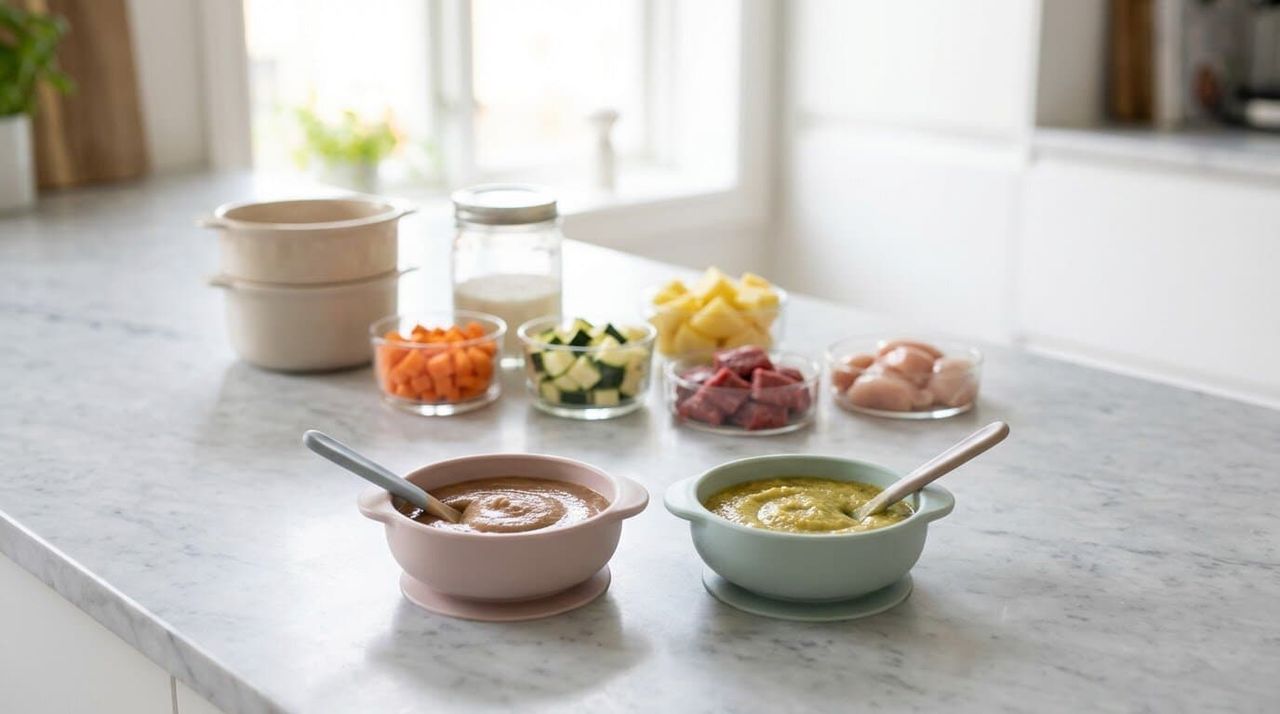
Introducing meat in baby food marks a crucial step in infant nutrition. Between the 5th and 7th month of life, the need for certain nutrients increases significantly – particularly iron, zinc, and high-quality protein. While breast milk or infant formula provide optimal nutrition in the first months, a so-called "iron gap" develops in the second half of the first year. This is exactly where meat becomes an important part of the diet.
This guide explains in a well-founded and practical way: when to introduce meat to baby, which meat is suitable, how often meat puree should be given, and what physiological factors play a role.
Why Meat Is So Important in Complementary Feeding
By the 5th-6th month, the prenatally accumulated iron stores of many babies are largely depleted. Studies and recommendations from leading professional institutions such as the German Nutrition Society (DGE), the Austrian Agency for Health and Food Safety (AGES), and the "Healthy from the Start" network emphasize the importance of iron-rich complementary foods from the beginning of supplementary feeding.
Find more information about the optimal time for starting solids in our comprehensive guide.
The Iron Gap in the Second Half of the First Year
- ▸ Breast milk contains only about 0.3 mg iron per liter
- ▸ The need increases significantly from the 4th-6th month
- ▸ According to the WHO, babies between 9 and 11 months must cover up to 97% of their iron needs through complementary foods
Meat is particularly valuable here because it provides heme iron – a form of iron that is absorbed much better than plant-based non-heme iron.
Heme Iron vs. Non-Heme Iron: The Difference Matters
Bioavailability makes the difference:
Heme Iron (Meat)
20–30% Absorption Rate
Non-Heme Iron (Grains, Vegetables)
1–10% Absorption Rate
Additionally, meat has the so-called "meat factor": It even improves the absorption of plant-based iron from the same meal.
💡 Practical Tip:
Combine meat puree with vitamin C-rich vegetables (e.g., broccoli or bell peppers) to further increase iron absorption.
Keep track of your baby's iron intake
Grubsy automatically flags iron-rich meals as you log meat purees and more, so you can see whether your baby is actually getting enough iron instead of guessing.
When to Introduce Meat to Baby?
The common question "when to start meat for baby?" can be answered clearly:
👉 Between weeks 17 and 26, meat can be introduced for the first time – usually as part of the classic vegetable-potato-meat puree.
This recommendation corresponds to current guidelines for introducing complementary foods in Germany, Austria, and Switzerland.
Meat Baby Puree: Which Types Are Suitable?
Not all meat is equally suitable. Nutrient density, fat content, and digestibility are crucial.
🥩 Beef (First Choice)
- ✓ High iron content (approx. 2-3 mg/100g)
- ✓ Excellent source of zinc
- ✓ Particularly suitable as first meat puree
🍗 Poultry (Mild and Well Tolerated)
- ✓ Chicken or turkey breast
- ✓ Mild taste
- ✓ Slightly less iron than beef
🐖 Pork (Lean)
- ✓ Medium iron content
- ✓ Rich in B vitamins
- ✓ Only use very lean cuts
Which Meat Should Be Avoided?
Not recommended for baby food:
- ✗ Liver (too much vitamin A, possible contaminant load)
- ✗ Game from lead ammunition
- ✗ Raw or pink meat (infection risk)
⚠️ Important: Meat must always be fully cooked through.
Baby Meat Puree: Right Amount and Frequency
Recommendations for meat in baby food:
- ▸ Portion size: 20-30g lean meat
- ▸ Frequency: 2-5 times per week
- ▸ Alternative: 1-2 times per week fatty fish (e.g., salmon)
Early Protein Hypothesis: Keeping Protein Intake in Check
The total protein amount should be considered. Modern studies on the so-called "Early Protein Hypothesis" show that consistently high protein intake in the first year of life can be associated with an increased risk of obesity.
However, the protein source is crucial: Meat seems to promote length growth more without causing excessive weight gain – unlike very high amounts of milk protein.
Renal Load: Why Moderation Is Important
A baby's kidneys don't yet work at adult level. Too much protein increases the so-called "renal solute load" – the amount of metabolic products that must be excreted.
Recommendation:
- ▸ Approx. 1.3g protein per kg body weight per day
- ▸ Don't make meat portions excessively large
- ▸ Don't combine meat meals with large amounts of cow's milk
Homemade or Store-Bought?
Commercial Baby Food
Advantages:
- ✓ Very strict contaminant limits
- ✓ High product safety
- ✓ Practical for everyday use
Disadvantage: Meat content often only about 8% (approx. 15g per jar)
Homemade Meat Puree
Advantages:
- ✓ Full control over ingredients
- ✓ Higher meat content possible
- ✓ Individual texture adjustment
Important for homemade:
- ▸ Steam meat gently
- ▸ Cool quickly
- ▸ Freeze at -18°C for maximum 2 months
Meat in Baby Food and Organic Quality
Organic meat doesn't automatically contain more nutrients. Benefits are more related to:
- ▸ Stricter antibiotic rules
- ▸ No use of growth hormones
- ▸ Controlled animal welfare conditions
Commercial baby food is subject to extremely low contaminant limits anyway.
Meat in the Context of Vegetarian Baby Food
A vegetarian diet is possible but requires careful planning:
- ▸ Millet, oats, amaranth as iron sources
- ▸ Combine with vitamin C
- ▸ No simultaneous milk intake
- ▸ Regular medical monitoring of iron status
Since plant-based iron is less bioavailable, significantly more of it must be consumed.
Texture Development: From Puree to Family Food
- ▸ 5th-7th month: Very finely pureed meat
- ▸ From 8th month: Coarser texture possible
- ▸ Promoting chewing muscles is important for speech development
Meat can also be offered with Baby-Led Weaning – softly cooked and in appropriate sizes.
Conclusion: Meat in Baby Food – Sensible and Easy to Plan
Integrating meat into baby food is an effective way to meet the increasing iron and zinc needs in the second half of the first year. Beef in particular provides highly bioavailable heme iron and supports healthy development.
Key points summarized:
- ✓ Introduction possible between weeks 17 and 26
- ✓ 20-30g lean meat per portion
- ✓ 2-5 times per week
- ✓ Combine with vitamin C
- ✓ Offer milk and meat separately
Properly used, meat puree is a valuable part of a balanced complementary feeding plan and sustainably supports growth, blood formation, and neurological development.
The 5 Most Important Sources:
- • German Nutrition Society – Reference values for iron and infant nutrition
- • World Health Organization – Guideline: Complementary Feeding
- • Healthy from the Start – Complementary feeding recommendations
- • Austrian Agency for Health and Food Safety – Austrian complementary feeding recommendations
- • Koletzko et al., "Early Protein Hypothesis" – published in National Institutes of Health (PMC database)