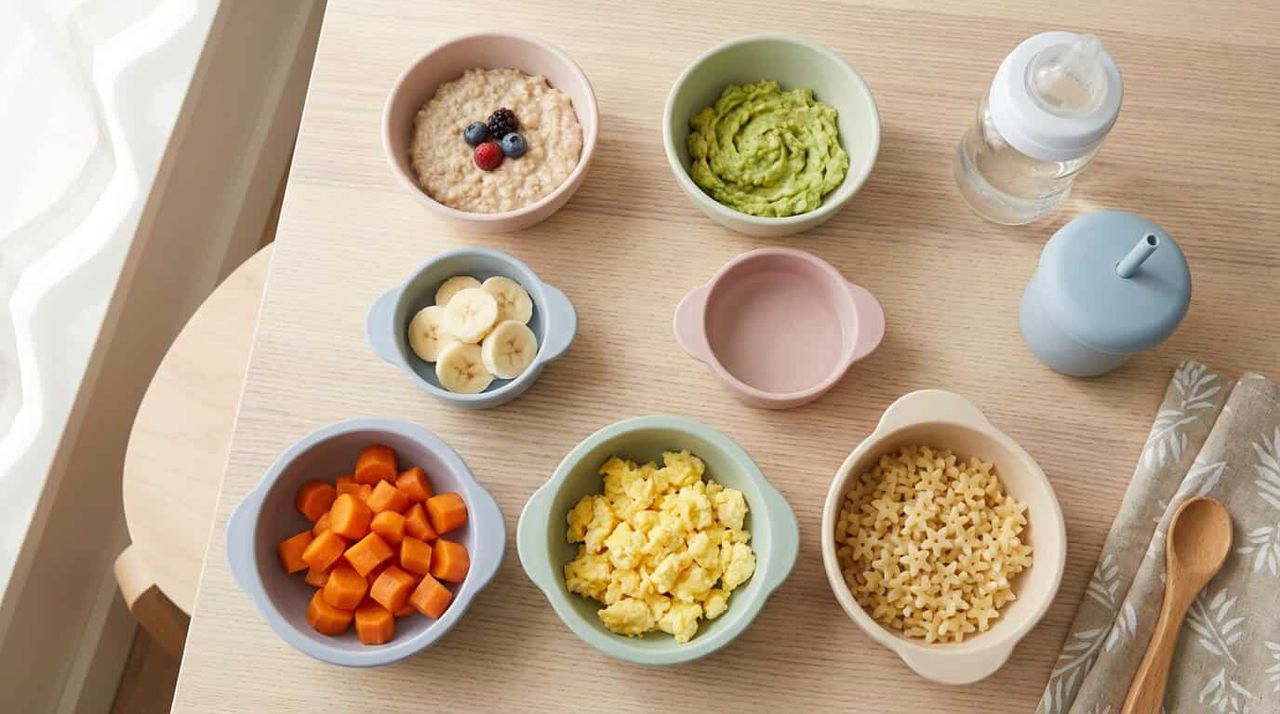
As babies approach their first birthday, feeding often becomes one of the biggest questions parents have. At 11 months old, babies are growing quickly, exploring new textures, and learning to eat more like the rest of the family.
But many parents still wonder: how much should an 11 month old be eating each day?
The short answer is that most 11-month-old babies eat three meals per day plus milk feedings, usually totaling around 750–900 calories daily. About 24–30 ounces of breast milk or formula still plays an important role, with the rest coming from solid foods.
Key Takeaways
- ▸ Most 11-month-old babies need 750–900 calories per day
- ▸ Milk intake: 24–30 oz of breast milk or formula daily
- ▸ Three solid meals plus 1–2 optional snacks per day
- ▸ Babies self-regulate hunger, trust their cues
How Much Should an 11 Month Old Be Eating Per Day?
Most 11-month-old babies need around 750–900 calories per day to support their growth and activity. At this stage, babies are often crawling, pulling up, or even taking their first steps, which increases their energy needs.
A typical daily intake might look like this:
- ▸ Breast milk or formula: 24–30 oz per day
- ▸ Solid meals: 3 meals daily
- ▸ Optional snacks: 1–2 small snacks depending on appetite
Milk is still important, but solid foods now provide a larger share of nutrition than they did earlier in infancy. For a full overview of what the feeding routine looks like at this age, see our 11 month feeding schedule guide.
Remember that every baby is different. Some days they may eat a lot, and other days less, that's completely normal.
How Much Milk Does an 11 Month Old Need?
Milk still plays a big role in your baby's nutrition at this age.
Breast Milk
Most breastfed babies nurse 3–5 times per day at 11 months, which usually adds up to about 20–25 ounces daily. If you're pumping, you might see amounts similar to formula intake, about 24 ounces total per day.
After the first birthday, milk intake often gradually decreases as toddlers eat more solid food.
Formula
For formula-fed babies, the typical pattern is:
- ▸ 3–4 bottles per day
- ▸ 6–8 ounces per bottle
- ▸ 24–30 ounces total daily
Some babies naturally begin dropping bottles as they approach one year. If you're comparing with younger babies, the milk intake for a 10-month-old usually falls in the same range: 24–32 ounces daily. Check our guide on babies at 10 months for more details.
How much is enough? Let the app work it out
The Starting Solids app builds a personalized plan with the right portion sizes for your baby's age, and scales the amounts up as your baby grows.
How Much Food Should an 11 Month Old Eat?
When it comes to solids, babies usually eat three small meals each day. You may notice that your baby is becoming more independent and interested in feeding themselves. Finger foods become especially helpful during this stage.
Typical Portion Size for an 11 Month Old
Here are general serving size guidelines:
The most important thing to remember is that babies are good at listening to their own hunger signals. Some meals may be big, while others are small.
What Should an 11 Month Old Be Eating?
At this stage, babies can eat a wide variety of foods. Many families start serving modified versions of regular family meals. For a broad overview of how solid food introduction works, see our complete starting solids guide.
Fruits
Soft fruits are easy for babies to eat and digest. Good choices include:
- ▸ Banana slices
- ▸ Soft peaches or nectarines
- ▸ Blueberries (mashed slightly)
- ▸ Avocado
- ▸ Mango pieces
Vegetables
Cook vegetables until soft so they are easy to mash with gums:
- ▸ Steamed carrots
- ▸ Sweet potato cubes
- ▸ Broccoli florets
- ▸ Peas
- ▸ Zucchini
Protein Foods
Protein helps support growth and development. Great options include:
- ▸ Scrambled eggs
- ▸ Shredded chicken
- ▸ Ground beef or turkey
- ▸ Lentils and beans
- ▸ Tofu
Grains and Carbohydrates
- ▸ Oatmeal
- ▸ Soft pasta
- ▸ Rice
- ▸ Whole-grain toast
- ▸ Pancakes
Dairy
Dairy foods are safe before one year as long as they aren't replacing breast milk or formula:
- ▸ Plain yogurt
- ▸ Cottage cheese
- ▸ Small pieces of cheese
Sample Schedule for an 11 Month Old
Here is a simple example of how meals and milk feedings can fit together throughout the day:
7:00 AM – Wake up
Breast milk or 6–8 oz formula bottle
8:30 AM – Breakfast
Oatmeal with fruit and yogurt
11:30 AM – Lunch
Soft chicken pieces, pasta, and vegetables
1:00 PM – Milk feed before nap
6–8 oz bottle or nursing session
3:30 PM – Snack
Fruit and cheese
5:30 PM – Dinner
Rice, beans, avocado, and steamed vegetables
7:00 PM – Bedtime milk feed
Breast milk or formula bottle
This type of routine works well because it spaces meals and milk evenly throughout the day. The key is consistency, babies often eat better when meals happen around the same time each day.
Signs Your Baby Is Eating Enough
Instead of focusing only on numbers, it helps to watch your baby's cues. Signs your baby is getting enough food include:
- ✓ Steady weight gain
- ✓ At least 5–6 wet diapers daily
- ✓ Active and alert behavior
- ✓ Interest in food during mealtimes
Babies also clearly show when they're full, turning their head away, pushing food away, or closing their mouth. Letting babies decide how much to eat helps them develop healthy eating habits.
Confident with every new finger food
Before you hand over grapes, nut butter, or anything new, the app flags choking risk, the right way to cut it, and whether it's appropriate for an 11-month-old yet.
Safety Tips When Feeding an 11 Month Old
As babies begin eating more finger foods, choking safety becomes very important.
Foods that need special care:
- ▸ Grapes, cut into quarters
- ▸ Cherry tomatoes, cut into small pieces
- ▸ Raw carrots, cook until soft
- ▸ Nut butter, spread thinly, never given by spoonful
Always avoid:
- ✗ Whole nuts or large nut pieces
- ✗ Popcorn
- ✗ Hard candies
- ✗ Honey – must not be given before 12 months
Always make sure your baby is sitting upright and supervised during meals.
Looking Ahead: Nutrition at 12 Months
By the time your baby reaches their first birthday, they'll be well on their way to eating regular family meals. Solid foods take over as the primary nutrition source, and milk transitions from formula to whole cow's milk. For a complete overview of what feeding looks like after the first birthday, see our baby nutrition at 1 year guide.
The Bottom Line
Most 11-month-old babies need:
- ✓ 750–900 calories per day
- ✓ 24–30 oz of breast milk or formula
- ✓ Three solid meals daily plus optional snacks
As long as your baby is growing well and seems happy and active, they are likely getting the nutrition they need. Every baby is different, some days they'll eat more, some days less, and that's perfectly normal.
Sources
- ▸ AAP – American Academy of Pediatrics: Infant and Toddler Nutrition
- ▸ CDC – Centers for Disease Control: How Much and How Often to Feed
- ▸ NHS – National Health Service (UK): 10–12 Month Baby Feeding
- ▸ Solid Starts – Evidence-based feeding schedules