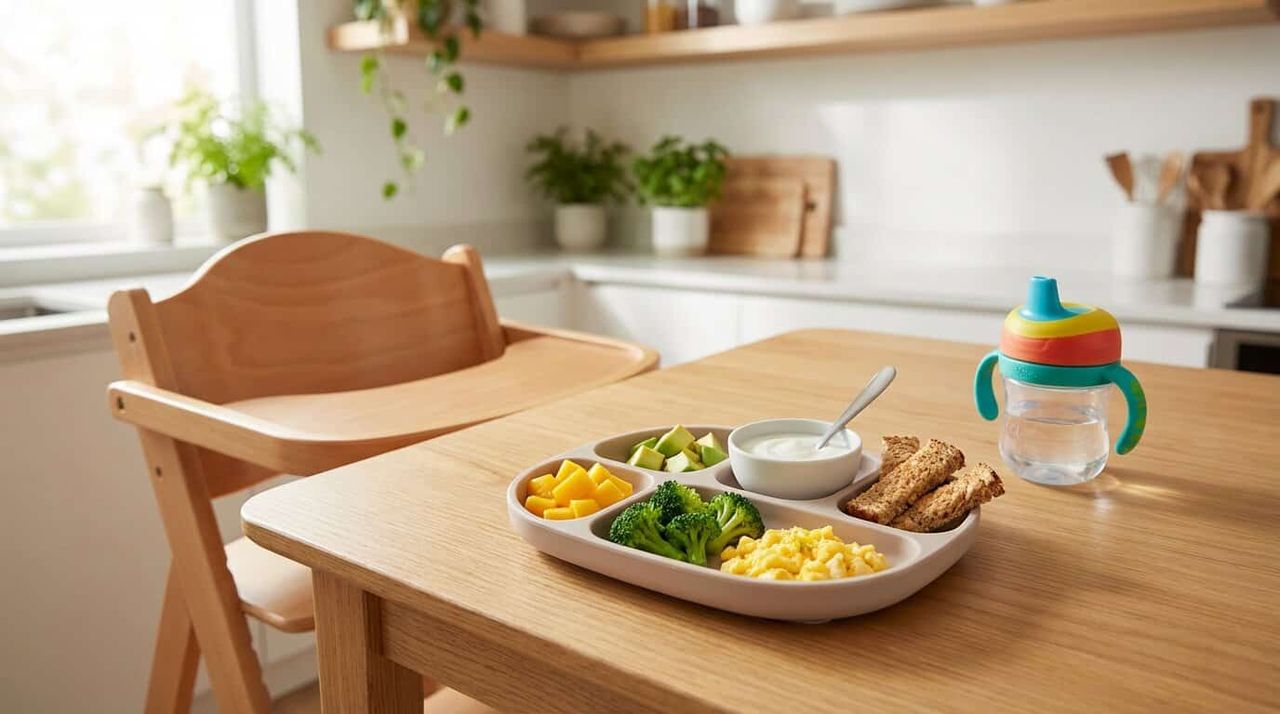
Navigating the feeding journey in late infancy can feel like stepping into a whole new world. By the time your baby reaches the 11-month mark, their feeding schedule, appetite, and developmental needs have shifted dramatically from just a few months earlier. The transition from mostly-milk nutrition toward a solid-food-focused routine happens quickly, and parents often find themselves wondering exactly how much formula an 8-month-old needs, how many ounces a 7-month-old drinks, or what a 10-month-old should eat.
At a Glance: 11-Month-Old Feeding Schedule
- ✓ 20–24 ounces of formula per day
- ✓ 3 solid meals + 2 snacks
- ✓ About 50% of calories from solid foods
- ✓ 2–4 bottle feeds (6–8 ounces each)
- ✓ Preparing for transition to cow's milk at 12 months
How Feeding Evolves from 7 to 11 Months
From seven months onward, babies begin a meaningful transition in their nutritional architecture. Their digestive system matures, their oral-motor skills expand, and their caloric needs rise as they learn to move, crawl, and explore. Yet, throughout this entire window, formula or breast milk remains a key nutritional source.
How Much Formula for a 7-Month-Old?
At seven months, many babies still take 24–32 ounces of formula in 24 hours. A typical feeding routine for a 7-month-old includes 4–6 bottles, usually around 6–8 ounces each, spaced around solid meals.
7-Month Feeding Routine:
- ▸ 4–6 bottle feeds (6–8 ounces each)
- ▸ 2 solid meals (lunch + possibly evening porridge)
- ▸ Solids become more essential, but baby still gets most calories from milk
Eight-Month-Old Feeding Patterns
By eight months, babies have typically added a third meal and are more engaged with textures. Parents often ask how much formula for an 8-month-old, and the answer is that intake usually remains similar to that at seven months, generally 24–32 ounces per day.
Foods become more adventurous. Find more details in our 8-Month Baby Food Guide.
How Much Formula Does a 9-Month-Old Need?
Nine months is when many babies start drinking slightly less milk and relying more heavily on solids for energy. Typical intake shifts to 24–30 ounces across the day. Babies this age usually drink 3–4 bottles, around 7–8 ounces each. This reduction in formula is normal, especially as motor skills develop and solid food becomes more exciting.
If your 9-month-old is drinking less milk:
- → Increased interest in table foods
- → Teething discomfort
- → Larger solid-meal portions
- → Developmental distractions
A consistent routine usually helps stabilize intake. More details in our 9-Month Nutrition Guide.
How Much Formula Should a 10-Month-Old Drink?
Many ten-month-olds settle around 20–30 ounces of formula daily. The shift toward three meals plus snacks is usually complete by now.
You may find your 10-month-old eating a diverse selection of soft foods or finger foods. For detailed information, check our 10-Month Baby Development Guide.
How Much Formula for an 11-Month-Old?
By eleven months, babies often drink 20–24 ounces of formula per day. There isn't a single right amount, your 11-month-old's formula intake may sit slightly above or below this range depending on appetite, growth, and how well they're eating solids.
A typical baby drinks around three bottles of 6–8 ounces each. By this stage, formula is still nutritionally important, but solids provide roughly half of daily calories. This prepares babies beautifully for the 12-month transition to cow's milk.
Developing an 11-Month-Old Feeding Schedule
A well-rounded 11-month-old feeding schedule blends three solid meals, two snacks, and 2–4 milk feeds each day.
Sample Daily Schedule for 11-Month-Old:
- 🌅 Morning: Milk (6–8 oz) shortly after waking
- 🥣 Breakfast: An hour later, such as oatmeal, fruit, or scrambled eggs
- 🍌 Morning snack: Yogurt or avocado
- 🍽️ Lunch: With soft proteins, grains, and veggies
- 🍼 Midday: Milk (6–8 oz)
- 🫐 Afternoon snack: Fruit slices or soft cheese
- 🍲 Dinner: With balanced textures and flavors
- 🌙 Bedtime: Milk (6–8 oz) as part of wind-down
This rhythm respects hunger patterns, nap times, and developmental readiness for structured meals. Tips for a relaxed start to solid foods can be found in our comprehensive guide.
Your baby's own 11-month feeding schedule
The Starting Solids app builds a daily schedule with meals, formula amounts, and snack times matched to your baby's exact age and pace.
Texture Progression Toward Toddler Eating
At 11 months, babies often handle:
- ✓ Soft bite-sized pieces
- ✓ Finely chopped foods
- ✓ Early self-feeding with pincer grasp
- ✓ A mix of spoon-fed and self-fed meals
Some continue with purees, though most infants naturally migrate toward table foods by this age. Learn more about solid foods for babies here.
Water Intake and Cup Skills
Between 9 and 12 months, it's safe to offer 4–8 ounces of water in an open cup, straw cup, or soft-spout cup. Learning to sip water alongside meals helps with hydration and chewing coordination.
Why Formula Intake Drops Over Time
Parents often worry when formula amounts shift downward in the last stretch before the first birthday. Yet this decrease from 7 to 11 months is expected:
- ✓ Babies grow slower than in early infancy
- ✓ Solids replace calories once provided solely by milk
- ✓ Motor skills increase energy needs but also regulate hunger cues
- ✓ Appetite fluctuates due to teething or developmental leaps
As long as your baby drinks between 20–32 ounces through this period and grows steadily, variations are normal.
Aging Up: How This All Leads to the One-Year Transition
The final weeks before turning one set the stage for toddler nutrition. Around the first birthday, babies shift from formula to whole milk (unless advised otherwise by a pediatrician). Understanding formula needs now, whether it's how much formula a 9-month-old drinks, how many ounces a 10-month-old needs, or how much formula an 11-month-old finishes, helps make that transition smoother.
Learn more about timing in our article How Long to Use Formula.
For everything else that is typical this month, including development, sleep and a sample daily routine, see our overview 11 Month Old Baby: Development, Feeding, Sleep & Daily Routine.
Final Thoughts on Late-Infancy Feeding
An 11-month-old feeding schedule in practice means:
- ✓ 20–24 ounces of formula across 2–4 bottles
- ✓ 3 main meals + 2 snacks with solid foods
- ✓ Approximately 50% of calories from solids, 50% from milk
- ✓ Responsive feeding: Following hunger cues, not forcing
- ✓ Preparing for transition to cow's milk at 12 months
From seven to eleven months, feeding evolves rapidly. Whether you're working out the right formula amount by age or shaping a predictable daily routine, the goal remains the same: balanced nutrition, responsive feeding, and exposure to a broad palate of foods.
As long as your baby takes in the appropriate range of formula and is engaging happily with solids, they are right on track.