Babies at 10 months are in the middle of a phase full of motor skill progress, new social interactions, and intense curiosity. At the same time, many parents notice that their baby is temporarily clingy, restless, or "out of rhythm" – typical signs of a possible leap around 10 months.
This comprehensive guide shows you everything about development, nutrition, and typical challenges with babies at 10 months – with practical tips for everyday life.
Development: What Babies at 10 Months Can Do
The 10th month brings significant changes. The WHO (World Health Organization) and pediatric associations emphasize that this phase is crucial for motor and cognitive development.
Motor Development
- ▸ Crawling or scooting: Many babies now crawl confidently or scoot very quickly
- ▸ Pulling to stand: Independently pulling up on furniture
- ▸ Cruising: Walking sideways along furniture
- ▸ Pincer grasp: Important for BLW & self-feeding
- ▸ Practicing balance: Attempting to stand unsupported
Cognitive & Social Development
- ▸ Simple commands are understood ("Get the ball")
- ▸ Better understanding of cause and effect
- ▸ Pointing, imitating & more social interaction
- ▸ First problem-solving strategies (sorting objects, stacking)
The 10-Month Leap – What's Behind It?
The so-called 10-month leap ("World of Categories" according to The Wonder Weeks) describes a phase when babies increasingly recognize structures, sequences, and connections.
Common Signs of the 10-Month Leap
- • Increased need for closeness: Baby is clingier than usual
- • Sleep problems: More restless nights, more frequent waking
- • Frustration: Strong reactions when trying new skills
- • Reduced appetite: Temporarily less interest in eating
- • Fussy days: More crying, whining
How Parents Can Help
- ✓ Lots of physical contact – Cuddling, carrying, providing closeness
- ✓ Familiar routines – Rituals provide security
- ✓ Safe movement opportunities – Space to explore
- ✓ Patient support – With eating & sleeping
Nutrition: Eating at 10 Months
At 10 months, babies usually eat several meals daily. Nutrition builds on baby food at 9 months and becomes even more varied now.
Typical Daily Structure
| Meal | Recommendation |
|---|---|
| Breakfast | Bread, oatmeal, fruit |
| Lunch | Vegetable-potato-meat/fish puree or family food |
| Snack | Fruit-grain puree or finger food |
| Dinner | Milk-grain porridge or BLW dinner |
Puree Ideas with Thermomix
With the Thermomix, you can quickly prepare nutritious purees:
- ▸ Carrot puree – A classic for starting out
- ▸ Pumpkin puree – Mild and slightly sweet
- ▸ Potato-vegetable puree – Filling
- ▸ Evening porridge – Perfect for nighttime
Oils in Baby Food
A teaspoon of rapeseed or olive oil provides essential fatty acids and improves the absorption of fat-soluble vitamins.
Finger Food & BLW at 10 Months
The pincer grasp is now well-developed – perfect for self-feeding! If you want to learn more about Baby-Led Weaning, read our comprehensive guide.
Suitable Finger Foods:
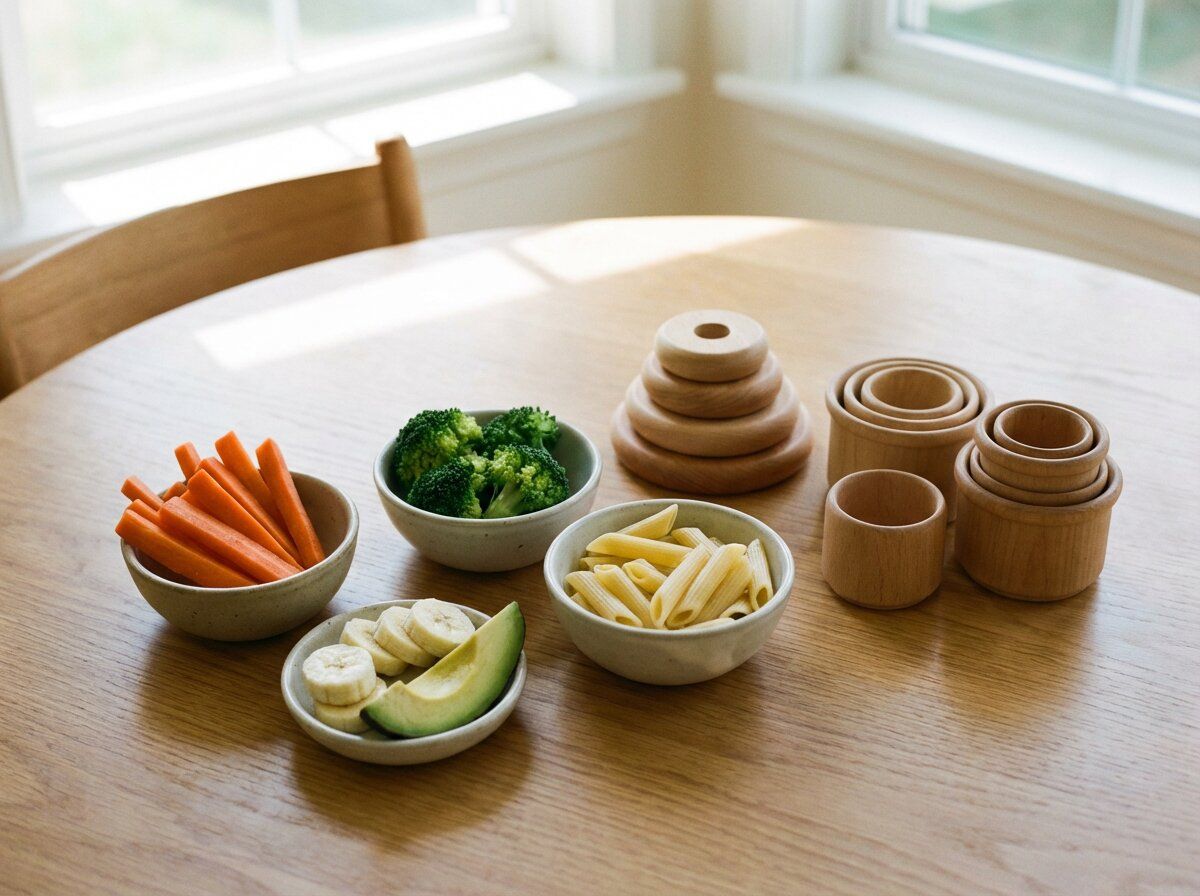
- ✓ Soft vegetable sticks (carrot, sweet potato, zucchini)
- ✓ Pasta, bread, pancake strips
- ✓ Avocado, soft pear, banana
Important: Gagging is normal – it's a protective reflex. Stay calm and offer soft textures!
Portion Sizes (Guidelines)
- • Lunch puree: ~180–220 g
- • Fruit-grain puree: ~120–150 g
- • Evening porridge: ~150–200 g
- • Finger food: according to hunger
In our Food Database, you'll find all suitable ingredients for your 10-month-old baby.
Your Feeding Roadmap for Month 10
From lunch purees to family meals, the app gives you the right portion sizes and recipe ideas for month 10, so you always know how much and what to serve.
Sleep Patterns at 10 Months
Many babies at 10 months sleep:
- ▸ 10–12 hours at night (with possible wake-ups)
- ▸ 2 daytime naps (morning and afternoon)
During the leap: Sleep may temporarily become more restless – this is completely normal and will pass!
Communication & Language
Language development makes great progress at 10 months:
- ▸ Sound repetitions ("bababa", "mamama")
- ▸ "Mama"/"Dada" are used more purposefully
- ▸ Gestures & pointing increase
- ▸ First understanding of daily routines
Activity Ideas for Babies at 10 Months
Playful activities support development:
- ✓ Stacking cups & sorting toys – Promotes fine motor skills
- ✓ Books with flaps – Cause-and-effect understanding
- ✓ Crawling paths / motor skill courses – Gross motor skills
- ✓ Water & sensory play – Sensory experiences
- ✓ Large blocks – Stacking and knocking over
Safety at Home
With increasing mobility, safety becomes even more important:
- ! Secure furniture – Anti-tip devices for pulling up
- ! No small parts – Choking hazard
- ! Stair gates – Top and bottom
- ! Non-slip socks or barefoot – For secure footing
Conclusion: Babies at 10 Months – An Exciting Time
At 10 months, your baby experiences an intensive developmental phase. Key points:
- ✓ Motor skills make great progress (crawling, standing, pincer grasp)
- ✓ The 10-month leap can cause restlessness – it will pass
- ✓ Nutrition becomes more varied with purees, finger foods, and family meals
- ✓ Patience, closeness, and a safe environment help through this phase
Every baby develops at their own pace. Trust your child's signals and enjoy this exciting time together!
Sources & Scientific Recommendations
- ▸ World Health Organization (WHO) – Feeding and Nutrition of Infants and Young Children
- ▸ American Academy of Pediatrics (AAP) – Developmental milestones and nutrition guidelines
- ▸ EFSA – Scientific Opinion on nutrient requirements for infants
- ▸ The Wonder Weeks (Van de Rijt & Plooij) – Foundation for developmental leaps