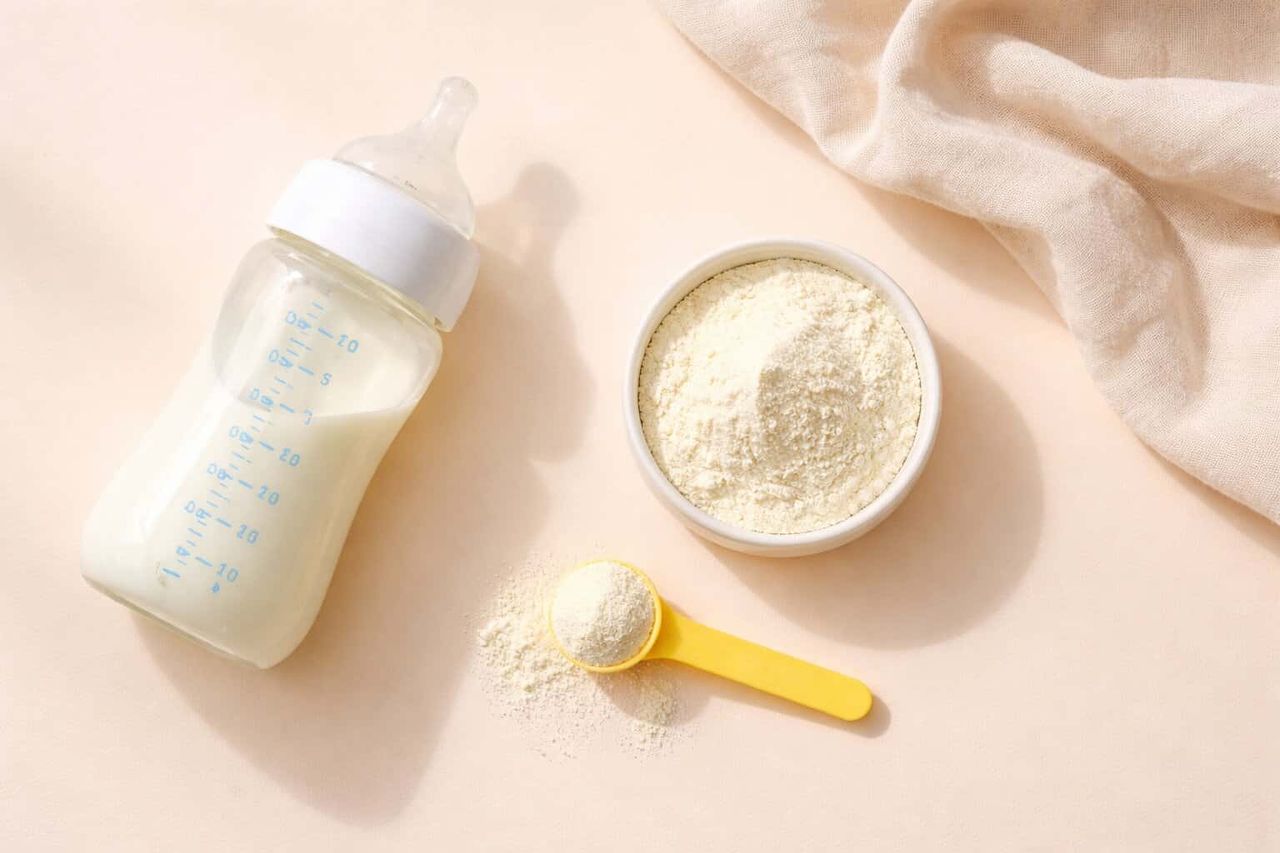
One of the most common questions new parents ask is how long do babies drink formula. Whether you are exclusively formula feeding or combining formula with breastfeeding, it's natural to wonder how long your baby will rely on it and when the transition to other foods and drinks begins.
The short answer is that most babies drink formula for the entire first year of life. During that time, formula provides the key nutrients babies need while their bodies and digestive systems continue to develop. Around their first birthday, most babies are ready to transition away from formula and move toward whole milk and solid foods.
However, the process isn't sudden. Babies gradually move from relying completely on milk to eating a wider variety of foods. Understanding how long babies drink milk, when solids are introduced, and when babies stop drinking milk as their main nutrition source can make the journey feel much easier for parents.
Key Takeaways
- ▸ Most babies drink formula until about 12 months of age
- ▸ Formula remains the primary nutrition source even after solids begin around 6 months
- ▸ At 12 months, most babies transition from formula to whole cow's milk
- ▸ Some babies may stay on formula longer due to allergies or medical needs
- ▸ Toddler formula is generally not necessary for healthy children
How Long Do Babies Drink Formula?
If you're wondering how long do babies drink formula, the general recommendation from pediatric experts is until about 12 months of age. For babies who are not breastfed, formula serves as their main source of nutrition throughout the first year.
Formula is carefully designed to provide the balance of nutrients infants need while their bodies grow quickly during the first year. It contains protein, healthy fats, vitamins, and minerals that support brain development, growth, and immune health.
Many parents also ask how long are infants on formula or how long do babies stay on formula. In most cases, the timeline looks something like this:
- ▸ Birth to 6 months: Formula (or breast milk) is the baby's only source of nutrition.
- ▸ Around 6 months: Solid foods are introduced, but formula still provides most of the calories.
- ▸ 6–12 months: Babies eat more solids, yet formula remains an important part of their daily diet.
- ▸ Around 12 months: Many babies transition from formula to whole milk.
So when parents ask how long do babies need formula, the answer is typically about the first year of life, unless a pediatrician recommends something different.
Why Babies Need Formula During the First Year
Babies grow more during their first year than at almost any other time in life. Because of this rapid development, they need food that is easy to digest and packed with nutrients.
Formula is created specifically for infants. It provides:
- ▸ Iron for healthy blood development
- ▸ Healthy fats for brain growth
- ▸ Protein for muscle and body development
- ▸ Vitamins and minerals for the immune system and bones
Regular cow's milk does not have the right balance for infants. It contains too much protein and minerals for a baby's developing kidneys to handle easily. That's one reason pediatricians recommend waiting until about 12 months before introducing it as a main drink.
During the first year, formula acts as a nutritional bridge while babies grow strong enough to eat a more varied diet.
When to Introduce Formula
Some babies start formula from birth, while others receive it later. Parents often wonder when to introduce formula if they are breastfeeding or considering combination feeding.
Formula may be introduced:
- • At birth, if parents choose formula feeding
- • As a supplement, if breast milk supply is low
- • When parents return to work, making exclusive breastfeeding difficult
- • If a baby is not gaining enough weight
Many families use both breast milk and formula, a practice often called combo feeding. In these cases, formula can help ensure babies are getting enough nutrition while still allowing breastfeeding when possible. Learn more in our guide on combining breastfeeding and formula.
How Long Do Babies Drink Milk?
Another common question parents ask is how long do babies drink milk in general.
Milk, either breast milk or formula, is the primary nutrition source for about the first year. After solids are introduced, milk remains important, but it slowly becomes less dominant in the baby's diet.
By around 9–12 months, many babies are eating several solid meals a day. Even then, they still drink formula or breast milk regularly. You can learn more about how long to give Pre formula specifically in our detailed guide.
After their first birthday, babies usually transition to whole milk and continue drinking milk as toddlers. However, the amount gradually decreases as their diet becomes more balanced with fruits, vegetables, grains, and protein foods.
Is your baby ready for solids?
The Starting Solids app reads your baby's readiness signs and builds a personalized plan that introduces solid foods at the right pace, while milk stays the base.
Introducing Solid Foods While Using Formula
Around 6 months old, babies typically begin trying solid foods. This doesn't mean formula is suddenly less important. Instead, solids are meant to complement milk, not replace it right away.
At first, babies eat only small amounts of foods such as:
- • Pureed vegetables
- • Mashed fruits
- • Baby cereals
- • Soft finger foods
During this stage, formula still provides most of their calories and nutrients. As months pass, babies become more comfortable with textures and flavors. They begin eating larger meals and drinking slightly less formula. This gradual shift is a normal part of development. Check out our complete guide to starting solids for more details.
When Do Babies Stop Drinking Milk as Their Main Nutrition?
Parents often ask when do babies stop drinking milk as their main food.
Milk remains a key part of a baby's diet throughout the first year. But as babies approach their first birthday, solids begin to play a larger role.
Around 12 months, many babies:
- ✓ Eat three solid meals a day
- ✓ Enjoy snacks between meals
- ✓ Drink less formula than before
This is usually when parents begin transitioning away from formula. However, milk still remains part of the diet after that, just not as the main source of nutrition. For a detailed look at feeding at this age, see our guide on baby nutrition at 1 year.
Transitioning From Formula to Whole Milk
Once babies turn one, most pediatricians recommend transitioning from formula to whole cow's milk. The change usually happens gradually rather than overnight.
A common method is mixing formula and milk together for a short period:
Step 1
Start with mostly formula and a small amount of milk.
Step 2
Slowly increase the milk over several days.
Step 3
Eventually switch completely to milk.
This helps babies adjust to the new taste and texture. At the same time, many families start moving from bottles to cups. This supports healthy dental development and helps toddlers learn independent drinking skills.
Situations Where Babies May Stay on Formula Longer
While most babies stop formula around 12 months, some may stay on it longer depending on their needs.
- • Premature babies may need specialized formula for additional nutrition while they catch up in growth.
- • Babies with allergies, such as a cow's milk protein allergy, might require special formulas beyond their first birthday.
- • Children with certain medical conditions may also benefit from formula longer if recommended by a healthcare provider.
In these situations, a pediatrician will guide parents on how long babies stay on formula and when the right time is to transition.
Keep milk volume and feeding frequency in view
The app helps you log bottle feeds and milk amounts, so you can see at a glance whether your baby is still drinking within the recommended range as solids take up more space.
Do Toddlers Need Toddler Formula?
After babies turn one, many parents notice products labeled "toddler formula" or "growing-up milk." These products are heavily marketed, but most healthy toddlers do not need them.
- ✗ Toddler formulas are often more expensive than regular milk
- ✗ They sometimes contain added sugars
- ✗ A balanced diet with regular whole milk is usually sufficient
For the majority of children, a balanced diet and regular whole milk provide everything they need.
Signs Your Baby Is Ready to Reduce Formula
Every child develops at their own pace, but some signs suggest a baby is naturally moving away from formula:
- ✓ Eating more solid foods at mealtimes
- ✓ Showing interest in family meals
- ✓ Drinking from a cup
- ✓ Gradually taking fewer bottles
This transition is usually smooth because babies naturally shift toward solid foods as they grow.
The First Year: A Summary
- ✓ Birth to 12 months: Formula or breast milk is the primary nutrition source
- ✓ Around 6 months: Solid foods begin
- ✓ Around 12 months: Babies transition away from formula
- ✓ After 12 months: Whole milk and a balanced diet take over
Understanding how long do babies drink formula helps parents feel more confident about feeding decisions. With patience and gradual changes, the transition from formula to regular foods becomes a natural part of your child's development.
When the formula year ends, these guides pick up the story: how to switch baby from formula to milk walks through the handover at 12 months step by step, how much milk a toddler should drink from 12 to 24 months and how much milk a 15 month old should drink cover the amounts afterwards, and the 15 month old feeding schedule shows a full day of meals, snacks and milk. If you are still in the first year, will my baby drink less milk when starting solids answers the question that comes first.