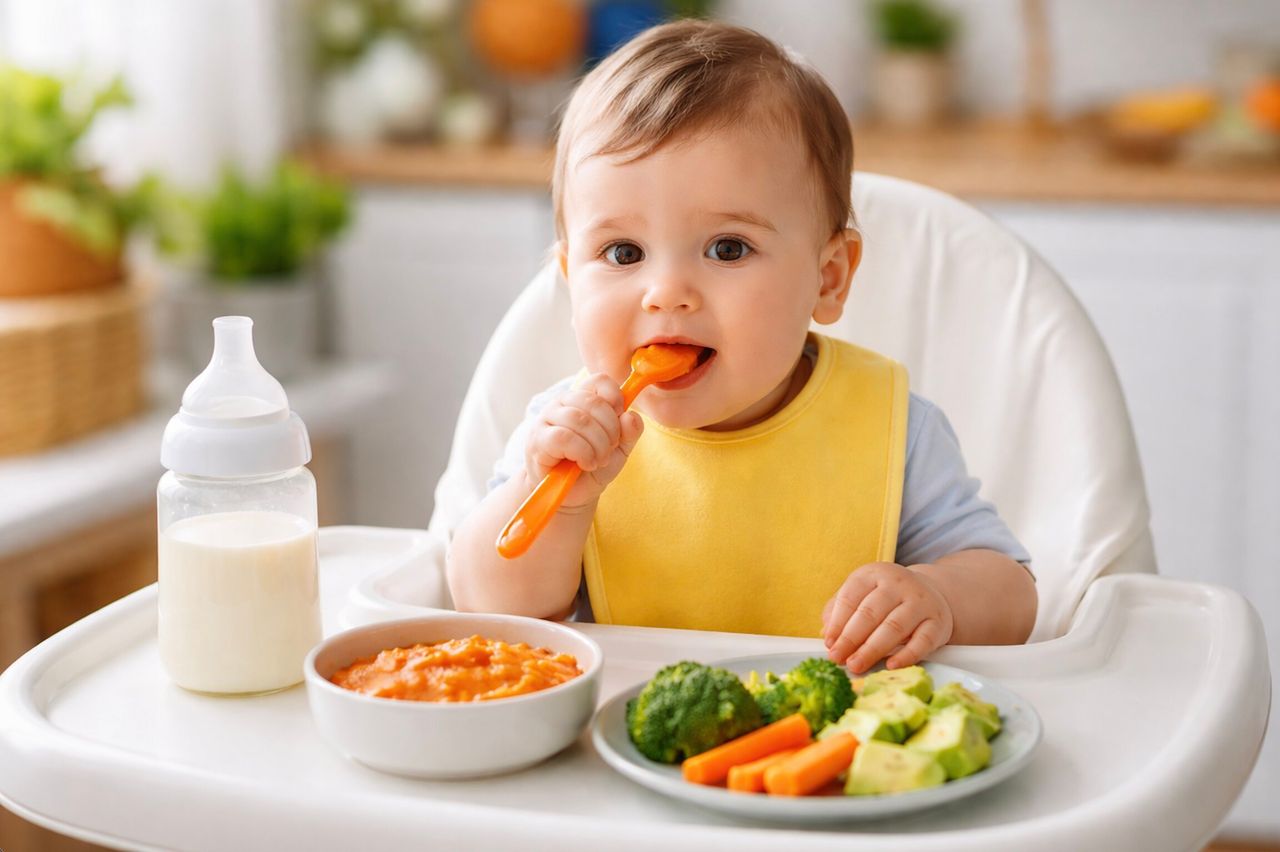
Starting solids is an exciting milestone, but it can also bring a lot of questions. One of the most common concerns parents have is: will my baby drink less milk when starting solids?
The short answer is: yes, eventually, but not right away, and not in a way you need to worry about. This transition is gradual, natural, and actually a sign that your baby is developing exactly as they should.
Key Takeaways
- ▸ Babies do drink less milk when starting solids, but gradually over weeks and months
- ▸ Milk remains the primary nutrition source throughout the entire first year
- ▸ A 6 month old drinking slightly less milk is usually completely normal
- ▸ Timing of milk vs. solids matters, offer milk first in early months
- ▸ Trust your baby's hunger and fullness cues throughout the process
What Happens When You Start Solids?
When you begin introducing solid foods, usually around 6 months, your baby isn't suddenly switching diets. Instead, they're entering a learning phase.
At this stage:
- ▸ Milk (breast milk or formula) is still the main source of nutrition
- ▸ Solids are more about exploration, taste, and skill-building
- ▸ Intake of solids is often very small at first
So if you're wondering: do babies drink less milk when they start solids?, not immediately. In the beginning, most babies continue drinking roughly the same amount of milk.
Do Babies Drink Less Milk When They Start Solids?
Over time, yes, but it's gradual and expected. As your baby eats more solid food, develops chewing and swallowing skills, and gets fuller from meals, they naturally begin to reduce milk intake slightly.
This is called nutritional displacement, solids start to take up space in your baby's tummy. But here's the key point:
Milk remains essential throughout the first year. Even as solids increase, breast milk or formula still provides important fats for brain development, immune support, and easily absorbed nutrients.
6 Month Old Drinking Less Milk, Should You Worry?
If your 6 month old is drinking less milk, it can feel concerning, but in many cases, it's completely normal. Here's how to tell the difference between normal and concerning changes:
✅ Normal Signs
- Slightly shorter feeds
- Small drop in total milk intake
- More interest in food
- Still having wet diapers and gaining weight
⚠️ Worth Checking
- Refusing milk entirely
- Fewer wet diapers
- Poor weight gain
- Extreme fussiness or lethargy
In most cases, a small decrease is simply your baby adjusting to new foods. If you're concerned, always check with your pediatrician.
Do Babies Drink Less Breast Milk When They Start Solids?
Yes, but often more gently than formula-fed babies. If you're continuing to breastfeed alongside solids, breastfed babies tend to:
- ▸ Self-regulate intake very effectively
- ▸ Adjust feeding frequency naturally
- ▸ Continue nursing for comfort as well as nutrition
The answer is yes, but it's usually gradual and baby-led, not abrupt. Many health organizations recommend breastfeeding alongside solids for at least 12 months or longer.
How Long After Solids Should I Give Milk?
Timing matters, especially in the early months. Here's a simple guideline:
6–8 Months
Offer milk first, then solids about 30–60 minutes later. This ensures your baby gets enough primary nutrition from milk.
9–12 Months
You can begin offering solids first, then milk afterward. This helps gradually shift nutrition toward food.
A simple rule: early months → milk first, later months → solids first.
Breastfeeding and Weaning Onto Solids
For parents who are breastfeeding and weaning onto solids, it's important to understand that weaning doesn't mean stopping breastfeeding immediately. It's a slow transition, not a switch. Breastfeeding can continue well beyond 1 year.
Many health organizations recommend breastfeeding alongside solids for at least 12 months or longer. Learn more about the key infant feeding milestones to know what to expect at each stage.
Am I Feeding My Baby Too Much Solid Food?
Because solids are exciting, it's easy to unintentionally overdo it. Here are some helpful indicators:
Signs of Too Much Solid Food
- Baby refuses milk regularly
- Frequent spit-up or vomiting
- Gassiness or discomfort
- Rapid drop in milk intake before 9 months
Signs You're on Track
- Baby shows interest but doesn't overeat
- Milk intake remains steady
- Baby stops eating when full
- Growth and diapers are normal
Remember: solids complement milk, not replace it (until around 12 months). Check out our guide on how long babies drink formula for more detail on milk's role in the first year.
A Simple Timeline to Follow
6–7 Months
1 small meal per day. Milk remains primary nutrition.
8–9 Months
2 meals per day. Slight, gradual decrease in milk intake.
9–12 Months
3 meals + snacks. Noticeable but gradual drop in milk.
After 12 Months
Solids become the main source of nutrition. Milk becomes a complement.
Track Milk and Solids Side by Side
With the Grubsy app, you can log milk feeds and solid meals together and instantly see how the balance shifts week by week, so you always know if your baby is getting enough.
The Role of Iron, Why It Matters
Around 6 months, babies need more iron than milk alone can provide. That's why early solid foods should include:
- ▸ Iron-fortified cereals
- ▸ Meat, poultry, or fish
- ▸ Lentils and beans
If solids replace too much milk without providing adequate iron, it can lead to deficiencies. Balance is key.
Trusting Your Baby's Appetite
One of the most important things to understand is that babies are naturally good at regulating their intake. They eat when hungry, stop when full, and adjust milk and food intake automatically.
Your role is to offer balanced options, respect their cues, and avoid pressure. If your baby suddenly drinks less milk due to teething, illness, or distractions, keep offering milk regularly and try feeding in a calm environment. Intake usually returns to normal.
Final Thoughts
Starting solids is less about replacing milk and more about expanding your baby's world, new tastes, textures, and experiences. If your baby starts to drink slightly less milk, that's not a problem, it's progress.
As long as your baby is growing well, having regular wet diapers, and is active and alert, you can feel confident that things are moving in the right direction.
- ✓ Yes, babies do drink less milk when they start solids, but gradually
- ✓ Milk remains essential throughout the first year
- ✓ A 6 month old drinking less milk is often normal
- ✓ Trust your baby's hunger and fullness cues
The milk story continues past the first birthday. Our guide on how to switch baby from formula to milk covers the handover at 12 months, how much milk a toddler should drink from 12 to 24 months and how much milk a 15 month old should drink give the amounts for the second year, and the 15 month old feeding schedule shows where milk fits between meals and snacks.