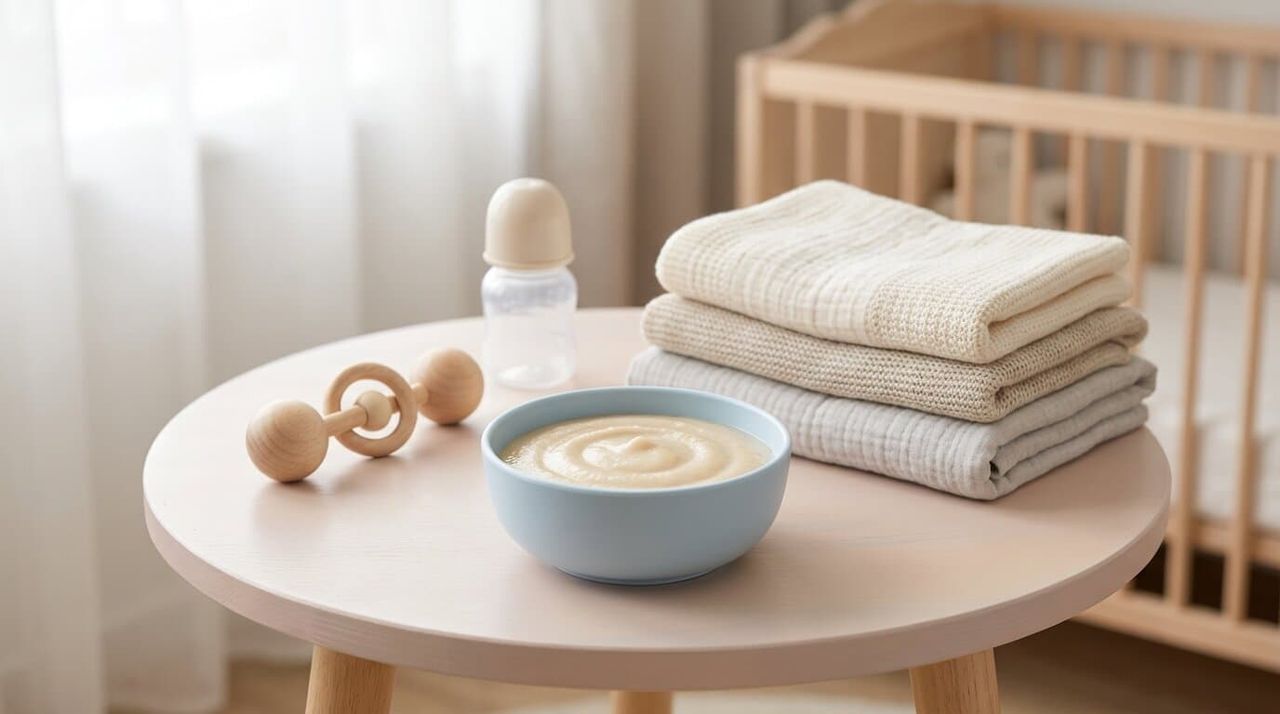
Starting your little one on solid foods is one of the biggest milestones of early parenthood. For many families, baby cereal at 4 months is the first step toward a lifetime of exploring flavours, textures and healthy eating habits. But with so many opinions, brands and guidelines floating around, it can feel overwhelming.
This easy-to-read guide breaks down everything you need to know – without scientific jargon – so you can confidently choose the best baby cereal, understand when your 4-month-old might be ready, and make mealtime safe and enjoyable.
Key Takeaways
- ▸ Baby cereal is mild, easy to digest and iron-fortified – ideal as a first food
- ▸ Most guidelines recommend starting solids around 6 months, but many babies show readiness between 4 and 6 months
- ▸ Oatmeal cereal is today's most popular first choice
- ▸ Cereal in a bottle is not recommended – spoon-feeding is safer
- ▸ At the beginning, 1–2 teaspoons per meal is perfectly enough
Why Baby Cereal Is Often the First Food
For decades, baby cereal has been a gentle first choice because it is:
- • Mild in taste
- • Easy to digest
- • Simple to mix with breast milk or formula
- • Fortified with iron, which babies start needing more of around this age
Many parents look specifically for the best infant cereal to start with. While rice cereal was long the standard, oatmeal has become today's favourite – especially because it is considered particularly gentle and nutrient-rich. For a comprehensive overview of different grain types, check out our article on cereal porridge for babies.
Is 4 Months Too Early for Baby Cereal?
Most guidelines suggest starting solids around 6 months, but many babies show readiness between 4 and 6 months. The key is not the age – it's the signs of readiness.
Signs Your Baby Might Be Ready:
- ▸ Good head and neck control
- ▸ Able to sit with support
- ▸ Shows interest in your food
- ▸ Opens mouth for the spoon
- ▸ Less tongue-thrust reflex (not automatically pushing food out)
If your baby shows these skills, an infant cereal at 4 months may be appropriate – always double-check with your paediatrician. For more on readiness signs, see our detailed guide on complementary feeding readiness.
Choosing the Best First Cereal
Parents often wonder: What is the best baby cereal to start with? Is oatmeal okay for a 4-month-old? Should I use rice cereal or something else? Here is a simple breakdown.
Oatmeal Cereal (Most Recommended Today)
Gentle on the stomach, lower in unwanted environmental residues than rice, great texture and easy to prepare. Perfect as baby cereal stage 1.
Barley Cereal
Nutty flavour, easy to digest and a nice step after oatmeal.
Multigrain Cereal
For babies who already tolerate single grains. More flavour and variety.
Rice Cereal (Use in Rotation)
Rice cereal used to be the standard, but many parents now rotate it with other grains. It is still safe to offer, just not as the only cereal every day.
How to Prepare Baby's First Cereal
Starting solids should be relaxing, simple and fun.
Basic First-Time Recipe
1 tbsp baby cereal + 4 tbsp breast milk or formula
Stir until it is thin like "soupy milk." This helps new eaters practise swallowing safely. Gradually, you can make it thicker as your baby gets the hang of things.
How Much Should a 4-Month-Old Eat?
At first, only 1–2 teaspoons may actually make it into the mouth. That is perfectly normal!
Solids at this stage are about:
- ▸ Learning – Discovering new textures and flavours
- ▸ Exploring – Practising with spoons and food
- ▸ Practising – Training swallowing and oral motor skills
Your baby will still get most of their nutrition from breast milk or formula. To learn more about how the entire process works, check out our starting solids guide.
Best Baby Cereal Brands to Start With
Here are trusted, widely loved brands for getting started:
Gerber
Wide range of stage 1 cereals, easy to mix and available in most stores.
Earth's Best
Organic options popular with parents who value clean ingredients.
Holle
Demeter-certified, especially popular in Europe for premium organic quality.
Little Spoon
Convenient delivery service with freshly prepared baby food options.
Track Which Brand and Amount Works Best
Whether you choose Gerber, Earth's Best, or Holle, the Starting Solids app lets you log which cereal your baby had, how many spoonfuls they ate, and how they reacted, so you can quickly see what's working.
Cereal in a Bottle – Yes or No?
Many parents still ask whether adding cereal to a bottle helps babies sleep longer.
The Answer: No.
Experts strongly recommend: no cereal in bottles (unless a doctor specifically instructs it). Keep cereal for spoon-feeding only. It helps babies learn important feeding skills and avoids choking risks.
What If Baby Gets Constipated or Fussy?
This happens sometimes when starting solids.
Tips:
- ▸ Switch from rice cereal to oatmeal
- ▸ Offer a little more breast milk or formula
- ▸ Make the cereal slightly thinner
If constipation is severe, call your paediatrician.
Allergy Awareness
Cereal grains can sometimes trigger reactions in sensitive infants. Symptoms to watch for include:
- ▸ Vomiting
- ▸ Rash
- ▸ Diarrhoea
- ▸ Excess fussiness after feeding
These are uncommon but always worth monitoring. Try new foods one at a time with a 3-day wait between each introduction.
How Often Should You Offer Cereal?
At 4 months:
1 small serving a day is plenty.
By 6 months:
1–2 servings if your baby enjoys it. Variety becomes more important – gradually expand into fruits and vegetables.
What's the Best First Cereal for Infants?
The simplest recommendation:
Oatmeal is the best cereal to start infants on. It is gentle, smooth, low-residue and beginner-friendly – perfect for baby's first cereal.
A Sample Schedule for a 4-Month-Old Starting Cereal
Morning
1–2 teaspoons of cereal
Rest of the day
Normal bottles or breastfeeding
That's all. No pressure, no forcing, no rush.
Keeping Mealtime Positive
Your baby should guide the experience. Look for:
Hunger Cues
Leaning forward, excited arms or legs, opening mouth for spoon.
Fullness Cues
Turning head away, pushing the spoon out, getting distracted.
You're helping your baby learn to listen to their body – an amazing lifelong skill. If you'd like to dive deeper into starting solids at 4 months, check out our comprehensive guide on complementary food at 4 months.
Final Thoughts: Enjoy the Journey
The key points at a glance:
- ✓ Watch for readiness signs – age alone is not enough
- ✓ Oatmeal is the best cereal to start with
- ✓ Simple preparation – mix thin with breast milk or formula
- ✓ Responsive feeding – baby sets the pace and amount
- ✓ Variety over perfection – try different grains over time