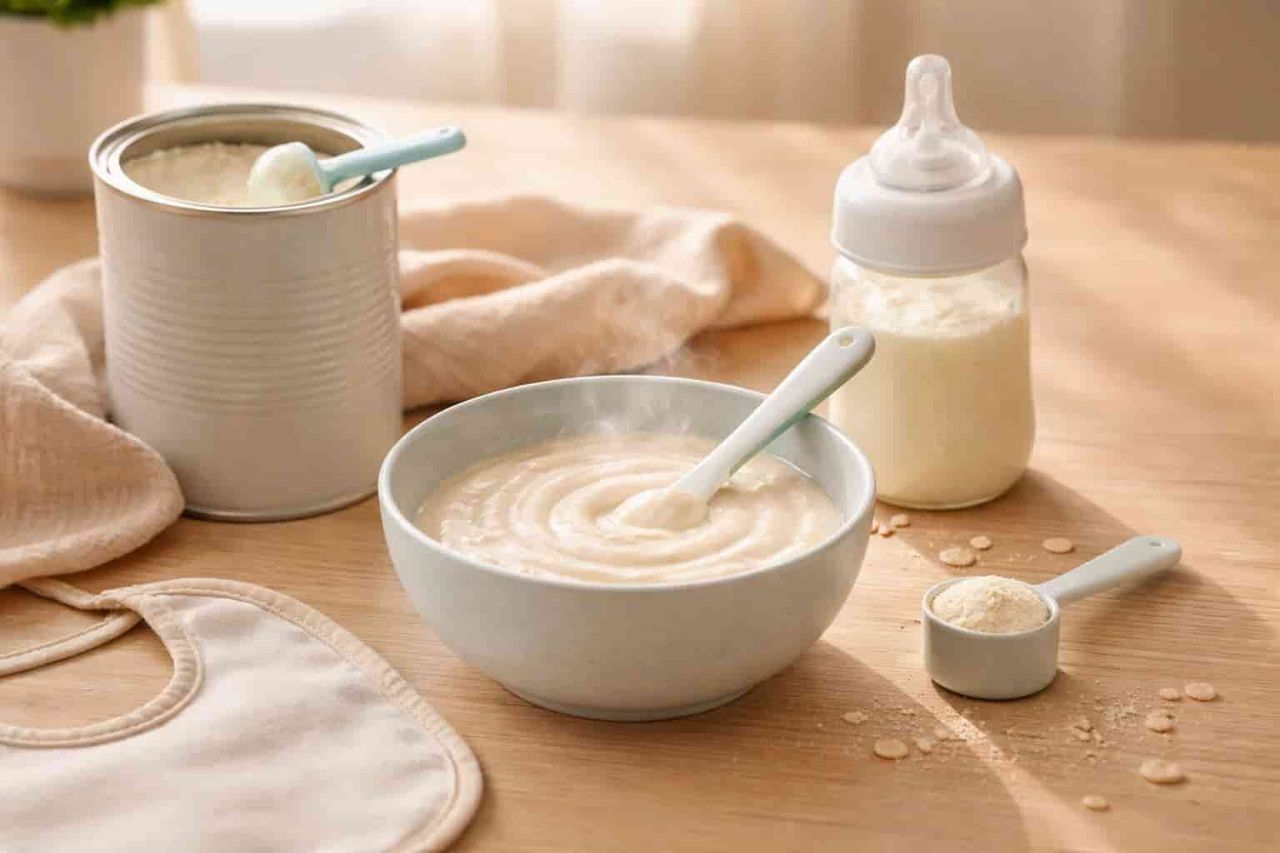
Starting solids is a big milestone for your baby, and for you too. One of the first foods many parents try is baby cereal, but a common question is: how do you mix baby cereal with formula or breast milk the right way?
This guide walks you through everything in simple terms, no confusing language, no stress.
Key Takeaways
- ▸ Mix 1 tablespoon cereal with 4–5 tablespoons of prepared formula or breast milk
- ▸ Start with a thin, soupy texture and thicken gradually
- ▸ Oatmeal cereal is the most recommended first choice
- ▸ Do not put cereal in a bottle unless your doctor says so
- ▸ Breast milk or formula remains the main nutrition source
When Can You Start Baby Cereal?
Most babies are ready for cereal around 4 to 6 months old. But age alone is not the deciding factor, you should look for readiness signs instead.
Signs your baby might be ready:
- • Can hold their head up steadily
- • Can sit with support
- • No longer pushes food out with their tongue
- • Shows interest in your food
If you are unsure whether your baby is ready, always check with your paediatrician. For a detailed look at all the readiness signs, read our guide on complementary feeding readiness.
How to Mix Baby Cereal with Formula (Step by Step)
This is the part most parents care about. The good news? It is very simple.
Basic Method
1 tablespoon baby cereal + 4–5 tablespoons prepared formula
Stir until smooth. The texture should be thin and runny at first, almost like soup, so your baby can practise swallowing safely.
As your baby gets used to eating, you can slowly make the mixture thicker by using less liquid.
Important tips
- ▸ Always use prepared formula (not dry powder directly)
- ▸ Mix slowly, adding liquid little by little to avoid lumps
- ▸ Check temperature on your wrist before feeding
How to Mix Baby Cereal with Breast Milk
You can absolutely use breast milk instead of formula, the steps are the same. However, there is one thing to keep in mind:
Good to know
Breast milk contains natural enzymes that can break down cereal over time, making the mixture more watery. For this reason, mix it right before feeding so it keeps the right consistency.
If you are combining breast milk and formula in your baby's diet, you might find our article on combining breastfeeding and formula helpful.
Formula and Cereal: What You Should Know
Using formula and cereal together is very common and perfectly fine.
- • Formula keeps the cereal texture more stable than breast milk
- • It will not thin out over time
- • Great if your baby prefers a consistent texture
Best Texture for Beginners
When you are just starting out, thinner is better. Your baby is learning how to eat, so go slow.
Week 1–2
Very smooth, almost liquid consistency.
Week 3+
Slightly thicker, like yoghurt. Soft but not too thick.
Should You Put Cereal in a Bottle?
Short answer: No (in most cases).
Why experts say no
- ▸ It increases the risk of choking
- ▸ Babies may overeat
- ▸ It does not actually improve sleep
Only add cereal to a bottle if your doctor specifically instructs you to for medical reasons.
What Type of Baby Cereal Is Best?
Not all baby cereals are the same. Here is a simple breakdown:
Oatmeal Cereal (Most Popular)
Gentle on the stomach, nutrient-rich and lower in environmental contaminants than rice. The top choice for most families today.
Barley Cereal
Nutty flavour, easy to digest and a nice second option after oatmeal.
Multigrain Cereal
Best for babies who already tolerate single grains. Offers more flavour and variety.
Rice Cereal (Use in Moderation)
Once the standard first cereal, rice can contain higher levels of arsenic. Safe to use in rotation, but not as the only cereal every day.
For a detailed comparison of different grain types and porridge options, check out our article on cereal porridge for babies.
How Much Baby Cereal Should You Give?
At the beginning (4–6 months)
1–2 tablespoons per feeding, once per day. Most of the food will end up outside the mouth, that is completely normal.
Later (7–8 months)
4–8 tablespoons per day, split across 2–3 meals.
Remember: breast milk or formula is still the main source of nutrition at this stage. For a more detailed, age-specific breakdown, see our guide on how many ounces of puree for a 7 month old.
Track Every Feeding and Amount in the App
Instead of counting spoonfuls, the Grubsy app helps you log every cereal feeding with formula or breast milk and see how your baby's portions grow week by week.
Mixing Tips That Make Life Easier
- 1. Add liquid slowly, pour it in little by little to prevent lumps
- 2. Warm liquid is fine, many babies prefer it slightly warm, but never hot
- 3. Stir thoroughly, make sure the mixture is smooth and lump-free
- 4. Always test temperature, a drop on your inner wrist should feel lukewarm
Safety Tips Every Parent Should Know
Important rules
- ▸ Throw away any leftovers after feeding, do not save cereal your baby already ate from
- ▸ Use clean bowls and spoons every time
- ▸ Do not microwave breast milk
- ▸ Fresh cereal: use within 2 hours
- ▸ Unused refrigerated cereal: up to 24 hours
What If Your Baby Doesn't Like It?
This is very normal. Babies often need 10–15 tries before they accept a new food.
- • Stay calm and patient
- • Offer only small amounts
- • Try again another day
- • Never force it
Mixing Cereal with Other Foods
Once your baby gets comfortable with plain cereal, you can start adding:
Fruit Purees
Mashed banana, apple or pear, adds natural sweetness and vitamins.
Vegetable Purees
Carrot, sweet potato or pumpkin, introduces savoury flavours early.
This helps improve taste, add nutrients and build healthy eating habits from the start. If you want more ideas for what to serve, have a look at our starting solids guide.
Final Thoughts
The key points at a glance:
- ✓ Start thin and simple, 1 tbsp cereal to 4–5 tbsp liquid
- ✓ Watch your baby's cues, hunger and fullness signals guide the pace
- ✓ Use safe feeding practices, clean utensils, proper storage, no bottle cereal
- ✓ Go at your baby's pace, there is no rush
- ✓ Oatmeal is the top pick, gentle, nutritious and easy to prepare
Whether you are using breast milk, formula, or both, what matters most is that your baby is safe, happy and learning. For a complete overview of the very first stage of solid foods, check out our baby cereal at 4 months guide.