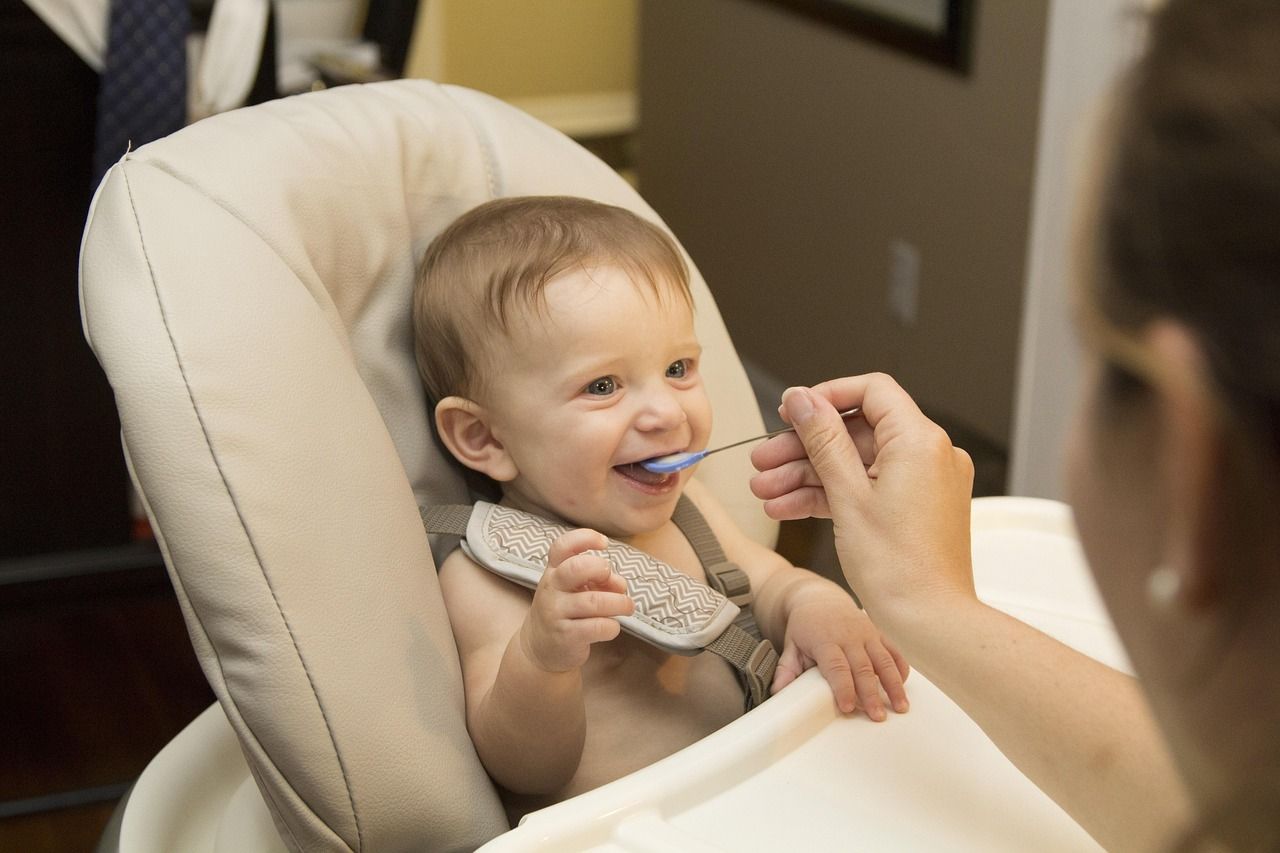
When your baby gags during feeding, it often looks dramatic – especially at the beginning of complementary feeding. Many parents fear their child will choke or suffocate. At the same time, numerous complementary feeding guides describe that gagging is a typical part of learning to eat and usually remains an important protective mechanism (Baby Ida Isst).
⚠️ Important Notice
This article is meant to help you better assess gagging – without promising a diagnosis or "scientifically proving" anything. If you're uncertain or have a bad feeling, always: better to see your pediatrician one more time or call emergency services.
1. What Happens When a Baby Gags During Feeding?
Many parents eventually google "baby gagging during feeding" or "baby gagging on puree" – and end up in forums, experience reports, and complementary feeding blogs.
In many reputable complementary feeding guides, gagging is described as follows (Baby Ida Isst):
- ▸ Gagging is a protective reflex in the mouth and throat area
- ▸ In babies, this reflex is initially located further forward on the tongue than in adults
- ▸ When unfamiliar food goes "too far" back or the amount in the mouth is too large, the tongue works against it and pushes the food forward
- ▸ This acts like a small "alarm" that says: "Wait, that was too much for me."
Especially at the beginning of complementary feeding – whether puree or finger food – it's therefore completely typical for a baby to gag on puree, small crumbs, or new textures.
Important:
Gagging can still be uncomfortable or exhausting for your child. If you're worried, talk to your pediatrician – this text does not replace medical examination.
2. Gagging vs. Choking/Suffocating – The Most Important Difference
Perhaps the most important point: There is a clear difference between harmless gagging movements and a serious choking or suffocation emergency. First aid centers and pediatricians explain this very similarly (Kinderärzte im Netz).
2.1 Typical Signs of "Normal" Gagging
Many complementary feeding websites describe gagging roughly like this:
- ✓ The baby makes sounds: gagging, coughing, wheezing, sometimes complaining or crying
- ✓ It gets air, even if it seems strained for a moment
- ✓ The face turns red from exertion
- ✓ It visibly moves the tongue and "works" actively
- ✓ Usually a piece of food comes back out of the mouth
As long as your baby gags during feeding, but breathes, makes sounds and reacts consciously, many first aid courses say: let it happen for now and stay attentively present (Gewünschtestes Wunschkind).
2.2 Warning Signs for an Emergency (Choking/Suffocating)
In a serious suffocation emergency, rescue services and children's hospitals usually describe the following warning signs (Kinderärzte im Netz):
🚨 Emergency Warning Signs:
- ⚠ The child makes no or hardly any sounds (no coughing, no crying)
- ⚠ It suddenly appears silent and panicked
- ⚠ The lips or face may turn pale or blue
- ⚠ It seems to get no air
- ⚠ It cannot cough or swallow effectively
- ⚠ It becomes limp or loses consciousness
👉 With such signs: Act immediately!
Call emergency services (911/112) immediately and apply – if trained – the recommended first aid measures for babies. If you're unsure, emergency services is always the right step; they can guide you over the phone.
This article can help with orientation, but does not replace a first aid course. Just a single course specifically on "First Aid for Children" gives many parents enormous confidence.
3. Why Your Baby Gags on Puree
The search for "baby gagging on puree" comes up incredibly often. Typical explanations in complementary feeding guides and parenting blogs (Gewünschtestes Wunschkind):
3.1 New Textures & "Surprise Lumps"
- ▸ Smooth, very fine puree is easier for many babies
- ▸ As soon as small pieces come in – e.g. when the puree becomes slightly coarser – the gag reflex kicks in
- ▸ This is especially true when the baby expects smooth puree but suddenly feels something "oddly hard" in the mouth
3.2 Learning to Eat is Training
Complementary feeding guides remind us that babies (swissmom.ch):
- ▸ previously only knew sucking
- ▸ must first learn to move food with the tongue
- ▸ must coordinate: keep in mouth – chew – swallow
During this learning phase, it can be completely normal for a baby to gag, cough, or push puree back out of the mouth.
3.3 Very Sensitive Mouth Area
According to parent reports and professional forums, some children react particularly sensitively: Just a spoon at the back of the tongue is enough, and the baby gags during feeding immediately (Gewünschtestes Wunschkind).
If your child:
- ▸ gags strongly at almost every meal
- ▸ consistently refuses food
- ▸ often immediately vomits food
...please discuss this with your pediatrician. It may make sense to get additional speech therapy or occupational therapy assessment – but this is always decided by the treating professional.
3.4 Other Possible Reasons
Various guides also mention the following points, among others (kindergesundheit-info.de):
- ▸ Reflux or heartburn
- ▸ Stress around eating (pressure, conflict, forcing)
- ▸ very rapid transition from milk to large amounts of complementary food
Here too: If something seems off, your child seems to be in pain, or weight stagnates, please have it checked medically.
Is the Texture Already Right for Your Baby?
For hundreds of foods, the app shows the safe size, shape, and choking risk for your baby's current age, so you can better tell whether a gag is about the prep or just a normal part of learning to eat.
4. What Can You Do When Your Baby Gags During Feeding?
Many complementary feeding and BLW websites give similar, simple recommendations to safely accompany your baby (Baby Ida Isst).
4.1 Stay Calm (Even If It's Hard)
- ▸ Take a deep breath and stay outwardly calm, as long as your child is coughing or gagging but breathing and making sounds
- ▸ Hecticness and panic can cause the baby to startle and possibly gasp for air – you want to avoid that
4.2 Don't Reach Into the Mouth with Your Finger
Many professional centers warn against the classic reflex to "quickly get the piece out with your finger":
- ▸ You could push the bite deeper into the throat
- ▸ Harmless gagging can thus become a more dangerous situation
If you feel your child is really stuck, rather call emergency services immediately and have them explain over the phone what to do.
4.3 Safe Sitting Position
- ▸ Make sure your baby sits upright (high chair, on your lap with back support)
- ▸ Feeding while lying down, in a bouncer, or in a car seat is viewed critically by many complementary feeding guides because the position makes safe swallowing more difficult
4.4 Never Leave Babies Unattended While Eating
Quite simple, but important: Never leave your baby alone with food, neither with puree nor with bread or snacks. Even with experienced eaters, something can slip unfavorably.
5. When Should You See a Doctor?
Gagging alone doesn't automatically mean danger. Nevertheless, there are situations where you should definitely have your child examined medically. Many pediatricians and official health portals mention the following points, among others (Kinderärzte im Netz):
5.1 Immediate Help / Emergency Call
Please immediately dial emergency services 911/112 if:
- 🚨 your baby suddenly becomes silent
- 🚨 makes no or hardly any sounds
- 🚨 visibly gets no air
- 🚨 turns pale or blue around mouth and face
- 🚨 becomes limp or loses consciousness
These situations always belong directly in the hands of emergency doctors and rescue services – even if you're not sure whether it's "really that bad."
5.2 Medical Evaluation in the Coming Days
Talk to your pediatrician if, for example:
- ▸ your baby gags strongly at every meal or regularly vomits violently
- ▸ your child consistently refuses food and hardly keeps anything down
- ▸ it frequently coughs or gags on liquids
- ▸ you have the impression your child barely gains or loses weight
- ▸ you feel overall uncertain or stressed about eating behavior
Only a direct examination on site can rule out or confirm more serious causes.
6. FAQ: Brief Answers to Common Questions
Is it normal for my baby to gag during feeding?
Many complementary feeding guides state that occasional baby gagging at the beginning of complementary feeding is quite common and usually just part of learning to eat. Nevertheless: If you have a bad feeling, your baby suffers a lot, or the situation stresses you greatly, definitely talk to your pediatrician.
My baby gags on puree – should I pause complementary feeding?
Some parents take a step back with massive gagging or stress around the spoon, give more milk again and start later with a smaller portion and very fine puree. What makes sense in your case can best be assessed by a professional who knows your child. Please don't make such decisions based only on an internet article.
My baby gags but then laughs again – is that okay?
If your baby gags, coughs, perhaps sheds a tear, but then immediately breathes, looks around, laughs, plays, or wants to continue eating, many experienced parents describe this as "typical gagging" – the normal protective reflex while learning to eat. Nevertheless, this also applies here: Only you see your child live. If you're unsure, discuss such situations at the next checkup.
7. Important Notice at the End
- ▸ This text explains what many experts and guides write generally about "baby gagging during feeding" and "baby gagging"
- ▸ It does not replace medical advice, examination, or first aid training
- ▸ Do not make decisions about treatment or non-treatment based solely on online information
👉 If you're worried, your child behaves differently, has pain, or has difficulty breathing: Please always have it checked medically or call emergency services.