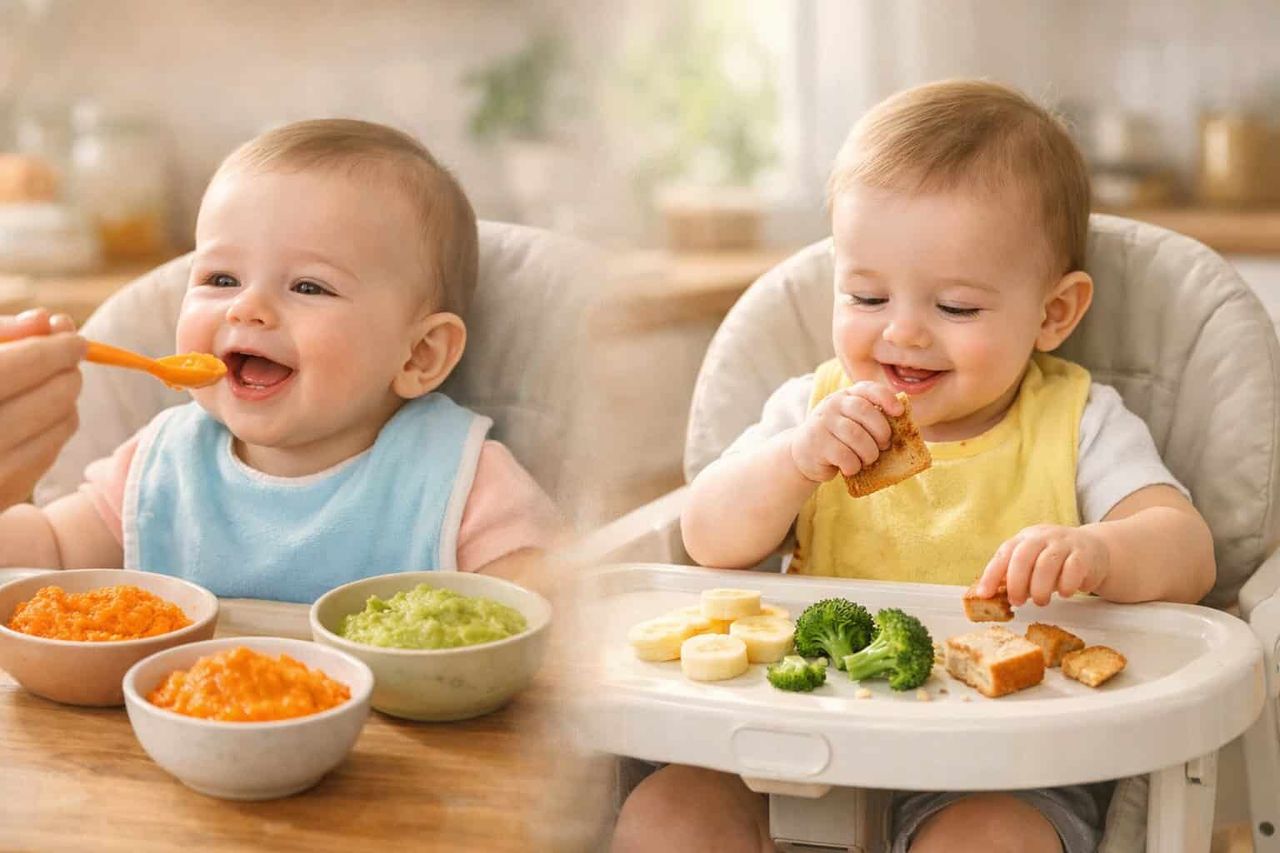
Moving your baby from milk to solid food is a big step, and for many parents, it can feel confusing or even a little stressful. If you're wondering about transitioning from purees to solids, you're not alone. The good news is that with a simple, step-by-step approach, this process can feel much easier and even enjoyable.
What this guide covers
- ▸ How to transition from purees to table food
- ▸ Readiness signs to look for
- ▸ The 4 stages of texture progression
- ▸ Safety tips: gagging vs choking
- ▸ Building healthy eating habits from the start
When to Start Transitioning from Purees to Solids
Most babies are ready to start solids at around 6 months old. But instead of focusing only on age, it's better to look for signs that your baby is ready. For a deeper dive into readiness cues, see our complementary feeding readiness guide.
Your baby may be ready if they:
- ▸ Can sit up with little or no support
- ▸ Have good head and neck control
- ▸ Show interest in your food
- ▸ Open their mouth when food is offered
- ▸ No longer push food out with their tongue automatically
Why the Transition Matters
Transitioning from purees to solids isn't just about eating different foods. It helps your baby:
Physical Development
- ▸ Learn how to chew and swallow
- ▸ Develop hand-eye coordination
Sensory & Social
- ▸ Explore different textures and tastes
- ▸ Build healthy eating habits
This stage also helps your baby start joining family meals, which is an important part of learning how to eat. Our starting solids guide covers the nutritional foundations in more detail.
The 4 Simple Stages of Moving from Purees to Solids
If you're unsure how to move from purees to solids, think of it as a gradual journey. You don't need to rush. Most babies move through these stages between 6 and 12 months.
Stage 1: Smooth Purees (Around 6 Months)
This is where most babies begin. Foods should be completely smooth, easy to swallow, and slightly runny.
Good first foods:
- Mashed banana, naturally smooth and sweet
- Pureed sweet potato, nutrient-dense and creamy
- Applesauce, gentle and easy to digest
- Avocado, rich in healthy fats
At this stage, your baby is learning how to move food from the front of their mouth to the back and swallow it. Check out our stage 1 puree guide for more ideas.
Stage 2: Thicker Purees (6–8 Months)
Once your baby handles smooth purees well, you can make them thicker.
How to progress:
- Use less liquid when blending
- Mix foods together (like apple + carrot)
- Add soft grains like oatmeal
This helps your baby practice using their lips and handle slightly thicker textures.
Stage 3: Lumpy and Mashed Foods (8–10 Months)
This is often the trickiest stage, but it's very important. Now you can offer mashed potatoes with small lumps, scrambled eggs, cottage cheese, and soft cooked vegetables mashed with a fork.
Your baby starts learning to:
- Move food around their mouth
- Use their gums to mash food
If your baby gags a little, don't panic, this is normal and part of learning. For more on what to expect at this age, read our baby food at 8 months guide.
Stage 4: Soft Finger Foods (10–12 Months)
Now your baby is ready to start feeding themselves. This is the final step in transitioning from purees to solids before eating regular family foods.
Good finger foods:
- Soft fruit pieces (banana, peach)
- Steamed vegetables (carrots, broccoli)
- Small pasta pieces
- Shredded chicken
At this stage, babies develop the pincer grasp and growing independence during meals. Explore our baby finger foods guide for safe options.
Track Your Baby's Progress Through All 4 Texture Stages
The Grubsy app helps you track your baby's progress through the four texture stages and find recipes matched to each one, from smooth purees to soft finger foods.
How to Transition from Purees to Table Food
By around 12 months, your baby can start eating modified versions of what the family eats. Here's how to make that transition smooth:
1. Offer Soft Versions of Family Meals
Instead of making separate meals, adjust your food: cook vegetables until soft, cut food into small pieces, and avoid added salt and sugar.
2. Let Your Baby Self-Feed
Even if it gets messy, self-feeding helps your baby learn faster and develop independence.
3. Keep Mealtimes Relaxed
Don't pressure your baby to eat. Let them explore food at their own pace.
4. Introduce Variety Early
Offer different foods regularly so your baby gets used to new tastes and textures.
Important Nutrients to Focus On
As your baby eats more solids, certain nutrients become very important.
Iron
Essential for growth and brain development.
Sources: Meat, lentils, beans, iron-fortified cereals
Tip: Pair iron foods with vitamin C (like fruit) to help absorption.
Healthy Fats
Support brain development.
Sources: Avocado, yogurt, cheese
Variety
Offer foods from all food groups.
Fruits, vegetables, grains, protein, dairy
Introducing Allergenic Foods
It's now recommended to introduce common allergens early, around 6 months. These include peanut (smooth, thinned), egg (fully cooked), dairy (yogurt, cheese), and wheat.
Important tips for allergen introduction:
- ▸ Introduce one new allergenic food at a time
- ▸ Watch for reactions over 2–3 days
- ▸ Keep offering the food regularly once introduced
Gagging vs Choking: What You Need to Know
Many parents worry about choking when transitioning from purees to solids. Understanding the difference between gagging and choking is crucial.
Gagging (Normal)
- ▸ Loud, baby coughs or gags
- ▸ Happens often with new textures
- ▸ This is your baby learning
Choking (Emergency)
- ▸ Silent, baby can't breathe or cry
- ▸ Skin may turn blue
- ▸ Act immediately and seek help
For more on this topic, our baby gagging during feeding guide explains what to expect and how to respond.
Foods to Avoid or Modify
Some foods are choking risks and should be prepared carefully:
- ▸ Whole grapes → cut into quarters
- ▸ Hot dogs → cut into strips
- ▸ Raw carrots → cook until soft
- ▸ Whole nuts → avoid completely in the first year
Feeding Schedule: Milk vs Solids
As your baby grows, the balance between milk and solids changes.
6–9 Months
- Milk is still the main nutrition
- Offer solids once or twice a day
9–12 Months
- 3 meals a day
- Solids become more important
- Milk comes after meals
Encouraging Good Eating Habits
Healthy habits start early. Here's how to set a strong foundation:
Follow Your Baby's Cues
Signs of hunger: reaching for food, opening mouth
Signs of fullness: turning head away, pushing food away
Respect these signals, don't force your baby to eat.
Be a Role Model
Eat together as a family. Babies learn by watching you.
Expect Some Pickiness
It's normal for babies to refuse foods or change preferences. Keep offering foods without pressure. It can take many tries before a baby accepts something new.
Creating a Safe Feeding Setup
Your baby's position matters more than you might think.
Use a High Chair with Support
Your baby should sit upright, have feet supported, and be stable. This helps with chewing, swallowing, and safety.
Bottle to Cup Transition
As you move toward solids, start introducing a cup. Open cups and straw cups help your baby develop mouth and muscle control.
Final Thoughts
Transitioning from purees to solids is a journey, not a race. Every baby develops at their own pace, and that's completely normal.
- ✓ Follow your baby's readiness, not just age
- ✓ Move gradually through textures
- ✓ Offer a variety of foods
- ✓ Keep mealtimes calm and positive
- ✓ Focus on learning, not perfection
With patience and consistency, your baby will naturally learn how to eat and enjoy a wide range of foods.