Key Takeaways
Starting your baby on baby puree is an exciting step, it's the beginning of your baby's journey into real food. This stage doesn't have to feel complicated. With a few basics, you can feel confident about introducing baby food puree, choosing the best purees for baby, and knowing how much to give.
When to Start Baby Puree
Most babies are ready for baby purees stage 1 between 4 and 6 months. Instead of focusing only on age, look for readiness signs:
Signs Your Baby Is Ready
- ▸Sitting up with support
- ▸Good head control
- ▸Interest in food (watching you eat, reaching for food)
- ▸No longer pushing food out with the tongue
If you notice these signs, your baby may be ready for their baby first puree. For a complete readiness guide, see our starting solids guide.
First Purees for Baby (Stage 1 Foods)
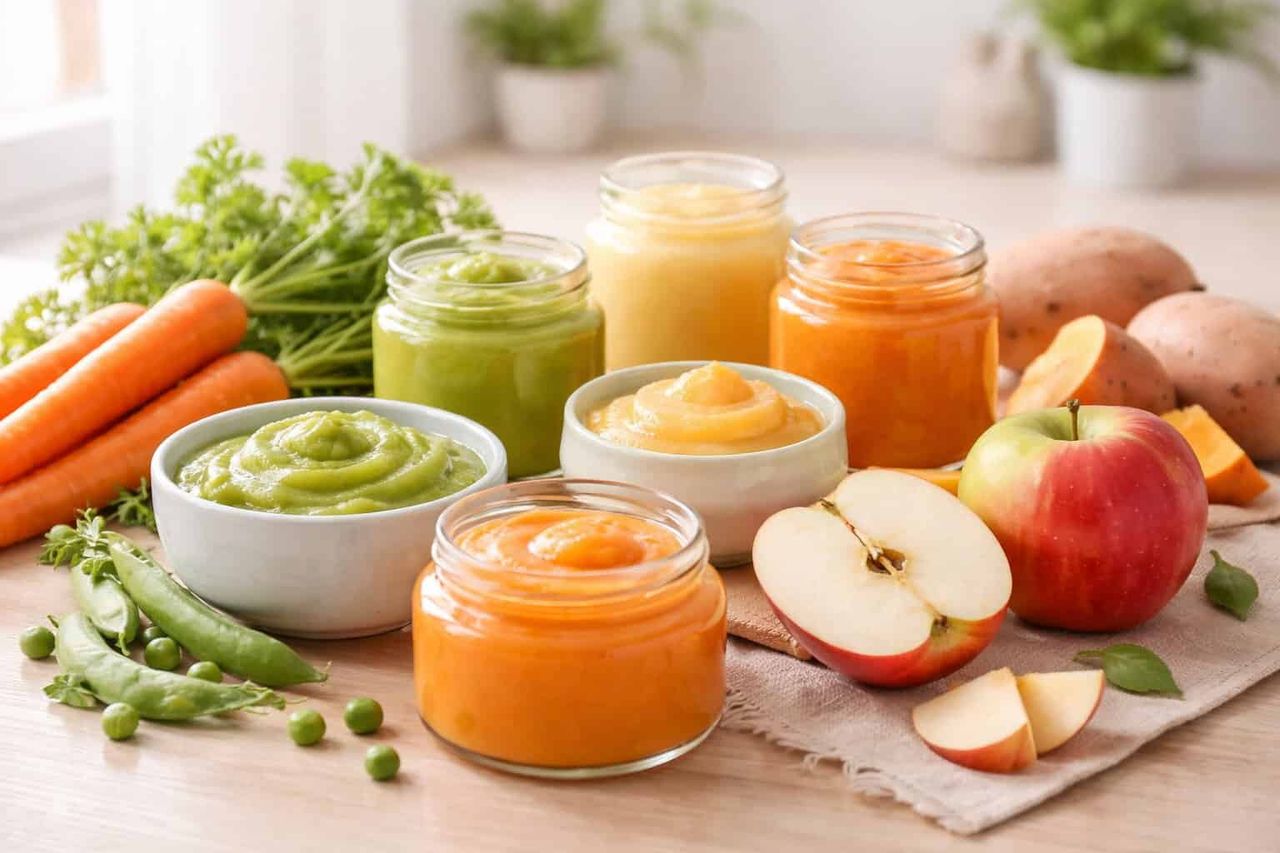
Stage 1 purees are smooth, simple, and made with one ingredient. These are often called stage one purees or baby puree stage 1.
Best Purees to Start With
- ▸Sweet potato, naturally sweet, easy to digest
- ▸Carrots, mild and smooth
- ▸Avocado, creamy, full of healthy fats
- ▸Banana, no cooking needed, naturally soft
- ▸Apples, cooked and blended smooth
- ▸Pears, gentle on the tummy
- ▸Oatmeal (iron-fortified), great first grain
If you're wondering what puree to start with, go for something mild and easy to digest like sweet potato or banana.
Purees by Age
4 Months
- ▸Start with very small amounts, around 1–2 teaspoons once a day
- ▸Try a thin, smooth puree
- ▸Milk (breast milk or formula) is still the main food
For more on starting this early, see our guide to complementary food at 4 months.
5 Months
- ▸Increase to a few tablespoons per day
- ▸1–2 meals daily
- ▸Try more variety, different fruits and vegetables
6 Months
- ▸2–3 small meals per day
- ▸Mix fruits, vegetables, and proteins
- ▸Great time to introduce more flavors and textures
For vegetable ideas at this age, check out our vegetables for 6 month old guide.
How to Make Baby Puree at Home
Learning how to make baby puree is simple and gives you full control over ingredients.
Basic Steps
- 1. Wash and peel fruits or vegetables
- 2. Steam or cook until soft
- 3. Blend until smooth
- 4. Add liquid (water, breast milk, or formula) if needed for a thinner consistency
That's it, you've made pureed baby food at home. For recipe inspiration, see our baby puree recipes guide.
Vegetables for Baby Puree
Vegetables are an important part of infant purees and help your baby get used to different flavors early.
Best Vegetables to Start
- •Sweet potato
- •Carrot
- •Pumpkin
- •Peas
- •Zucchini
Best Fruits to Start
- •Banana
- •Apple (cooked)
- •Pear
- •Avocado
- •Mango
How Much Baby Puree to Feed
This is one of the most common questions parents ask. Always follow your baby's cues, if they turn away or close their mouth, they're full.
General Guide by Age
- 4 months:1–2 teaspoons, once a day
- 5 months:3–10 tablespoons per day, 1–2 meals
- 6 months:Small meals, 2–3 times daily
Remember: at this stage, milk is still the primary source of nutrition. Purees are for learning and exploring.
Homemade vs. Store-Bought Baby Purees
Homemade Baby Puree
- •Fresh ingredients you choose
- •No added sugar or preservatives
- •Budget-friendly
- •Can be batch-cooked and frozen
Store-Bought Purees
- •Convenient and ready to serve
- •Good for travel and on-the-go
- •Check labels for added ingredients
Choose what works best for your lifestyle, there's no single "perfect" option. Many parents use a mix of both.
Portions and Recipes in One Place
Whether homemade or store-bought, the Grubsy app lets you track how much your baby eats at each meal and save your favorite recipes right alongside it.
Reading Your Baby's Cues at the Spoon
Babies tell you very clearly whether they want more or are done, once you know what to look for. Respecting these cues from the very first spoonful lays the foundation for healthy appetite regulation later on.
Your baby wants more
- ✓Leans forward toward the spoon
- ✓Opens the mouth as the spoon approaches
- ✓Reaches for the spoon or the food
- ✓Smiles or makes excited sounds
Your baby is done
- ✗Turns the head away
- ✗Presses the lips together
- ✗Pushes the puree back out with the tongue
- ✗Gets fussy or only plays with the spoon
A couple of spoonfuls or a firmly closed mouth are completely normal in the beginning: purees are practice at this stage, and milk remains the main source of nutrition. If your baby shows little interest for weeks, our guide to a baby not interested in food walks you through what helps.
When Is It Time for Stage 2?
There is no fixed timetable. Your baby is ready for thicker purees with small soft lumps when they:
- •swallow smooth purees easily and rarely gag anymore
- •clearly want more after a portion
- •start grabbing food and bringing it to their own mouth
Some babies take this step quickly, others stay with smooth purees for longer. Both are normal. Our stage 2 baby foods guide shows what the next stage looks like.
Simple Tips for Success
Getting Started Right
- • Start slow, this is about learning, not replacing milk
- • Introduce one food at a time, wait 2–3 days before trying another
- • Expect some mess, it's part of the process
- • Keep meals relaxed and fun, no pressure to finish
Remember, every baby is different. Some love baby purees right away, others need time to warm up.
Simple Takeaway
- ▸Most babies are ready between 4–6 months
- ▸Start with single-ingredient, smooth purees
- ▸Follow your baby's hunger cues
- ▸Homemade or store-bought, both are fine
- ▸Keep it simple, relaxed, and fun
Helpful External Resources