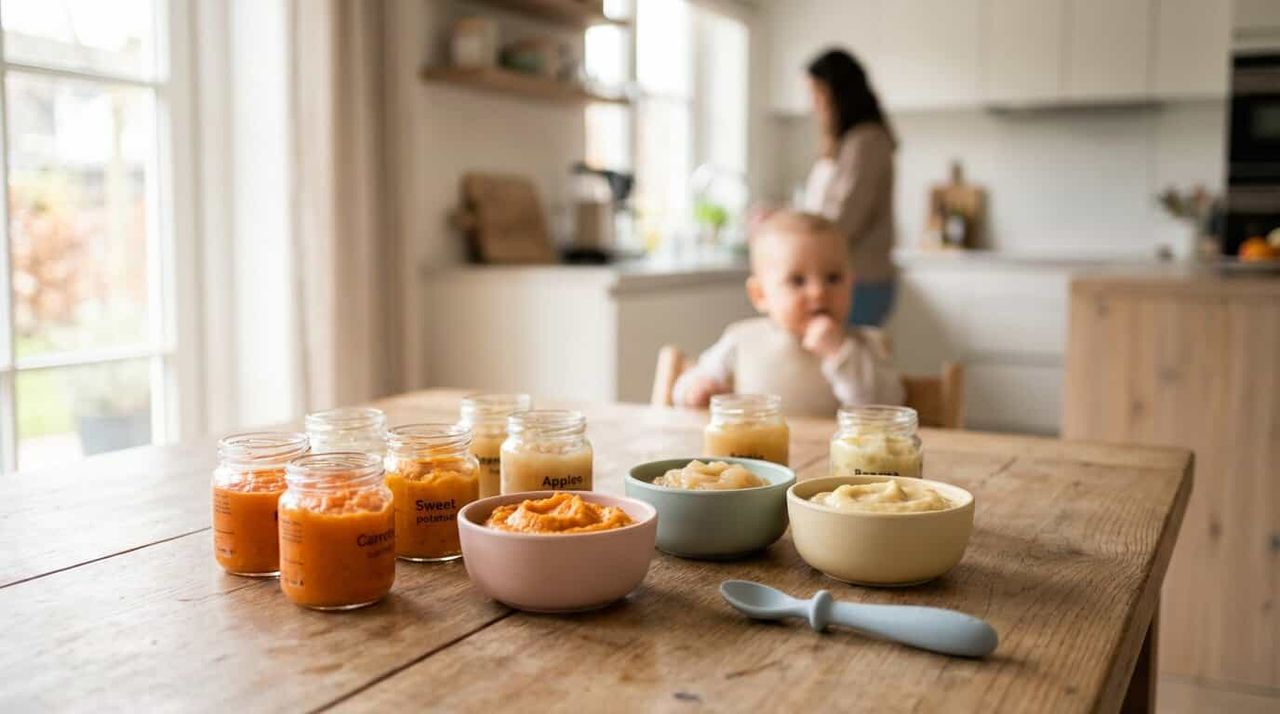
The transition from milk to solid foods is one of the most important developmental phases during infancy. Parents often hear terms like baby food stages, Gerber 1st foods, Gerber 2nd foods, or stage 3 baby food, but understanding what these stages mean can make feeding much easier.
The 2nd foods age usually begins between 6 and 8 months old, when babies move beyond very thin purees and begin eating thicker blends and combination foods. This stage helps infants develop stronger eating skills, explore new flavors, and receive important nutrients needed for growth.
At a Glance: 2nd Foods Age
- ✓ Age: Typically starts at 6–8 months
- ✓ Texture: Thicker purees with some texture
- ✓ Ingredients: Multiple ingredients combined
- ✓ Skills: Baby sits upright, begins chewing motions
- ✓ Preparation: For stage 3 with chunky foods
What Is the 2nd Foods Age?
The 2nd foods age refers to the stage when babies progress from simple single-ingredient purees to thicker foods and flavor combinations.
Most babies reach this stage around 6 months old, though readiness depends more on development than exact age. During this time, babies usually:
- ▸ Sit upright with little or no support
- ▸ Show interest in food
- ▸ Open their mouth for a spoon
- ▸ Move food from the front of the mouth to the back to swallow
- ▸ Begin experimenting with basic chewing movements
Learn more about readiness signs in our guide to solid food readiness signs.
Brands such as Gerber label this stage as Gerber 2nd Foods or Gerber Sitter 2nd Foods, indicating foods designed for babies who can sit independently.
Baby Food Stages Explained
Many parents wonder how the feeding stages work. Although brands may label them slightly differently, most follow the same general progression.
Stage 1 Baby Food Age
The stage 1 baby food age typically starts between 4 and 6 months.
At this stage, foods are:
- ▸ Very thin and smooth
- ▸ Usually single ingredients
- ▸ Designed for babies just learning to swallow purees
This stage often includes foods like plain vegetables, fruits, or fortified cereals. Find more details in our Starting Solids Guide.
For example, Gerber 1st Foods age recommendations generally begin around 4–6 months, depending on a baby's readiness.
Stage 1 vs Stage 2 Baby Food
The main difference between stage 1 vs stage 2 baby food is texture and variety.
Stage Comparison:
Stage 1:
- • Texture: Very smooth and thin
- • Ingredients: Usually single ingredient
- • Age range: 4–6 months
- • Skills: Learning to swallow
Stage 2:
- • Texture: Thicker and more textured
- • Ingredients: Combination foods
- • Age range: 6–8 months
- • Skills: Learning to chew and move food
Stage 2 foods help babies practice stronger mouth movements and experience new flavors.
When to Start Stage 2 Foods
Many parents ask when to start stage 2 foods. In most cases, babies are ready when they:
- ✓ Eat stage 1 foods comfortably
- ✓ Show good head and neck control
- ✓ Sit upright independently
- ✓ Keep food in their mouth instead of pushing it out
For most infants, this occurs around 6 months, which is why many guides refer to this period as the Gerber stage 2 age or sitter 2nd foods age.
Milk (breast milk or formula) should still remain the main source of nutrition until the first birthday.
What Are Stage 2 Foods?
Stage 2 foods are thicker purees that may include multiple ingredients. These foods are designed to help babies practice chewing motions and adapt to different textures.
Typical characteristics of stage two foods include:
- ▸ Thicker consistency that stays on a spoon
- ▸ Mixed ingredients such as fruit blends or vegetables with grains
- ▸ Gradual exposure to proteins and iron-rich foods
Find more recipe ideas in our Baby Puree Recipes Guide.
Compared with stage 1 foods, stage 2 infant food provides more variety and nutritional balance.
Important Nutrients in Stage 2
Parents often introduce foods that support important nutrients like:
- ▸ Iron: Essential for blood formation and development
- ▸ Zinc: Supports immune system and growth
- ▸ Vitamin C: Promotes iron absorption
- ▸ Healthy fats: Important for brain development
These nutrients become increasingly important as babies grow and their nutritional needs expand.
Is your baby ready for stage 2?
The Starting Solids app reads your baby's age and developmental milestones to flag when they're ready for thicker textures, and suggests stage 2 recipes built around the nutrients that matter most.
Gerber 2nd Foods Age and Development Milestones
Many parents search specifically for Gerber second foods age or Gerber sitter 2nd foods age.
Gerber uses developmental milestones to guide feeding stages rather than relying strictly on age.
At the Gerber 2nd foods age, babies typically:
- ✓ Sit upright without assistance
- ✓ Use their lips to remove food from a spoon
- ✓ Begin basic chewing motions
- ✓ Show curiosity about new foods
These skills help babies manage thicker foods and prepare them for chunkier textures later.
Parents sometimes ask when can babies eat Gerber products. In general:
- ▸ Gerber 1st Foods: around 4–6 months
- ▸ Gerber 2nd Foods: around 6 months and older
- ▸ Gerber 3rd Foods: about 8–12 months
However, developmental readiness should always guide the transition.
Why Stage 2 Infant Food Matters
The stage 2 infant food phase plays a key role in a baby's development.
During this period, babies begin learning how to:
- → Move food around the mouth
- → Use early chewing motions
- → Accept new flavors and textures
- → Coordinate swallowing thicker foods
This stage also helps babies get nutrients that become harder to obtain from milk alone, especially iron.
Introducing different flavors early may also help reduce picky eating later in childhood.
Stage 3 Baby Food Age: The Next Step
After mastering stage 2 foods, babies gradually move toward stage 3 baby food age, which usually begins between 8 and 10 months.
Stage 3 foods include:
- ▸ Small soft chunks
- ▸ More textured meals
- ▸ Foods babies can pick up with their fingers
By this point, babies often develop the pincer grasp, allowing them to pick up small pieces of food. Learn more in our Baby Finger Foods Guide.
This stage prepares infants for eating modified versions of family meals by their first birthday.
Safety Considerations During the 2nd Foods Age
As babies explore new foods, safety remains very important.
Parents should:
- ⚠ Avoid foods that could cause choking
- ⚠ Ensure foods are soft and easy to swallow
- ⚠ Introduce new foods gradually
- ⚠ Watch for allergic reactions
Whole nuts, large pieces of hard vegetables, and round foods like whole grapes should not be offered without modification.
Milk remains essential during the entire first year, and cow's milk should not replace breast milk or formula until after 12 months.
Helping Babies Develop Healthy Eating Habits
The 2nd foods age is not only about nutrition, it also helps babies build lifelong eating habits.
At this stage, parents can encourage healthy feeding by:
- ✓ Offering a variety of flavors
- ✓ Allowing babies to explore food
- ✓ Watching hunger and fullness cues
- ✓ Eating together as a family
Babies often signal fullness by turning their head away, closing their mouth, or pushing food away. Respecting these signals helps support healthy appetite regulation.
Final Thoughts
The 2nd foods age is an important milestone:
- ✓ Typically begins around 6 months
- ✓ Thicker foods and more complex flavors
- ✓ Helps develop chewing and swallowing skills
- ✓ Prepares for stage 3 and family meals
- ✓ Provides important nutrients for growth and development
Understanding the differences between stage 1 baby food, stage 2 foods, and stage 3 baby food age helps parents introduce new textures safely and confidently.
Whether parents choose commercial products like Gerber 2nd Foods or prepare foods at home, the goal remains the same: helping babies develop the skills, nutrition, and confidence needed for a healthy lifelong relationship with food.