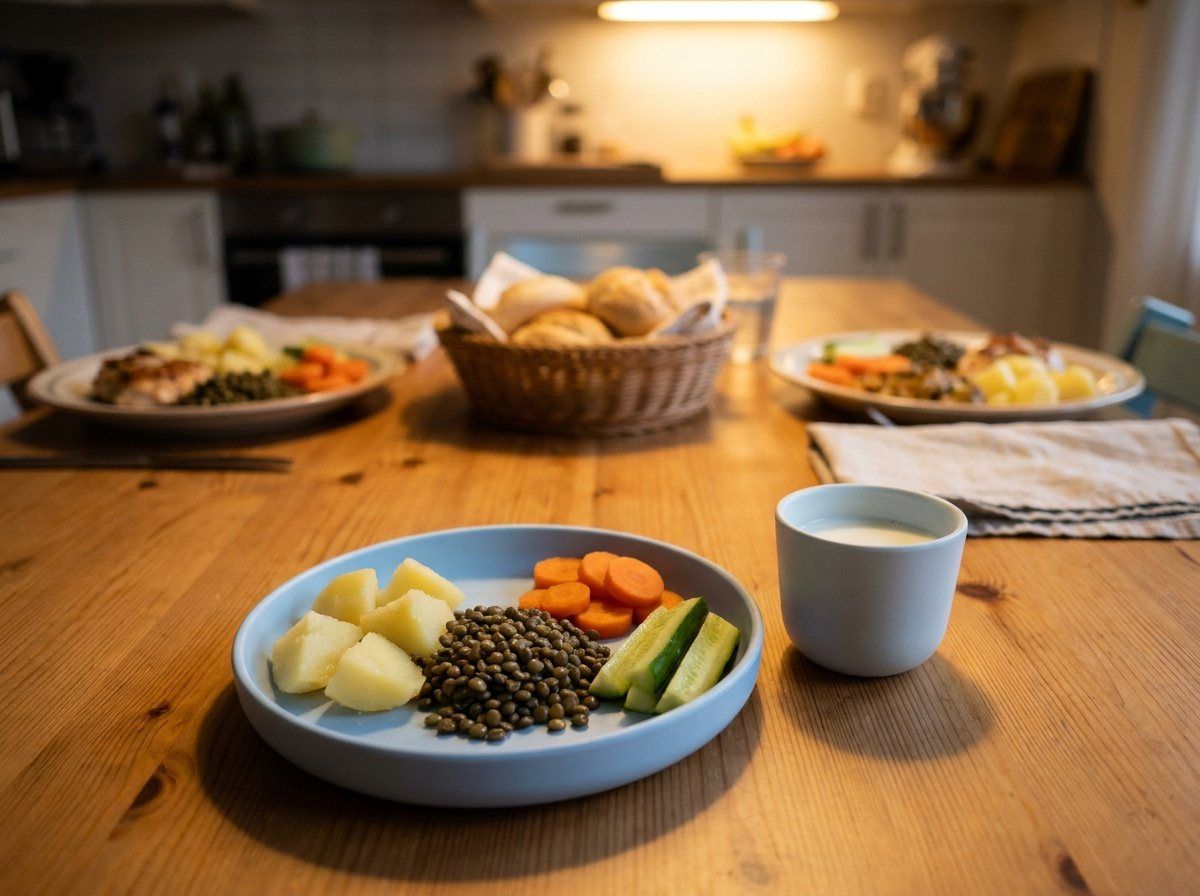
At 1 year, your baby officially becomes a toddler, and the first birthday is a moment to breathe: a year of milk feeds, first foods, broken nights and countless small victories is behind you. Your child now stands, cruises or takes first steps, points at everything interesting, understands a surprising amount and has a mind of their own. At the table, they eat what everyone eats.
This guide covers what is typical around the first birthday, feeding, sleep and what a day can look like. Everything here is a range, not a deadline: children develop at their own pace.
Key Takeaways: Your 1 Year Old
- ✓ Movement: Standing alone, cruising, first steps for about half of children, a solid pincer grasp
- ✓ Feeding: Family meals, three meals and two snacks, whole milk from a cup at about 16 to 24 oz a day
- ✓ Sleep: Usually 11 to 14 hours a day with one or two naps
- ✓ Communication: Pointing, waving, following simple requests, first words for many
- ✓ Health: The 12 month checkup, first molars, safety for a walker and climber
Development at 1 Year: What Is Typical Right Now
Motor Skills: Standing, First Steps, Climbing
The WHO motor development study puts walking alone between roughly 8 and 18 months, with the average almost exactly at the first birthday. In other words, about half of 1 year olds are not walking yet, and both are normal. Most stand alone or with a light hold, cruise along furniture, lower themselves to sitting and climb stairs on hands and knees if allowed. Those who walk do it wide-legged, arms out, with many landings on a padded bottom.
The hands are skilled. The pincer grasp is secure, small things go into containers and come back out, some children stack two blocks or scribble with a chunky crayon. The spoon lands in the mouth more often than beside it, and the open cup gets held with both hands.
Thinking and Imitation
Your child imitates almost everything now: talking on the phone, sweeping, brushing hair, feeding the doll with a spoon. They use objects for their purpose, solve simple problems like opening a box or pulling a toy out from under a blanket, and remember where things live. Picture books become a favorite, especially when you point and name.
Communication and Language
Many 1 year olds say one to three words with meaning, usually "mama", "dada" or "uh-oh"; some say more, some none yet. Speech varies enormously now; understanding is what matters: your child responds to their name, follows simple requests like "give me the ball", points at things they want, waves goodbye and shakes their head for "no". As long as comprehension and gestures are there, a late first word is no cause for concern.
Social and Emotional
Separation anxiety is still strong for many children around the first birthday, and at the same time their own will grows. First small tantrums when something does not work or is not allowed are part of it, because the feeling is there and the words are not. Your child is interested in other children but mostly plays alongside them, and loves rituals and repetition because they make the day predictable.
Feeding at 1 Year: Family Meals and Milk From a Cup
From the first birthday, your child eats with the family: three meals and two small snacks, with water in between. The balance shifts toward vegetables, fruit, grains and protein foods, with dairy in moderation and sweets as an occasional treat. A breastfed child can keep breastfeeding as long as you both want. Formula is no longer needed after the first birthday, and neither are toddler milks; the AAP and the NHS both say plain whole milk and a varied diet do the job.
Whole Milk and Dairy
Cow's milk can now be a drink, ideally whole milk from a cup. The AAP suggests about 16 to 24 oz (2 to 3 cups) a day; the NHS talks about roughly 12 oz (350 ml) or two servings of dairy such as yogurt or cheese. More is not better: large amounts of milk fill a toddler up, crowd out meals and provide almost no iron. Our guide to switching from formula to milk covers the handover, and how much milk for a 15 month old covers the months after.
What and How Your Child Eats Now
What the family eats goes on the plate, soft and cut safely. Some rules relax now: honey is fine after the first birthday, and a little salt in family cooking is acceptable, though the NHS caps toddlers at under 2 g of salt a day and added sugar should stay as close to zero as possible. Anything round, hard or slippery still gets defused. Grapes and cherry tomatoes are quartered, raw carrot is grated, hot dogs are split lengthwise and chopped, and whole nuts stay off the menu until at least age 4 (the NHS says 5). Family food at 1 year looks like soft bread with a spread, pasta with vegetable sauce, potatoes with vegetables and meat or chickpeas, oatmeal with grated apple, and cucumber sticks to gnaw on. The safe size and shape for each food at each age is on its page in the food library; the ground rules are in how to cut food for a baby safely.
Your child feeds themselves now, with spoon and hands, and decides how much to eat; you decide what is served and when. That split is the best prevention against power struggles; our guide to the division of responsibility in feeding explains it. For a complete nutrition guide with portion sizes, see baby nutrition at 1 year, and for meal ideas, lunch ideas for a 12 month old.
Water, Iron, Vitamin D and the Shrinking Appetite
Water is the drink between meals, ideally from an open cup. Bottles should be gone between 12 and 18 months, because constant sipping on milk or juice damages teeth. Iron still matters: meat, beans, lentils and whole grains with vitamin C rich fruit or vegetables, and milk in moderation. In the US, vitamin D drops often continue past the first birthday unless your child drinks enough fortified milk; in the UK, all children from 1 to 4 are advised to take a daily vitamin D supplement. One more shift: growth slows in the second year, so many 1 year olds suddenly eat less and get pickier, which is normal. Our guides to picky eating and toddler mealtime behavior explain how to stay relaxed about it.
Sleep at 1 Year
For children from 1 to 2 years, the AAP endorses 11 to 14 hours of sleep in 24 hours. Most 1 year olds sleep around 10 to 12 hours at night and 1 to 3 hours during the day. Many still take two naps; others have already settled into one after lunch. The switch usually happens between 12 and 18 months and shows up as a morning nap that drifts later or gets refused, or a bedtime that starts sliding. During the transition, one-nap and two-nap days are both normal.
Around the first birthday many parents report another rough sleep patch, because learning to walk, separation anxiety and the first molars often land together. What helps: a fixed bedtime routine with teeth, a book and a cuddle, plenty of outdoor movement, short and calm responses at night. For safe sleep, stay with the crib and the mattress at its lowest setting, a sleep sack instead of a blanket and no pillow yet. Your child only needs to move to a bigger bed once they start climbing over the rail.
Sample Daily Routine at 1 Year
Here is what a day can look like once your child is down to one nap. With two naps, lunch moves a little earlier and a short morning nap slots in around 9:30 AM:
| Time | What happens | Example |
|---|---|---|
| 7:00 AM | Wake up | Cuddles, breastfeed or a cup of milk |
| 7:45 AM | Breakfast | Oatmeal with fruit or toast with a spread, water |
| 9:30 AM | Snack, awake time | Fruit pieces, then playground or playgroup |
| 11:30 AM | Lunch | Family food, soft and safely cut, water |
| 12:15 PM | Nap | About 1.5 to 2.5 hours |
| 2:30 PM | Snack | Yogurt with fruit or bread, water |
| 3:00 PM | Awake time | Play, visitors, fresh air |
| 5:30 PM | Dinner | A warm family meal or a simple plate with vegetables, water |
| 6:45 PM | Bedtime routine | Bath, teeth, book, milk or breastfeed |
| 7:15 PM | Night sleep | About 11 to 12 hours |
More variations, including two-nap days, are in our sample 12 month old schedule.
Family meals without the guesswork
The app shows the safe shape of every food for your child's age, plans meals for the whole family and keeps an eye on iron, milk and allergens.
Health and Safety Around the First Birthday
Checkups, Vaccines and Teeth
In the US, the 12 month well visit checks growth, movement, language and hearing, often screens for anemia and lead, and brings the first MMR and chickenpox doses plus hepatitis A and boosters. In the UK, the 1 year vaccines include MMR, MenB and the Hib/MenC and pneumococcal boosters; ask your practice for the current schedule. The first molars arrive for many children between 12 and 18 months. Keep brushing twice a day with a rice-grain smear of fluoride toothpaste, and the first birthday is the recommended deadline for a first dental visit.
Safety for a Child Who Walks and Climbs
- ▸ Falls: Stair gates, window guards, anchored furniture and nothing climbable near windows or balcony rails.
- ▸ Water: Paddling pools, garden ponds, buckets and the bathtub only with an adult within arm's reach.
- ▸ Poisoning and burns: Cleaning products, medications and dishwasher pods locked away, hot drinks out of reach, stove knob covers, and the Poison Control number saved in your phone (in the UK, call NHS 111).
- ▸ Out and about: Keep the car seat rear-facing as long as the seat allows, and stay close at the playground.
- ▸ Eating: Always seated, never on the move, always supervised. Choking risk stays high until about age 4; see our choking hazards guide.
When to Talk to Your Pediatrician or Health Visitor
Check in if your 1 year old does not stand with support, does not move around at all, does not point or use other gestures, does not babble or use sounds with intonation, does not respond to their name, shows little interest in people, does not imitate anything, or loses skills they used to have. Persistently tiny meals, a stalled weight curve or a gut feeling are all good reasons for an appointment.
Frequently Asked Questions About 1 Year Olds
What should a 1 year old be doing?
Most stand alone or with support and cruise along furniture; about half take first independent steps. They use a pincer grasp, point, wave, follow simple requests, imitate a lot and often say one to three words.
My 1 year old is not walking yet. Is that normal?
Yes. Walking alone arrives between roughly 8 and 18 months in the WHO data, and the average is right at the first birthday. As long as your child moves around, pulls up and puts weight on both legs, all is on track.
How much milk should a 1 year old drink?
About 16 to 24 oz (2 to 3 cups) of whole milk a day by AAP guidance, or roughly 12 oz plus other dairy by NHS guidance. More than that crowds out meals and provides almost no iron. Breastfeeding can continue as long as you both want.
Does my child still need formula or toddler milk?
No. After the first birthday, a varied family diet plus whole milk in moderation covers what a toddler needs. The AAP and the NHS do not recommend toddler milks.
How much sleep does a 1 year old need?
Usually 11 to 14 hours in 24, with 10 to 12 at night and the rest in one or two naps. The move to a single afternoon nap usually happens between 12 and 18 months.
My child suddenly eats much less. Is that normal?
Yes. Growth slows in the second year, so appetite drops and many children get pickier. Keep offering varied meals without pressure and watch the weight curve rather than single days.
Can my 1 year old have honey?
Yes. After the first birthday the risk of infant botulism is gone, so honey is allowed. Because of the sugar, it stays an occasional ingredient.
The Other Months
The other guides in this series: 6 month old baby (rolling, readiness signs, first foods), 8 month old baby (crawling, finger foods, stranger anxiety) and 11 month old baby (first steps, the move to family meals).
Sources
- ▸ CDC: Developmental Milestones (Learn the Signs. Act Early.)
- ▸ CDC: Infant and Toddler Nutrition
- ▸ American Academy of Pediatrics: How Many Hours of Sleep Does Your Child Need
- ▸ American Academy of Pediatrics: Choking Prevention
- ▸ NHS: What to Feed Young Children
- ▸ NHS: Drinks and Cups for Babies and Young Children
- ▸ NHS: Vaccinations and When to Have Them
- ▸ NHS: Baby and Toddler Safety
- ▸ WHO: Motor Development Milestones