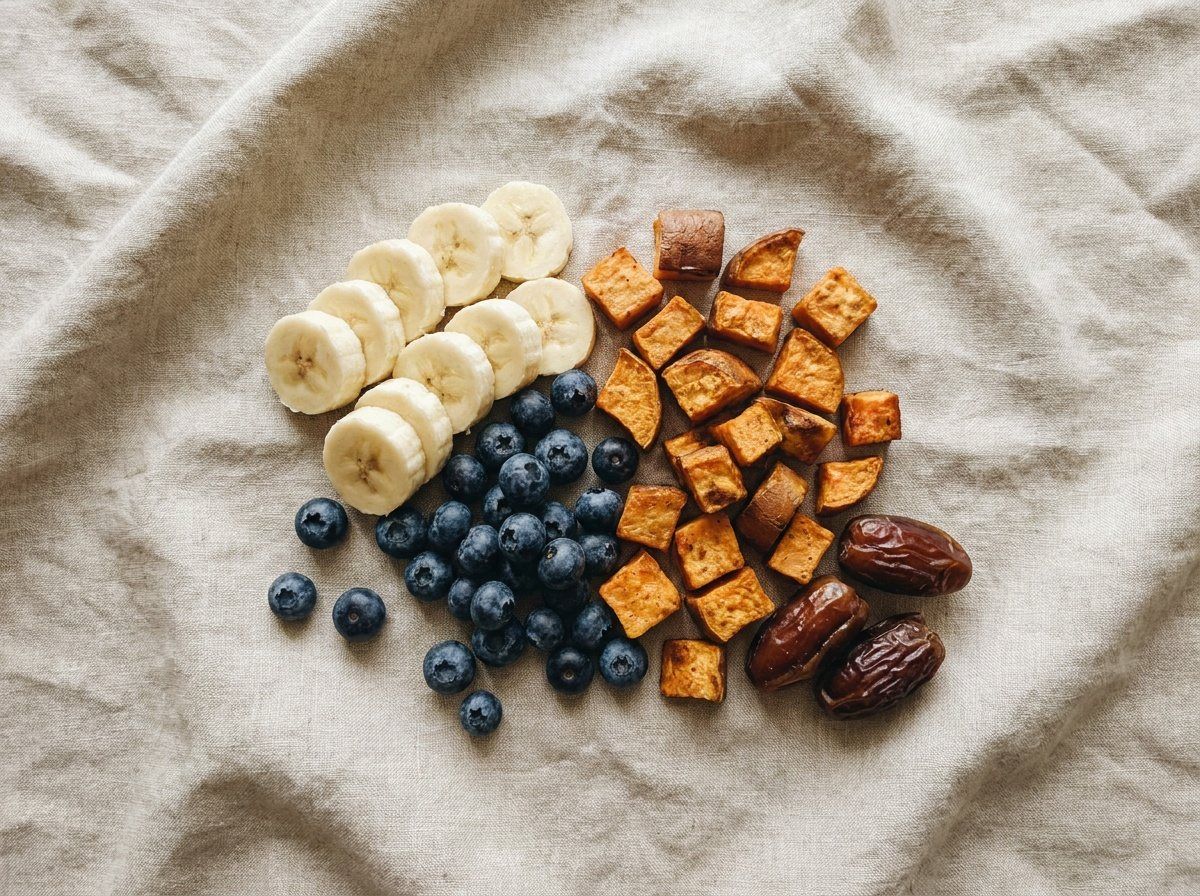
If you've started wondering about sugar and babies somewhere around the first spoonful of sweet potato or the first squished banana, you're asking the right question at the right time. The mainstream guidance is refreshingly simple to state, even if it takes a little more explaining to apply at the kitchen table: avoid added sugar before your baby turns one, keep it minimal for a good while after that, and don't worry about the natural sugar already sitting inside whole fruit, because that's a completely different thing, and one your baby is welcome to enjoy from the start of solids.
That one sentence covers almost everything you need to know, but the details are where parents usually get stuck, mostly because the word "sugar" gets used to describe two very different things. This guide walks through why the first year, and the year or two after it, matters so much for sugar specifically, why honey gets pulled into this conversation for an entirely unrelated reason, what counts as added sugar versus the sugar that comes bundled inside a piece of fruit, where added sugar hides in products marketed straight at babies, how to make sense of a label in a few seconds, and how the whole picture loosens gradually as your child grows into toddlerhood and family meals.
Avoid added sugar before age one, keep it minimal for a good while after, and don't worry about the natural sugar in whole fruit or vegetables, that part is fine and genuinely good for your baby.
Sugar and Babies: Why This Age Window Matters
Babies are born already liking sweetness. It's one of the few taste preferences that shows up before birth, which is part of why sweet potato and banana tend to be such reliable hits at the first few meals. What happens over the following months is less about creating a sweet tooth, which is already there, and more about calibrating everything else. Repeated early exposure to a wide range of tastes, bitter greens, sour tomato, plain unsweetened oats, earthy lentils, is what teaches your baby's palate that these flavors are simply normal food, not something to tolerate on the way to something sweeter. Added sugar, offered early and often, tends to crowd out that calibration before it has a real chance to happen, nudging your baby toward expecting sweetness as the default rather than experiencing it as one flavor among many.
There's also a simple, physical reason sugar deserves a lighter touch in the first year: a baby's stomach is genuinely tiny, not much bigger than their own fist, and it fills up fast. Every one of those small meals is a real opportunity to deliver iron, protein, healthy fats, and the dozen other nutrients a rapidly growing body and brain need, especially once breast milk or formula alone is no longer providing quite enough on its own. Sugar brings none of that. A few bites of a sweetened pouch or a sugary yogurt can leave a baby feeling full without having taken in much of what actually matters nutritionally, and that trade-off matters far more for a baby eating three small meals a day than it does for an adult with a bigger stomach and far more meals to balance things out.
Once the first teeth arrive, usually somewhere around six months, dental health joins the list of reasons to keep sugar minimal. Sugar residue left on new teeth feeds the bacteria that cause cavities, and baby teeth are just as vulnerable to decay as adult teeth, sometimes more so, since the enamel is thinner. Early and frequent exposure to sugary drinks and foods is one of the more consistent risk factors dental professionals point to for early childhood tooth decay, and it's a much easier habit to avoid from the start than to unwind later, once a toddler has decided that something sweet at every meal is simply how eating works.
The Honey Exception, and Why It's a Completely Different Rule
Honey comes up constantly in conversations about sugar and babies, and it deserves a clear, separate explanation, because the reason honey is off the table before 12 months has nothing to do with its sugar content. Honey can occasionally contain dormant spores of the bacterium Clostridium botulinum. Those spores are essentially harmless to older children and adults, whose more mature gut flora and stomach acidity keep them from ever becoming active. A baby's digestive system hasn't developed that same defense yet, and in rare cases the spores can germinate in an infant's gut and produce a toxin that causes infant botulism, a serious illness that needs immediate medical care.
That's the entire reason for the honey rule, a bacterial spore risk tied to an immature gut, not a sugar rule at all. It's worth keeping the two separate in your head, because the logic doesn't transfer between them: cooking or baking honey into something doesn't reliably destroy the spores, so "just a small amount, baked into muffins" isn't a safe workaround before 12 months, even though heat changes plenty of other things about food. After the first birthday, most babies can have honey safely, and at that point it simply behaves like any other added sugar, folded into the general "keep it minimal" guidance rather than needing a rule of its own.
Two Different Rules, Easy to Mix Up
- ▸Added sugar is avoided before age 1 and limited after because of taste development, nutrient density, and dental health
- ▸Honey is avoided before 12 months because of infant botulism risk from bacterial spores, a food-safety issue, not a sugar issue
- ▸After 12 months, honey is simply treated as an added sugar like any other
What Actually Counts as Added Sugar
This is where most of the genuine confusion lives, and it's worth sitting with for a moment, because it changes what you actually need to watch for. Mashed banana, pureed pear, or a bowl of soft blueberries all contain natural sugar, but that sugar arrives inside its whole-food package, bundled together with fiber, water, and a long list of vitamins and minerals. The fiber slows down how quickly that sugar is digested, the water and flesh of the fruit add bulk that fills a small stomach quickly, and the overall nutrition is genuinely good for your baby. Whole fruit, mashed, pureed, or offered as soft finger food, is the natural sugar mainstream guidance is happy for your baby to have from the start of solids, no calculating or limiting required.
Added sugar is a different category entirely: any sugar, syrup, or sweetener stirred into a food during processing or cooking, on top of whatever sugar the ingredients already contained naturally. Fruit juice is a good example of how the same fruit changes character once it's processed. Squeeze the fiber out of an apple and what's left is concentrated sugar and water, easy to drink in a much larger quantity than a baby could ever manage by eating the whole fruit, and without the fiber that would normally slow all that sugar down. A puree with fruit juice concentrate or syrup added, a yogurt with a sweetened fruit layer stirred through it, and a smoothie made mostly from juice all fall into the same added-sugar bucket as candy or soda, even when the packaging leans hard on pictures of fresh fruit.
A simple mental test covers most situations: if the sweetness came from an ingredient your baby could recognize sitting on their own plate, mashed banana, a handful of soft berries, roasted sweet potato, it's natural sugar, and it's fine. If the sweetness came from a bag, bottle, or an ingredient added specifically to make something taste sweeter, it's added sugar, and it's the category worth limiting.
Natural Sugar vs. Added Sugar, at a Glance
- ▸Natural, and fine: mashed banana, pureed or soft whole fruit, roasted sweet potato or carrot, plain milk (breast milk, formula, or later plain cow's milk)
- ▸Added, and worth limiting: fruit juice, purees or pouches with syrup or juice concentrate added, sweetened or flavored yogurt, sweetened cereal or teething snacks
Naturally Sweet Recipes, Without Any Added Sugar
Grubsy's recipe library is built entirely around naturally sweet whole-food combinations, so dessert-style treats never need a spoonful of added sugar in the first year.
Hidden Added Sugar Sources That Surprise Parents
Some added sugar is obvious. A cookie is clearly a cookie. The sources that catch parents off guard are the ones marketed directly at babies and toddlers, wearing packaging that leans on words like "wholesome" or pictures of fresh fruit, while the ingredient list underneath tells a different story.
Where Added Sugar Likes to Hide
- ▸Flavored yogurt, plain yogurt with fruit stirred in is naturally sweet enough on its own
- ▸Teething biscuits and rusks, often surprisingly high in sugar despite being marketed as a first food
- ▸"Baby-marketed" snacks and pouches, especially fruit and vegetable blends that lean on juice concentrate for sweetness
- ▸Fruit juice, including 100% juice, best skipped in the first year and offered only in small amounts after
Plain, unsweetened yogurt is one of the easiest swaps on this list and one of the most worthwhile. It's a genuinely useful source of protein, calcium, and healthy fats for babies, and mixing in your own mashed banana or soft berries gets you all the sweetness of a flavored yogurt with none of the added sugar, plus the fiber and nutrients that only whole fruit brings along. Teething biscuits and rusks are worth a second look too, since some brands lean heavily on sugar to get the texture and taste right, even though the front of the box suggests otherwise. A frozen banana half or a chilled, unsweetened biscuit made mostly of oats can do the same soothing job.
Fruit and vegetable pouches deserve a similar second look. They're genuinely convenient and not inherently a problem, but many are sweetened well beyond what the fruit alone would provide, and because a pouch is so easy to sip quickly, it's also easy for a baby to take in more sugar, natural or added, than the same fruit eaten with a spoon would ever allow. Checking the ingredient list before restocking your diaper bag is worth the extra thirty seconds.
How to Read a Label for Added Sugar
You don't need to become a full-time label detective, just a slightly more skeptical one. Ingredients on a food label are listed by weight, from most to least, so if sugar, syrup, or fruit juice concentrate shows up in the first three or four ingredients, that product is contributing a meaningful amount of added sugar, whatever the front of the package claims.
Added sugar also travels under a long list of aliases, which is exactly why a product can be marketed as having "no added sugar" while an ingredient like cane syrup, brown rice syrup, dextrose, maltose, or fruit juice concentrate sits partway down the list. None of those are natural sugar in the whole-food sense described above, they're all sugar added during processing, regardless of which plant they were originally extracted from.
The nutrition panel's total "sugars" line is less useful for this particular question than it looks, because it lumps natural and added sugar together into one number, so a plain fruit pouch and a syrup-sweetened one can show a similar total while being nutritionally very different products. Where it's listed, an "added sugars" line, separate from total sugars, is the more reliable number to check, and when in doubt, the ingredient list itself is the most honest source in the whole package. While you already have the label in hand, it's an easy moment to glance at sodium too, another number that's easy to underestimate in packaged baby food; our guide to salt and sodium for babies covers exactly what to look for there.
Naturally Sweet Swaps and Combos Worth Keeping in Rotation
The good news is that naturally sweet food is genuinely easy to build a baby's whole diet around, especially once you have a few reliable combinations on hand. Mashed ripe banana stirred into plain yogurt or oatmeal delivers real sweetness, protein, and fiber in one bowl, no added sugar required. Soft-cooked or ripe blueberries mashed into plain yogurt or oatmeal work the same way, and the color alone tends to make it an easy sell. Roasted sweet potato or carrot, mashed or offered as soft finger food, brings a naturally sweet, almost dessert-like flavor to what's really a vegetable-forward meal, a genuinely useful trick on days your baby seems less interested in savory food.
Ripe mango and pineapple, offered soft and cut into appropriately sized pieces, are naturally sweet enough to feel like a treat without any added sugar at all, and pairing either with plain yogurt or cottage cheese turns them into a dessert-style bowl that's really just fruit and dairy. Warm spices like cinnamon, and a small amount of vanilla extract, are also worth knowing about, since they add a genuine sense of sweetness and interest to plain oatmeal or yogurt without adding any sugar whatsoever, a trick worth borrowing for baking too, when you're making baby-friendly muffins or pancakes sweetened only with mashed banana or unsweetened applesauce instead of sugar or syrup. Our puree combination ideas are a good place to find more pairings built the same way, all fruit and vegetable forward, without added sugar in a single one of them.
Easy Naturally Sweet Combos
- ▸Mashed banana, plain yogurt, and a pinch of cinnamon
- ▸Soft blueberries or other berries mashed into plain oatmeal
- ▸Roasted sweet potato or carrot, mashed or served as soft finger food
- ▸Ripe mango or pineapple pieces with plain yogurt or cottage cheese
What Changes After Age One or Two
Somewhere around the first birthday, quite literally in a lot of families, actual birthday cake and family meals more broadly start entering the picture, and the guidance genuinely shifts, though it shifts gradually rather than flipping overnight. Mainstream guidance continues to recommend minimizing added sugar through at least age two, and keeping it a modest part of the diet well beyond that, but "minimize" is a meaningfully different instruction from the "avoid entirely" of the first year. Our guide to nutrition in the first year covers this broader transition in more depth if you want the fuller picture.
In practice, that usually means the occasional slice of cake at an actual birthday party, a shared cookie, or a treat at a grandparent's house stops being a strict rule violation and becomes what it really is, a normal, occasional part of eating in a family and a culture. What matters most at this stage isn't perfect avoidance, it's proportion: the bulk of what your toddler eats across a week is still doing the heavy lifting nutritionally, and a treat here and there doesn't undo that, any more than one salad undoes a week of less balanced eating for an adult.
It's worth resisting the urge to turn any of this into a battleground, in either direction. Treating sugar as forbidden fruit tends to make it more, not less, fascinating to a toddler who is actively figuring out what's worth wanting, while offering it constantly as a reward or a bribe teaches a different lesson you probably don't intend, that food is a tool for managing behavior rather than something to simply enjoy. A calm, matter-of-fact approach, sweets exist, they're occasional, and mealtime isn't a negotiation over them, tends to hold up best over time. If food refusal or mealtime standoffs are a bigger concern in your house right now than sugar specifically, our guide to picky eating digs into that in more detail.
Final Thoughts
The guidance on sugar and babies really does come down to that one sentence: avoid added sugar before age one, keep it minimal for a good while after, and let your baby enjoy the natural sugar already built into whole fruit and vegetables without a second thought. Honey follows its own separate rule, tied to infant botulism risk rather than sugar content, and it's worth keeping that distinction clear in your head even after the sugar guidance itself starts to loosen.
None of this asks for perfection or a kitchen scale. It asks you to know the difference between a mashed banana and a sweetened pouch, to glance at an ingredient list before it goes into the diaper bag, and to lean on naturally sweet combinations most of the time. Do that, and the occasional birthday cake down the road is exactly what it should be, a treat, not a slippery slope.