Banana for Babies
Baby Food Guide from 6 Months
Puree
6+
Months
BLW
6+
Months
Choking Hazard
Low
Allergen
No
Key Nutrients
Potassium • Vitamin B6 • Vitamin C
Can Babies Eat Banana?
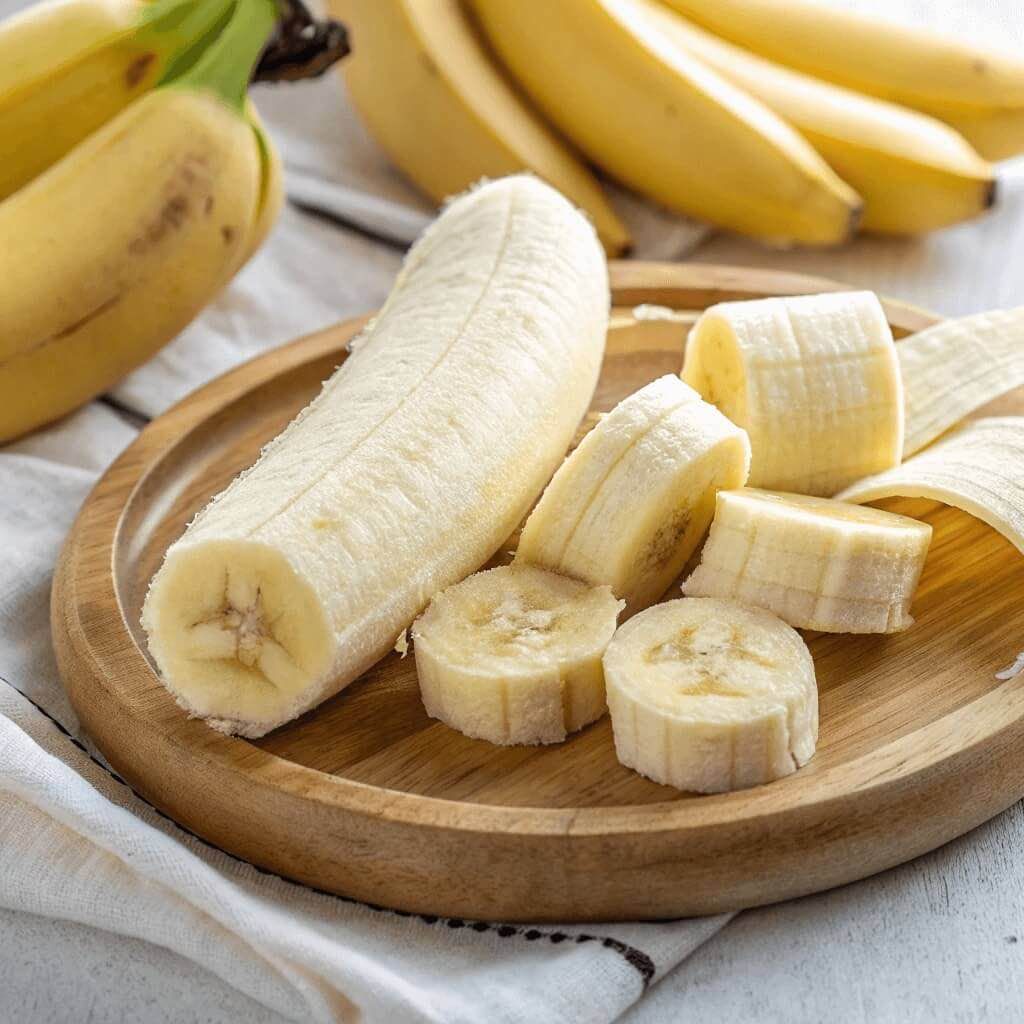
Banana is about as close to a zero-effort first food as it gets. No cooking, no special tools, and it arrives in its own packaging, which makes it the default choice for baby food on the go. It's naturally sweet, but that sweetness comes with real nutrition rather than empty calories.
Ripe banana is soft and creamy, so it mashes, purees, or serves as a finger food equally well at almost any stage. It's a good source of potassium and vitamin B6, and its natural fiber, including prebiotic fiber that feeds healthy gut bacteria, is gentle on a developing digestive system, while its natural sugars give active babies quick, steady energy. Its mild flavor also makes it an easy base to mix into cereals, yogurt, or other purees. It isn't a common allergen or a significant choking risk when ripe.
The trick is ripeness. Look for yellow skin with brown speckles. Underripe banana is firmer, starchier, and much less pleasant for a baby to manage.
Banana Baby Food: How to Prepare It
Puree from 6+ Months
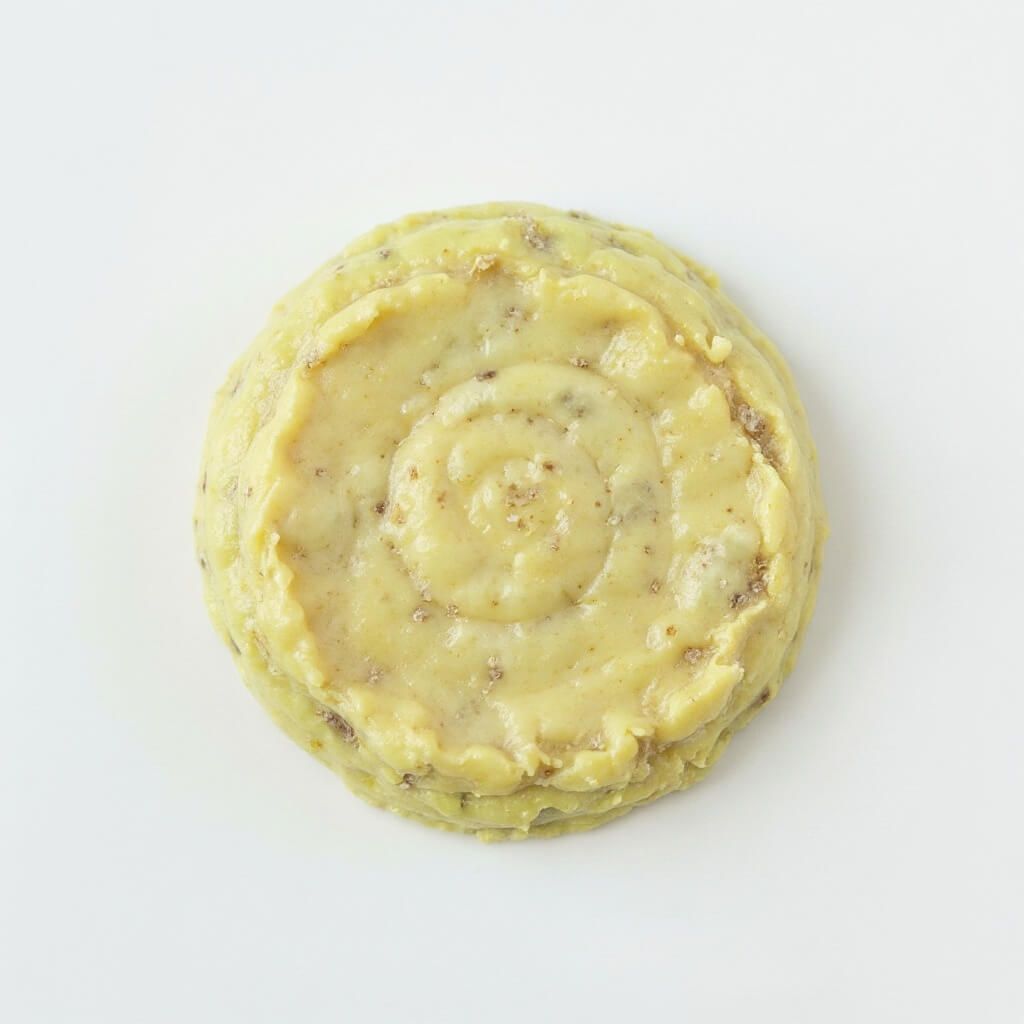
Mash ripe banana until smooth, adding breast milk or formula if needed for the desired consistency. You can mix it with other fruits or oatmeal to add flavor variety and nutritional diversity.
BLW from 6+ Months
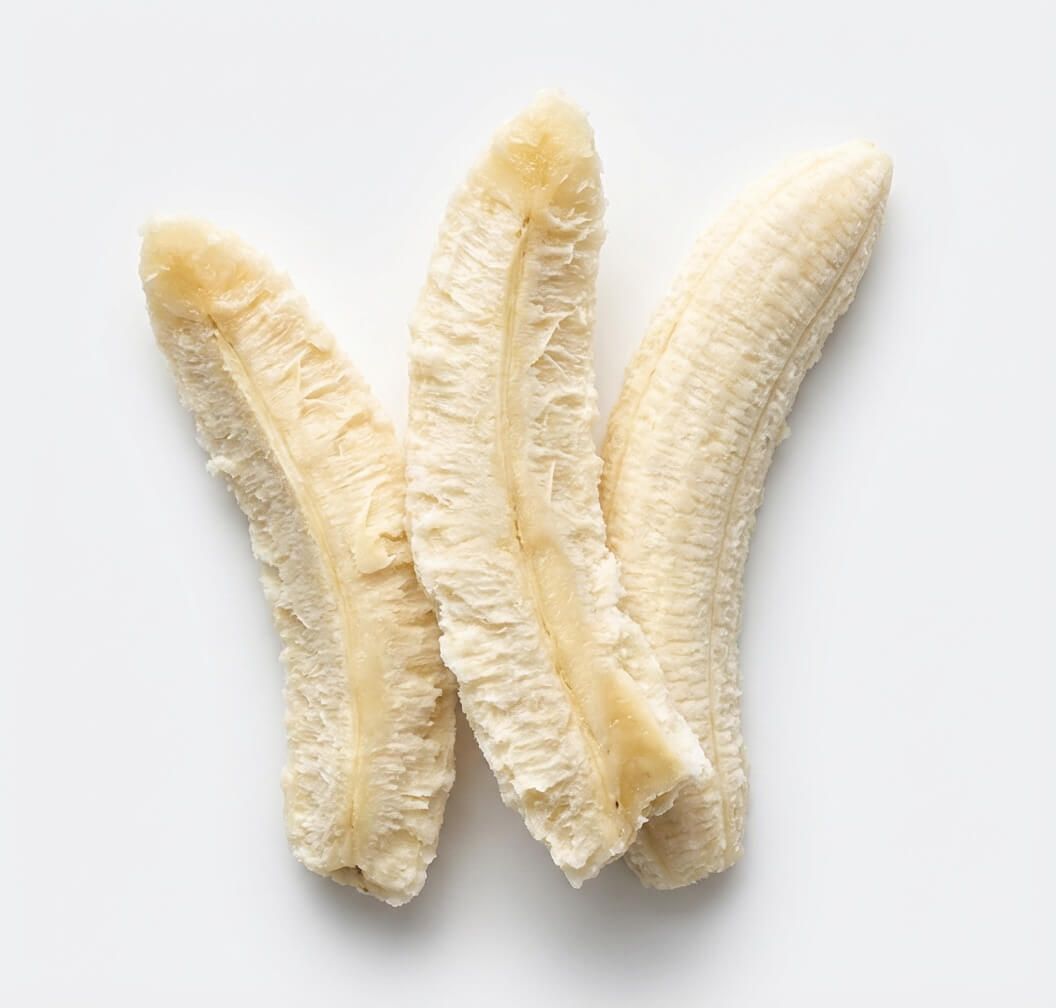
Offer half a whole banana or lengthwise spears split into thirds for easy grasping. If you want spoon practice, mashed banana is great for self-feeding and learning utensil skills.
BLW from 9+ Months
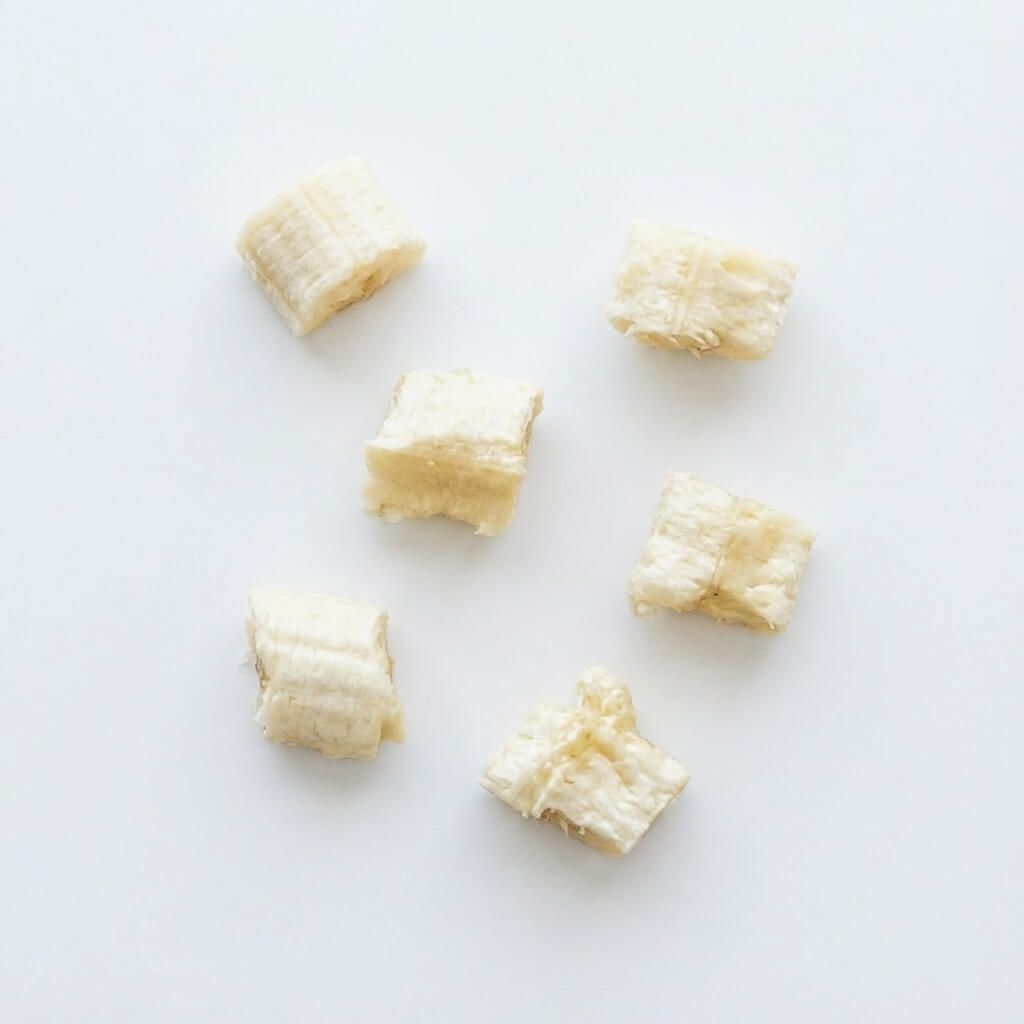
Cut banana into small rounds or bite-sized pieces to encourage fine motor development and pincer grasp practice. You can also offer lengthwise spears if your baby prefers them for grasping.
BLW from 12+ Months
Serve bite-sized pieces, spears, or offer a whole banana to practice biting and chewing. At 18 months and beyond, you can teach peeling to develop independence and fine motor coordination.
Nutritional Benefits
Bananas are nutrient-packed and provide steady energy for growing babies. They contain prebiotic fibers that support gut flora development and aid healthy digestion.
Key Nutrients
Potassium
Supports muscle and nerve function.
Vitamin B6
Aids brain development and metabolism.
Vitamin C
Boosts immunity and helps absorb iron.
Fiber
Promotes healthy digestion and prevents constipation.
Magnesium
Supports muscle relaxation and bone development.
Allergen & Choking Information
Not a Common Allergen
Bananas are rarely allergenic and pose minimal choking risk when soft and ripe. Avoid unripe bananas, which can be too firm for early eaters. Choose bananas with yellow skin and brown speckles for optimal ripeness.
Frequently Asked Questions
When can babies eat Bananas?
Around 6 months (when baby starts solids)
How do I prepare Bananas puree for my baby?
Mash ripe banana until smooth, adding breast milk or formula if needed for the desired consistency. You can mix it with other fruits or oatmeal to add flavor variety and nutritional diversity.
What are the nutritional benefits of Bananas?
Bananas are nutrient-packed and provide steady energy for growing babies. They contain prebiotic fibers that support gut flora development and aid healthy digestion.
Sources & Related Resources
Get Personalized Guidance for Every Feeding Stage
Download the Grubsy app to track meals, get tailored recommendations, and explore foods like Banana plus hundreds more, all in one place.
Disclaimer: This information is for educational purposes only and does not replace professional medical advice.