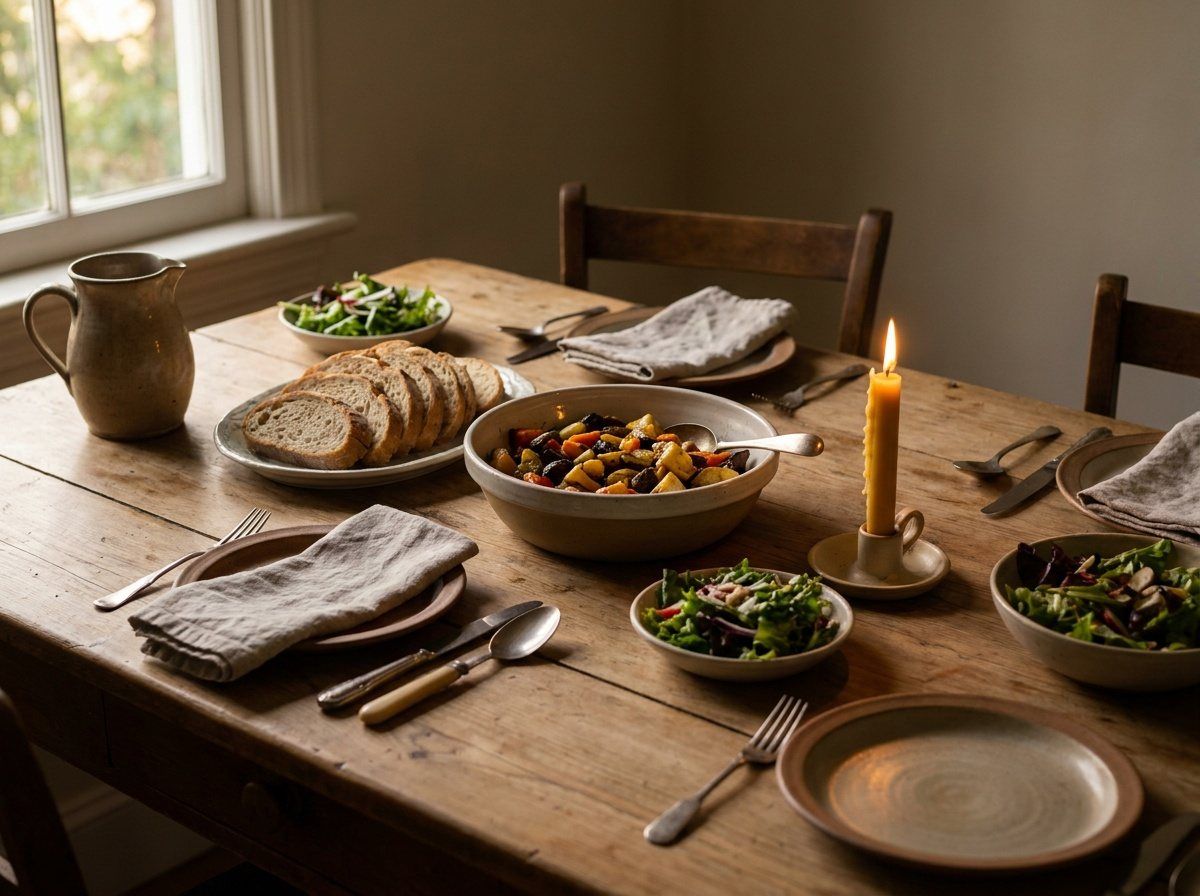
If dinner in your house sometimes turns into a negotiation, a bribe, or a standoff over three more bites of broccoli, you are not doing anything wrong, and you are also not alone. Pressure-free mealtimes for your baby or toddler are one of the most consistently recommended, and most consistently misunderstood, ideas in feeding research. The name makes it sound like giving up all structure, but it actually means something much more specific: offering food without demanding a particular outcome, and building a calm, predictable routine around it instead of a running argument.
This guide covers why pressure to eat so reliably backfires, what a pressure-free approach actually looks like at the table in very concrete terms, why screens undermine the same goals pressure does, and how to build a routine calm and predictable enough that none of this has to be a daily fight. None of it means anything goes. A clear structure sits underneath the whole approach, and by the end you will see exactly how the two fit together.
The evidence is consistent: pressuring a child to eat, whether through bribes, cheering, or "one more bite," predicts less food acceptance over time and more conflict at the table, not more eating. A calm, screen-free, low-pressure routine works better precisely because it removes the fight.
Why Pressure to Eat Backfires
It feels intuitive that a little push should help. If your toddler refuses green vegetables, surely one more bite, a bribe, or an enthusiastic round of applause for eating them would tip the balance? Feeding research points in the opposite direction almost every time it has been studied. Children who are regularly pressured to eat particular foods tend to eat less of those foods over time, not more, and mealtimes in pressuring households tend to involve more conflict and more resistance, not less.
Bribing is the clearest example. "Finish your vegetables and you can have dessert" teaches a lesson, just not the one most parents intend. It tells a child that the vegetable is an obstacle to get through and the dessert is the actual prize, which tends to make the child like the vegetable less and want the dessert more than they otherwise would. The food being used as leverage ends up with worse associations over time, not better ones.
Cheerleading over bites, the exaggerated "good job, one more, you're doing so well," can feel supportive, but it turns eating into a performance being judged rather than something a child does because they are hungry and the food is appealing. Negotiating for extra bites, the classic "just two more and then you're done," teaches a child that the stated end of the meal is not really the end, which quietly encourages the very standoffs it is meant to avoid. And visible disappointment, a sigh, a comment about how little was eaten, is still pressure, even when no words are spoken.
The underlying issue is that eating is one of the few areas where a young child has real, legitimate control over their own body, and pressure turns that control into a contest. Once a food or a mealtime becomes the site of a power struggle, a child's motivation shifts from curiosity about the food to defending their own say over what goes into their mouth, and that shift tends to outlast whatever specific meal caused it.
There is also a curiosity cost. Babies and toddlers are naturally cautious about new foods, a trait called food neophobia that shows up in nearly every child to some degree and usually eases with repeated, low-stakes exposure. Pressure adds a layer of negative emotion on top of that already-cautious starting point, and negative emotion is exactly what makes a child dig in rather than warm up. Take the pressure away, and repeated exposure is free to do what it does best: turn an unfamiliar food into a familiar, unremarkable one, through neutral repetition rather than any single dramatic breakthrough meal.
What Pressure-Free Mealtimes Actually Look Like in Practice
None of this is abstract. Pressure-free mealtimes for babies and toddlers come down to a handful of concrete habits, most of which are more about what you stop doing than what you start doing.
What No Pressure Sounds Like at the Table
- ▸Food is offered without a required outcome: your job ends at putting it on the table, not at getting a certain amount into your child
- ▸No bribes: dessert, treats, or screen time are never used as a reward for eating something else
- ▸No cheerleading or visible disappointment tied to bites taken: the same calm, neutral tone whether your child eats three bites or the whole plate
- ▸No negotiating extra bites: "all done" means all done, not the opening move in a bargain
- ▸No shaming or comparisons: skip "you used to eat this" or "your brother finishes his plate"
Notice what's still there: you are still choosing what lands on the plate, still serving vegetables next to something you know your child likes, still sitting down together. Pressure-free does not mean anything goes. It means the outcome, whether and how much your child eats of what's offered, stays theirs to decide, meal after meal, even when what they choose is a single bite of bread and nothing else.
That includes the food that comes back untouched for the tenth night in a row. Offering broccoli or peas again next week without comment, without a reminder that it was refused last time, is not you giving up. Repeated, pressure-free exposure is usually what eventually gets a food accepted, and pointing out the history usually works against you.
In practice, the shift is often just a change in language rather than a whole new philosophy. "Two more bites and then you get dessert" can become "dessert's part of the meal tonight, it's already on the table." "Good girl, you ate your carrots!" can become nothing at all, just clearing the plate the same way you would after any other bite. "One more bite for me?" can become silence, or a simple "let me know if you want more." The words change more than the food does, but the effect on how mealtime feels is significant.
Build a Calm Routine, Not a Rulebook
Grubsy's meal planning lays out a predictable rhythm of what and when for you, so pressure-free mealtimes are something you can actually stick to, not just a nice idea in theory.
Screens at the Table
A screen at the table works against the same goal from a different angle. Eating well depends on a child noticing their own hunger and fullness cues and connecting those signals to the food in front of them, slowing down when full, reaching for more when still hungry. A show or a tablet game pulls attention away from exactly that internal signal. A child watching a screen while eating tends to eat on autopilot, missing early fullness cues and sometimes missing hunger cues too, since the meal becomes background to whatever is actually holding their attention.
Screens also remove something less obvious but just as important: the social, modeling side of a shared meal. A large part of how food preferences form is a child watching the people around them eat and visibly enjoy food, a parent trying the same broccoli they're offering, a sibling reaching for seconds. That modeling only works if everyone at the table is actually paying attention to the meal and each other. A table where everyone, including the adults, is looking at a screen loses that entirely, and mealtime becomes several people eating in parallel rather than one shared experience.
None of this requires a rigid, zero-screen household rule, and it's worth saying plainly that a screen-free table is genuinely harder on some days than others. A flight, a rough teething week, a night when you need twenty uninterrupted minutes to get dinner on the table, all of those are real, and an occasional screen at the table on a hard day will not undo months of otherwise pressure-free, screen-free habits. What tends to work better than an absolute rule is treating the screen-free table as the aim, with a few realistic tools ready for the genuinely hard moments: simple conversation about the day, a board book or a quiet, non-screen toy near the highchair for a baby who is done eating but not ready to be done sitting, and, honestly, some tolerance for a squirmy toddler who needs to get down and wander for a minute. A little restlessness at the table is normal and not a sign that something needs fixing.
The same logic applies just as much to snack time and to the adults at the table as it does to a toddler's dinner. A parent scrolling through a phone while a baby eats is missing the same cues a child would miss watching a show, and is also unavailable for the modeling that makes shared meals valuable in the first place. Treating your own plate and your own phone the same way you're asking your child to treat theirs, present and screen-free for the duration of the meal, tends to make the whole household's routine easier to hold, not just the child's part of it.
Building a Calm, Predictable Routine
Structure is what makes low pressure sustainable, and the biggest piece of that structure is predictability. Meals and snacks at roughly the same times each day, not to the minute, but a rhythm your child can start to anticipate, mean your child actually arrives at the table hungry instead of having grazed all afternoon with no real appetite left for dinner. A set seat, the same highchair or the same spot at the table every time, gives eating a clear physical association, which matters more for young children than it sounds like it should. For a sense of how that rhythm typically shifts by age, our infant feeding milestones guide is a useful reference.
It also helps to have a realistic idea of attention span. Many babies and young toddlers genuinely engage with a meal for something like fifteen to thirty minutes, and pushing a meal well past that rarely buys more eating. What it usually buys is more fidgeting, more thrown food, and more opportunities for the very standoffs a pressure-free approach is trying to avoid. Treating that window as normal, rather than as a problem to solve, takes the pressure off everyone at the table, including you.
The end of the meal matters just as much as the start. A clear, calm close, wiping hands, saying something like "looks like you're all done, let's get down," and moving on, works better than an open-ended standoff that drags on while you wait for a few more bites that may never come. Deciding the meal is over and following through, without anger and without another round of bargaining, is itself part of the pressure-free approach, not a departure from it.
None of this needs to be rigid to work. A holiday, a late night out, a grandparent's house running on a different schedule, none of that undoes a routine built over weeks and months. Predictability is about the general pattern your child can count on most days, not a schedule that has to survive every disruption without bending.
If you're short on ideas for what actually fills that predictable window, lunch ideas for a 12-month-old is a good place to start, since having a few reliable meals on rotation makes the whole routine easier to keep.
Setting the Stage in the First Year
If your baby hasn't started solids yet, or started only recently, you have a genuine advantage: none of these habits need to be undone later, because they haven't been built in the other direction yet. Starting solids is a natural, low-stakes moment to build a pressure-free, screen-free routine from the very first spoonful or the very first piece of soft food on the tray, long before your baby has learned to expect a bribe or a round of applause for eating.
Sitting your baby at the table for family meals from early on, even while they are mostly on milk and just starting to explore purees or soft finger foods, builds the shared-meal habit before it needs to be retrofitted. A baby in a highchair at the family table during dinner is already absorbing the modeling piece, watching you eat, well before they are eating much of anything themselves. And because a young baby has no history of bribes or bargaining to unlearn, the calm, low-pressure default is simply the only version of mealtime they have ever known, which makes it far easier to keep than to introduce for the first time with an eighteen-month-old who has already learned that refusing food gets a reaction.
Around the first birthday, as your toddler's nutrition needs shift toward more of an adult eating pattern, the same predictable, low-pressure rhythm keeps paying off. It's far easier to keep a habit already running than to introduce one for the first time once a child has opinions and a favorite word for "no."
It also helps to know, going in, that appetite naturally dips and swells throughout the first year and into toddlerhood, around growth spurts, teething, illness, and ordinary developmental leaps, and none of those dips call for more pressure. A baby who normally eats well and suddenly eats very little for a few days is usually fine, and treating that dip as an emergency requiring extra encouragement is one of the more common ways pressure creeps into an otherwise low-pressure home. Riding out the dip with the same calm, neutral offering keeps the routine intact on the other side of it.
No Pressure Doesn't Mean No Structure
It's worth being direct about a common worry: pressure-free sounds, to a lot of parents, uncomfortably close to permissive, like it must mean serving whatever is requested on demand or letting meals run however a toddler wants. It doesn't, and the structure that keeps it from becoming that is worth naming explicitly. Feeding therapist Ellyn Satter's Division of Responsibility framework, now widely used across mainstream pediatric and feeding guidance, splits mealtime roles clearly: parents decide what food is offered, and when, and where it's eaten. The child decides whether to eat it at all, and how much of what's on offer.
Pressure-free mealtimes live entirely inside the parent side of that split, not outside it. You still plan the menu, still decide dinner is at six and happens at the table, still choose not to become a short-order cook making a separate meal on request. What you give up is any attempt to control the one piece that was never really yours to control in the first place, how much your child's body decides it needs. That's a narrower, more specific kind of letting go than "anything goes," and it's exactly what makes the whole approach sustainable instead of chaotic.
This structure is also what makes it possible to tell the difference between ordinary, expected fussiness and something worth a closer look. A toddler working through a picky phase, a baby who throws food, refuses to self-feed, or turns every meal into a production, these are common enough that they deserve their own detailed answers rather than a quick aside here. Our guide to picky eating and our guide to toddler mealtime behavior both build directly on the pressure-free, Division of Responsibility foundation laid out here.
Final Thoughts
Pressure-free, screen-free mealtimes are not about giving up on getting your child to eat well. Based on what feeding research consistently shows, they are a more effective route to it than bribing, cheerleading, or one more bite ever were, precisely because they remove the fight and let your child's own hunger and curiosity do the work instead.
None of it has to be perfect from day one. A screen creeps in on a hard night, a bribe slips out when you're exhausted, a meal ends in a standoff anyway sometimes. What matters far more than any single meal is the pattern over weeks and months: food offered calmly, without a required outcome, inside a routine predictable enough that nobody, including you, has to fight for it to work.