Key Takeaways
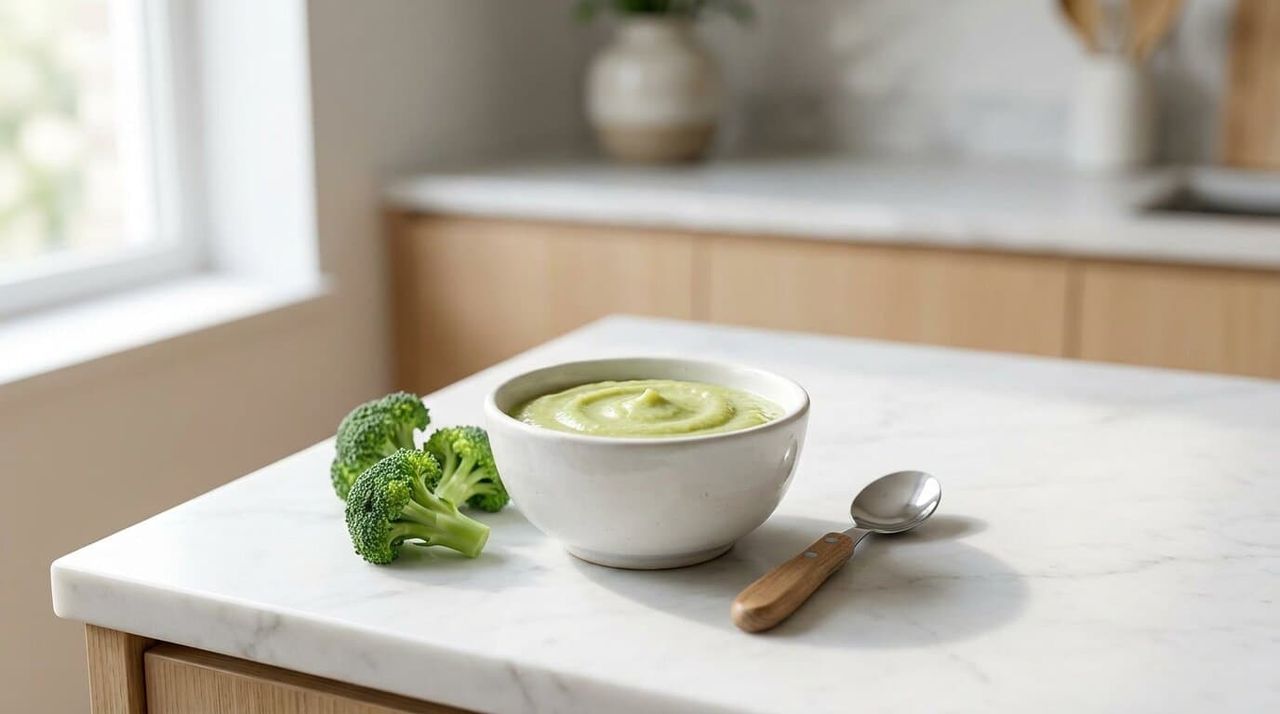
Broccoli is a nutrient-rich vegetable suitable for complementary feeding from the 6th or 7th month. It provides important vitamins like vitamin C, K, and folate, as well as minerals like calcium and iron.
Important: Always cook broccoli well, puree finely, and introduce in small amounts. Mild gas at the beginning is normal and usually regulates after a few days.
Broccoli for baby food is one of the most popular vegetables for complementary feeding. This green cruciferous vegetable stands out for its high nutrient density, versatility, and excellent compatibility with other foods.
This comprehensive guide provides you with well-founded, practical guidance on all important questions about broccoli in baby nutrition.
When Can Babies Eat Broccoli – The Right Timing
The most common question is: when can babies eat broccoli?
Broccoli is typically suitable from the 6th or 7th month, after the initial phase of introducing solids. In the first weeks, many parents start with mild vegetables like carrots or squash. Once your baby tolerates these well, broccoli can be gradually added to the diet.
More important than an exact date are the so-called readiness signs for solids:
- ▸ Your baby can sit upright with support
- ▸ The tongue thrust reflex has disappeared
- ▸ They show active interest in food
- ▸ They bring objects to their mouth purposefully
When these conditions are met, the timing for broccoli for babies is usually well chosen.
Is broccoli the right food for your baby right now?
Grubsy's food database shows the right age, safe prep, and tolerance notes for broccoli and hundreds of other ingredients, all tailored to your baby's exact age.
Why Broccoli for Baby Food Is So Valuable
Baby food with broccoli is considered particularly nutrient-rich for good reason. The vegetable provides many vitamins and minerals while having low energy density. Especially in the second half of the first year, when breast milk or formula alone no longer meets all nutritional needs, this is a great advantage.
Important Nutrients in Broccoli
- ▸ Vitamin C – supports the immune system and improves iron absorption
- ▸ Vitamin K – important for blood clotting and bone metabolism
- ▸ Folate – supports cell division and growth
- ▸ Provitamin A (Beta-Carotene) – important for vision and mucous membranes
- ▸ Calcium – contributes to bone development
- ▸ Plant-based Iron – supports blood formation
- ▸ Fiber – promotes intestinal activity
Especially in the second half of the first year, the body's iron stores decrease. That's why broccoli for baby food is a sensible addition to the diet.
Broccoli for Babies and Digestion
Many parents worry whether broccoli puree for babies causes gas. Indeed, broccoli belongs to the cruciferous family and contains natural plant compounds (glucosinolates) that are partially fermented in the intestine.
This can lead to the following symptoms in sensitive babies:
- ▸ Gas
- ▸ Mild tummy rumbling
- ▸ Increased flatulence
However, this doesn't mean broccoli is unsuitable. On the contrary: the intestine needs to learn to process new fibers.
Important When Introducing:
- ✓ Gradually increase small amounts
- ✓ Always offer broccoli well cooked
- ✓ Puree very finely
- ✓ Observe baby's reaction
In most cases, digestion regulates after a few days.
How to Properly Prepare Broccoli Puree
With broccoli puree, preparation plays a crucial role for digestibility and nutrient retention.
1. Always Cook Well
Raw food is unsuitable for babies. The fiber structure is too tough, and the mustard oils contained are more intense. Through gentle cooking, the cell structure is broken down, digestibility improves, and bacterial load is reduced.
2. Steam Instead of Heavy Boiling
When boiling heavily, water-soluble vitamins (e.g., vitamin C) are partially lost. Gentle steaming is therefore considered particularly nutrient-preserving.
3. Puree Very Finely
A smooth broccoli puree for baby is important to avoid the gag reflex. The texture should be homogeneous and without fiber residues.
Broccoli Baby Food in Thermomix – Useful or Not?
Many parents use kitchen machines for preparing baby food. Broccoli baby food in Thermomix is a common search query.
Advantages of Kitchen Machines:
- ▸ Even chopping
- ▸ Controllable temperature
- ▸ Time savings
- ▸ Very fine consistency
Important nonetheless: Check temperature after heating, stir the puree well, and check consistency. The machine doesn't replace parental attention but can make preparation easier.
Broccoli Potato Puree – Texture and Storage
A common topic around broccoli potato puree is the change in consistency after freezing. Potato starch tends to undergo so-called retrogradation – meaning the puree can become grainy, rubbery, or less creamy after thawing.
For babies, a uniform texture is particularly important. Therefore, frozen puree should be thoroughly heated, stirred intensively, and checked for consistency.
Fresh or Frozen – Which Is Better?
Many parents assume that fresh broccoli is automatically healthier. In fact, frozen broccoli can be a very good – sometimes even better – choice.
Advantages of Frozen Broccoli
- ▸ Flash-frozen immediately after harvest
- ▸ Low vitamin loss
- ▸ Available year-round
- ▸ Easy to portion
Especially when fresh broccoli has been stored for several days, the vitamin C content may have significantly decreased. For broccoli for baby food, high-quality frozen produce is therefore perfectly suitable.
Organic or Conventional?
When it comes to broccoli for babies, pesticide exposure also plays a role. Broccoli is generally considered relatively low in nitrates compared to some leafy vegetables.
- ▸ Organic farming uses less synthetic nitrogen fertilizer
- ▸ Seasonal outdoor broccoli often contains less nitrate
- ▸ Long storage times can reduce quality
If possible, organic broccoli is a good choice – but it's not mandatory as long as the product is fresh and of high quality.
Broccoli in Complementary Feeding and Taste Development
The early introduction of various vegetables influences later eating behavior. Babies are particularly open to new flavors in the first months of life – including slightly bitter aromas like broccoli.
When broccoli puree for baby is offered multiple times, the likelihood of the child accepting the taste increases. Studies show that up to 10-15 repetitions can be normal before a food is accepted.
Tips for Introduction:
- ✓ No pressure when eating
- ✓ Calm atmosphere
- ✓ Offer small amounts
- ✓ Stay patient
An early variety in broccoli complementary feeding can lead to broader vegetable acceptance long-term.
Hygiene with Broccoli for Baby Food
Since babies' immune systems are not yet fully developed, special care should be taken during preparation.
Important Hygiene Rules:
- ▸ Wash hands thoroughly
- ▸ Keep work surfaces clean
- ▸ Clean equipment with hot water
- ▸ Don't reheat puree multiple times
- ▸ Don't put leftovers from the spoon back into the storage container
Already warmed baby food broccoli should not be refrigerated and reused again.
Freezing and Storage
Broccoli puree can be frozen well, which is very practical in everyday life. More information can be found in our detailed guide to freezing baby food.
Important Points When Freezing:
- ▸ Cool down quickly
- ▸ Seal airtight
- ▸ Store at -18°C
- ▸ Keep for maximum about 2 months
- ▸ Label with date
When thawing, the puree should be fully heated and then cooled to eating temperature.
Conclusion: Using Broccoli for Baby Food Effectively
Broccoli for baby food is a nutrient-rich, versatile, and sensible addition to complementary feeding from about the 6th month.
It provides important vitamins, supports iron absorption, and promotes healthy intestinal development through its fiber. Even if mild gas occurs at first, this is usually part of the normal adjustment of the digestive system.
Whether as broccoli puree for baby, combined as broccoli potato puree, or using modern kitchen appliances – what matters is gentle preparation, fine consistency, gradual increase in amounts, good hygiene, and patient introduction.
With these basics, broccoli for babies becomes a valuable part of a balanced, varied complementary diet.