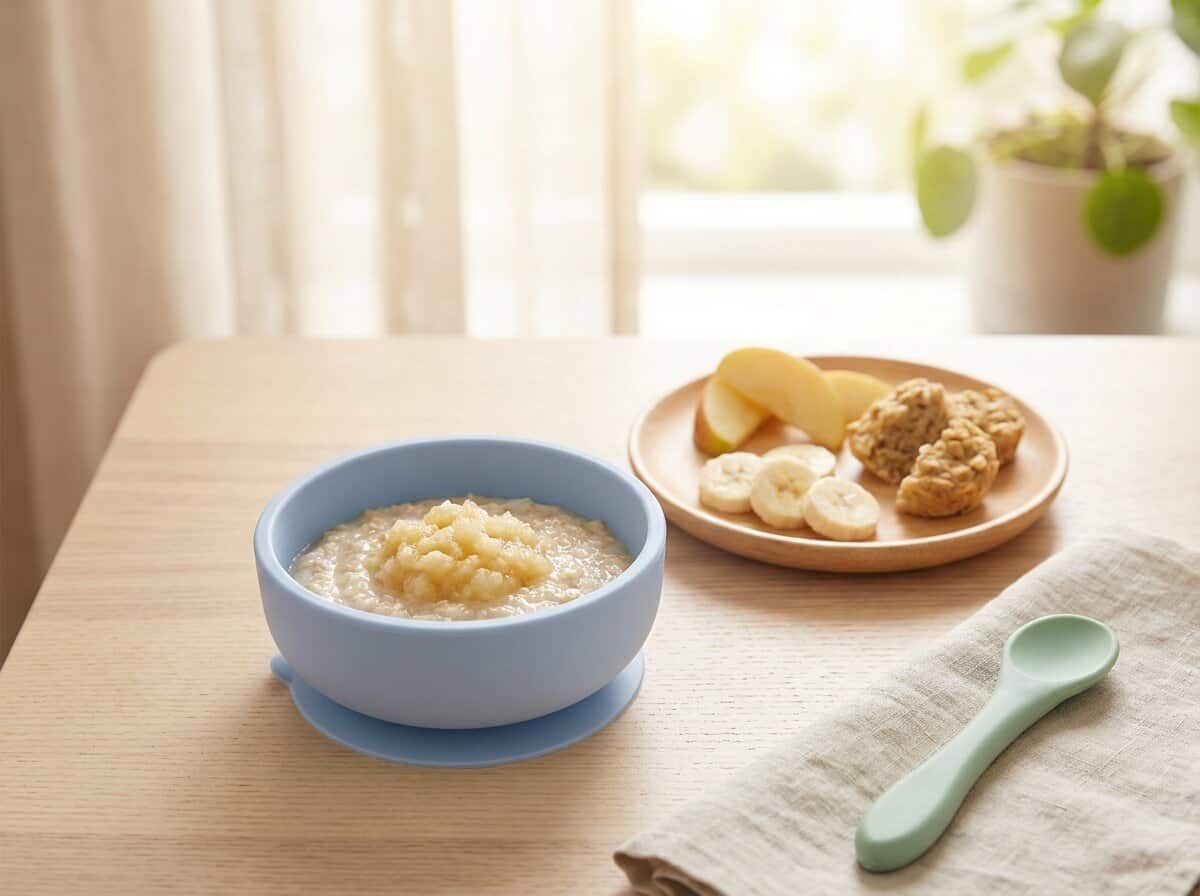
Baby breakfast plays a central role in the transition from milk feeds to solid food. While most weaning schedules first introduce lunch and evening meals, breakfast often remains milk-based until the 9th–10th month. Nevertheless, many parents wonder early on: When should babies start breakfast porridge? And which recipes are suitable for a nutritious baby breakfast?
This article provides a well-founded overview and practical, everyday recommendations for your baby's breakfast – from first porridges to family meals.
When Should Babies Start Breakfast Porridge?
A typical time for breakfast porridge for babies from 6 months is when your child shows certain readiness signs for solid foods:
- ▸ Sitting securely with support
- ▸ Reduced tongue-thrust reflex
- ▸ Interest in food
- ▸ Targeted hand-mouth coordination
Many infants start with breakfast porridge between 6 and 8 months, while others only transition to a solid breakfast meal from 10 months onwards. What matters is individual readiness, not the exact age.
Note: In the classic weaning schedule, breakfast is usually the last meal to be converted, after lunch and evening porridge.
Breakfast for Baby at 6 Months: What's Suitable?
Initially, breakfast is often a second breakfast after the early morning milk feed. The first meal of the day often remains breastfeeding or bottle – and that's perfectly fine!
Breakfast Porridge for Baby from 6 Months: A Gentle Start
A gentle introduction works through cereal porridges. These are easily digestible and provide important nutrients.
Suitable cereals:
- ✓ Oats – very iron-rich and filling
- ✓ Millet – gluten-free and rich in minerals
- ✓ Rice or spelt flakes – mild and easy to digest
Basic Recipe: Breakfast Porridge from 6 Months
Ingredients:
- ▸ 20 g cereal flakes
- ▸ 100–150 ml water or infant formula
- ▸ 2–3 tbsp fruit puree
- ▸ 1 tsp rapeseed oil for omega-3 fatty acids
Preparation:
Mix cereal flakes with warm liquid, let swell briefly, stir in fruit puree and oil – done!
Breakfast Porridge from 6 Months: 3 Recipe Ideas
Recipe 1: Oat-Fruit Porridge
Ingredients:
- ▸ 2 tbsp instant oat flakes
- ▸ 120 ml warm water
- ▸ 3 tbsp apple or pear puree
- ▸ 1 tsp rapeseed oil
Let swell briefly – ready to serve.
Recipe 2: Millet Porridge with Banana
Ingredients:
- ▸ 20 g millet flakes
- ▸ 150 ml water
- ▸ ½ mashed banana
- ▸ 1 tsp rapeseed oil
Cook porridge, fold in banana.
Recipe 3: Spelt Porridge with Peach
Ingredients:
- ▸ 2 tbsp spelt flakes
- ▸ 100–150 ml infant formula
- ▸ 3 tbsp peach puree
- ▸ optional: 1 tsp flaxseed oil
Let flakes swell in warm milk, stir in fruit puree.
Baby Breakfast at 10 Months: Transition to Family Foods
From 10 months, breakfast increasingly becomes a "normal" meal. The focus now is on soft, easily mashable foods. Babies at 10 months have usually developed the pincer grasp and want to eat independently.
Suitable for baby breakfast at 10 months:
- ✓ Soft bread pieces without hard crust
- ✓ Baby bread (low salt)
- ✓ Plain cream cheese
- ✓ Avocado as a spread
- ✓ Baby oat muesli (no sugar, no nuts)
- ✓ Steamed apple or pear slices
If you're interested in Baby-Led Weaning (BLW), breakfast is particularly well-suited for getting started – soft finger foods work wonderfully in the morning.
Baby Breakfast at 10 Months: 3 Recipe Ideas
Recipe 1: Baby Mini-Pancakes (Banana-based)
Ingredients:
- ▸ 1 small banana
- ▸ 1 egg
- ▸ 1 tbsp flour
Preparation:
Mix batter, fry small pancakes, serve soft. The pancakes are perfect for little hands!
Recipe 2: Soft Wholemeal Bread with Avocado
Ingredients:
- ▸ Unsalted, soft bread
- ▸ Some mashed avocado
Spread thinly, cut into strips – ideal for the pincer grasp!
Recipe 3: Warm Baby Muesli
Ingredients:
- ▸ 2 tbsp oat flakes
- ▸ 80 ml water or breast milk
- ▸ 2 tbsp mashed berries or apple puree
Bring oat flakes to a boil, let swell and enhance with fruit.
More Breakfast Ideas for Your Baby
Whether it's cereal porridge at 6 months or mini pancakes at 10, the app gives you matching breakfast recipes for every age, with nutrition info and a shopping list built in.
Important Safety Rules for Baby Breakfast
When introducing solid breakfast foods, you should observe some safety aspects. If your baby gags while eating, this is often a normal protective reflex – read more about it in our article.
Off-limits in the first year:
- ✗ Honey – botulism risk
- ✗ Whole nuts – choking hazard
- ✗ Salty breads – too much salt for baby's kidneys
- ✗ Rice cakes in large quantities – arsenic contamination
- ✗ Hard, raw fruit – choking risk
Preparation tips:
- ▸ Prepare porridges fresh whenever possible
- ▸ Lightly steam fruit for better digestibility
- ▸ Cut finger food large enough for baby to grasp easily
- ▸ Always supervise while eating
Tips for Everyday Life
Even if breakfast can be challenging at first, these tips help:
- ✓ No rush: Plan enough time in the morning
- ✓ Prepare ahead: Fruit puree can be frozen in portions
- ✓ Eat together: Let baby participate at the family table
- ✓ Patience: Not every day needs to be perfect
In our Food Database, you'll find all suitable ingredients for your baby's breakfast.
Conclusion: Baby Breakfast as a Developmental Step
Baby breakfast develops from a simple cereal-fruit porridge at around 6 months to a varied, family-style meal by 10 months. The key points:
- ✓ Breakfast porridge possible from 6 months – observe individual readiness
- ✓ Prefer iron-rich cereals like oats and millet
- ✓ From 10 months, transition to finger food and family meals
- ✓ Follow safety rules – no honey, no whole nuts
- ✓ Enhance with vitamin C-rich fruit and quality oils
With healthy cereals, vitamin C-rich fruits, and quality fats, you can create a nutritious breakfast that optimally supports growth, taste development, and eating skills.