Key Takeaways
If you've ever watched your baby try a new food and thought, "Wait, is that normal?" you're not alone. Recognizing the signs of allergic reaction in babies can feel overwhelming. This guide breaks everything down clearly, so you can spot what's happening, know what's serious, and respond calmly and confidently.
What Does an Allergic Reaction in Babies Look Like?
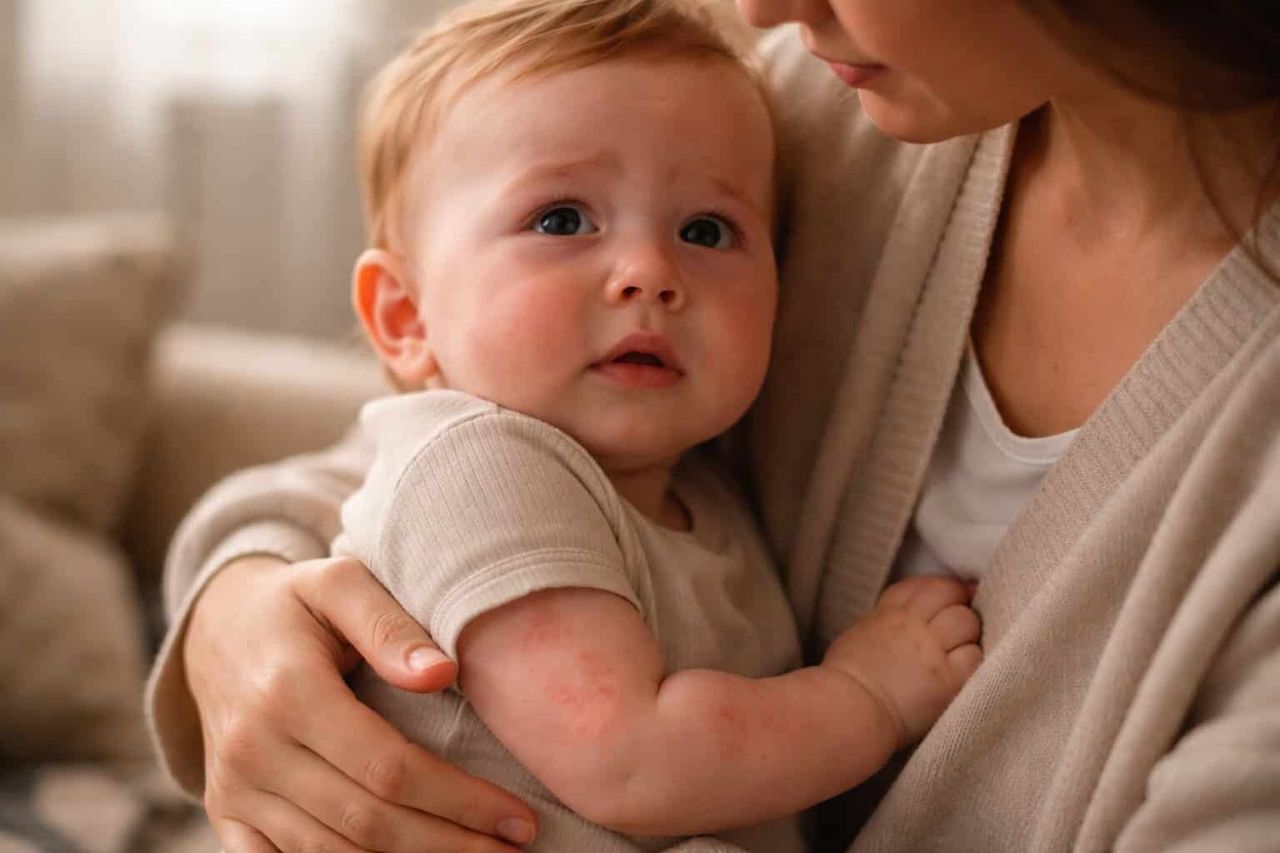
An allergic reaction in babies can show up in a few different ways. It usually affects the skin, tummy, or breathing, but sometimes it's just a change in behavior. Reactions can happen fast (within minutes) or take a few hours to appear.
Most Common Signs of Allergic Reaction in Babies
- ▸ Hives or raised bumps on the skin
- ▸ Redness, especially on the face (baby face red after eating)
- ▸ Swelling of lips, eyes, or face
- ▸ Vomiting or diarrhea
- ▸ Sudden fussiness or crying
- ▸ Coughing, wheezing, or trouble breathing
Some babies show only one symptom. Others may have several at once.
1. Skin Reactions: The Easiest Clue to Spot
Skin changes are usually the first thing parents notice, and often the clearest sign of an infant food allergy rash.
Hives (the Classic Sign)
- ▸ Raised, blotchy patches that may move around the body
- ▸ Can come and go quickly
- ▸ One of the most obvious allergic reaction in infants symptoms
Redness Around the Mouth
Common, but not always an allergy. Redness around the mouth is often caused by acidic foods (tomatoes, citrus, fruit). It's usually not itchy and fades quickly. A true baby food allergy rash typically spreads beyond the contact area.
Eczema Flare-Ups
If your baby already has dry, sensitive skin, certain foods can trigger a flare-up: dry patches, rough or scaly skin, and reddened areas. This is sometimes linked to infants and food allergies, but not always a direct allergic reaction.
2. Tummy Troubles: Hidden Signs of an Infant Allergy
Some of the trickiest reactions happen in the digestive system and can easily be mistaken for normal baby behavior.
Digestive Signs to Watch For
- ▸ Repeated vomiting after eating
- ▸ Loose stools or diarrhea
- ▸ Blood or mucus in poop
- ▸ Refusing to eat after a food was introduced
Timing is a big clue. Immediate vomiting suggests a possible allergy. Delayed symptoms (hours later) can still point to a newborn food allergy. If the same food consistently causes symptoms, that pattern matters.
3. Breathing Changes: When to Take It Seriously
Breathing symptoms are less common, but more serious. If you notice any of the following, especially alongside other symptoms, act immediately.
Serious Breathing Signs
- ▸ Wheezing or whistling sounds when breathing
- ▸ Persistent coughing
- ▸ Visible difficulty breathing
- ▸ Swelling in the mouth or throat
If breathing symptoms appear alongside skin or digestive symptoms, call emergency services immediately.
4. Behavior Changes: The Signs People Miss
Babies can't say "my throat feels weird," so they show it differently. These are often the earliest, and most overlooked, signs of allergic reaction in babies.
Subtle Behavioral Signs
- • Sudden intense crying or unusual distress
- • Becoming unusually sleepy or floppy
- • Rubbing face or tongue after eating
- • Pulling at ears or mouth
When these appear together with skin or tummy symptoms, take them seriously.
5. Signs of Allergic Reaction When Starting Solids
Starting solids is when most parents first notice a food reaction. If you're just beginning this journey, our guide on starting solids safely and our readiness guide are great places to start.
Most Common Allergy Triggers in Babies
- ▸Peanut
- ▸Egg
- ▸Dairy (cow's milk)
- ▸Wheat
- ▸Soy
- ▸Fish and shellfish
- ▸Tree nuts
Signs to Watch During First Foods
- • Rash or hives right after eating
- • Vomiting within 1–2 hours
- • Sudden fussiness or discomfort after a specific food
How to know if your baby is allergic to food? Look for reactions that happen consistently after the same food. Introducing one new food at a time (waiting 2–3 days between foods) makes it much easier to identify triggers. Read our baby food stage 1 guide for more on introducing first foods safely.
6. Mild vs. Serious Reactions: Know the Difference
Mild Reaction
- •A few hives or bumps
- •Mild rash around the mouth
- •Slight redness that fades quickly
- •Minor tummy discomfort
Serious Reaction
- ▸Trouble breathing or wheezing
- ▸Repeated vomiting
- ▸Swelling of face, lips, or tongue
- ▸Lethargy or floppy body
If more than one body system is involved (skin + breathing, or skin + vomiting), treat it as serious. Don't wait to see if it improves on its own.
7. What to Do If Baby Has an Allergic Reaction to Food
For Mild Symptoms
- 1. Stop feeding the food immediately
- 2. Clean baby's skin gently if a rash is present
- 3. Monitor closely for the next 1–2 hours
- 4. Contact your pediatrician to discuss next steps and allergy testing
For mild cases, doctors sometimes recommend liquid antihistamines, but always check first before giving any medication.
For Serious Symptoms
- ▸ Call emergency services immediately
- ▸ Lay baby flat (or on side if vomiting)
- ▸ Use prescribed emergency medication if available
Do not wait and see if it gets better on its own.
8. Common Questions Parents Ask
Can a 4–6 month old have allergies?
Yes, even very young babies can have food allergies or sensitivities. Reactions can occur when starting solids at 4–6 months, or in some cases through breast milk if the mother eats an allergenic food.
What about newborn food allergy?
Less common, but reactions to formula (cow's milk protein) or proteins passed through breast milk can happen. Look for persistent colic, blood in stool, or skin rashes in very young babies.
What can I give my baby for an allergic reaction?
This depends on age and severity. Liquid antihistamines can help with mild reactions, but only with doctor guidance. Never give medication without checking first.
Toddler allergic reaction vs. baby reactions, any difference?
As babies grow into toddlers, they may be able to communicate discomfort (saying their mouth feels funny, scratching, pointing to their tummy). The symptoms themselves remain similar, skin, digestive, and breathing signs.
9. How to Help a Baby With Allergies Day-to-Day
Managing an allergy infant doesn't have to take over your life. A few practical habits make a big difference.
Practical Daily Tips
- • Introduce new foods one at a time, waiting 2–3 days before trying another
- • Keep a simple food diary noting what was eaten and any reactions
- • Once a safe food is identified, keep it in the regular rotation
- • Work with your pediatrician on a clear allergy management plan
For general guidance on caring for your baby beyond food, our tips for infants guide covers feeding cues, sleep safety, and day-to-day care.
Your Food Diary, Digital and Always Handy
Instead of scattered notes, log every new food and any reaction in the Grubsy app, so you can instantly spot whether a symptom lines up with a specific allergen.
10. How to Prevent Food Allergies in Babies
Research in recent years has shifted the advice significantly. Instead of delaying allergenic foods, most experts now recommend introducing them early and regularly.
Evidence-Based Approach
- ▸ Start solids around 4–6 months when baby shows readiness signs
- ▸ Introduce common allergens (peanut, egg, dairy) early, in age-appropriate forms
- ▸ Keep those foods in the diet regularly once tolerated
- ▸ Breastfeeding during early allergen introduction may offer additional protection
Final Thoughts: Trust Your Instincts
Learning the signs of allergic reaction in babies isn't about memorizing a huge list, it's about noticing patterns. If your baby reacts the same way to the same food, has symptoms affecting more than one part of the body, or seems suddenly "off" after eating, it's worth paying attention.
You don't need to panic, but you do need to act quickly when something feels wrong. Over time, you'll get better at reading your baby. And that confidence makes all the difference. When you're ready for next steps, explore our guides on starting solids and baby food stage 1 to continue the journey with confidence.
Key External Resources
- 1. American Academy of Pediatrics (AAP) – Food allergy guidelines and early allergen introduction
- 2. NIAID (National Institute of Allergy and Infectious Diseases) – Peanut allergy prevention guidelines
- 3. Food Allergy Research & Education (FARE) – Comprehensive food allergy management resources
- 4. Mayo Clinic – Infant food allergy symptoms and treatment
- 5. HealthyChildren.org – Parent-friendly allergy and first foods guidance