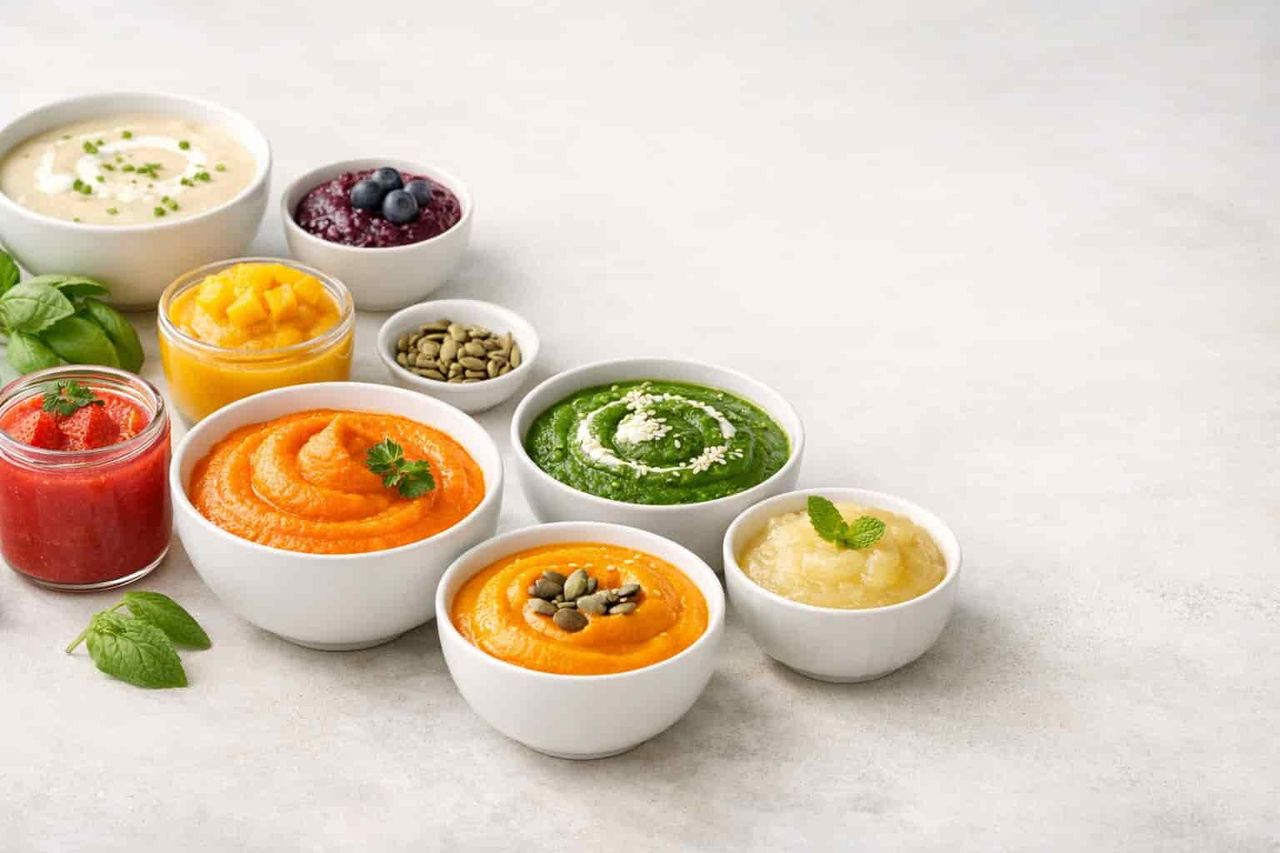
Puree food recipes are no longer just about blending food into a soft texture, they are about creating meals that are nutritious, flavorful and enjoyable. Whether you are preparing meals for someone with swallowing difficulties, a senior, or a baby starting solids, the goal is the same: safe food that still tastes great and looks appealing.
What You Will Learn
- ▸ Practical tips on how to make puree food at home
- ▸ The best puree foods for nutrition and taste
- ▸ Easy puree meal ideas for breakfast, lunch and dinner
- ▸ Creative puree food ideas to avoid boring meals
- ▸ Simple techniques to improve texture, flavor and presentation
What Are Puree Food Recipes?
Puree food recipes are meals that have been blended into a smooth, thick consistency. The texture should be lump-free, moist and cohesive, and easy to swallow without chewing.
These recipes are commonly used for:
- • People with swallowing difficulties (dysphagia)
- • Seniors who need softer foods
- • Babies transitioning to solid foods
Today, puree food ideas go far beyond plain mashed food, they can be colorful, flavorful and satisfying meals. If you are just beginning your baby's weaning journey, our starting solids guide covers the basics of getting started safely.
How to Make Puree Food (Step by Step)
If you are wondering how to make puree food properly, follow this simple process:
Step 1 – Cook Food Until Very Soft
Always cook food longer than usual. The softer it is, the smoother your puree will be.
Best methods: Boiling, steaming, slow cooking, braising
Step 2 – Blend Thoroughly
Use the right tool for the job:
- Blender → best for soups and fruits
- Food processor → best for meats and thicker foods
- Hand blender → quick small batches
Step 3 – Add Liquid Slowly
To reach the right texture, add small amounts of milk, broth, juice or cream.
Avoid adding too much at once, you want a thick, spoonable consistency.
Step 4 – Check Texture
A good puree should hold its shape on a spoon, slide off easily (not sticky) and have no lumps or fibers.
Step 5 – Strain If Needed
For foods like berries, beans or greens, use a sieve to remove seeds, skins and fibers.
For a detailed walkthrough on making baby-specific purees from scratch, check out our guide on how to make baby food puree.
Best Puree Foods for Nutrition
Choosing the best puree foods means focusing on ingredients that pack a lot of nutrition into small portions.
Avocado
Naturally smooth, rich in healthy fats and great for both sweet and savory dishes.
Sweet Potatoes
Naturally creamy, slightly sweet and high in vitamins.
Eggs
High in protein and easy to blend when cooked soft.
Salmon
Soft texture, rich in healthy fats and works well with sauces.
Greek Yogurt
Smooth, thick, high in protein and a great base for many puree recipes.
Lentils & Beans
High in protein and fiber, they blend into rich, creamy purees.
Oats & Grains
Filling and soft, easy to turn into smooth porridge.
Puree Meal Ideas for Every Day
Here are simple, practical puree meal ideas you can use daily.
Breakfast Puree Food Ideas
Creamy Banana Oat Puree
Cook oats with milk, add banana and blend until smooth.
Tip: Add peanut butter or yogurt for extra calories.
Vanilla French Toast Puree
Soak bread in milk, egg and vanilla. Cook until soft, then blend with syrup. One of the best puree recipes for a comforting breakfast.
Berry Yogurt Smooth Puree
Greek yogurt, blended berries (strained) and honey. A simple and refreshing option.
Looking for more morning meal inspiration? Our baby breakfast guide has additional ideas you can adapt.
Lunch Puree Meal Ideas
Creamy Tomato Soup Puree
Cook tomatoes, onion and garlic. Add cream and blend until smooth.
Chicken & Vegetable Puree
Cook chicken until tender, add carrots and potatoes, then blend with broth. A balanced, filling meal.
Avocado Chicken Blend
Cooked chicken, ripe avocado and a little broth or yogurt. Smooth, rich and nutrient-dense.
Dinner Puree Food Recipes
Beef Stew Puree
Slow cook beef with vegetables, blend meat and sauce separately, then combine for a smooth texture.
Pureed Pasta Bolognese
Overcook pasta, blend with meat sauce and adjust thickness.
Salmon with Cream Sauce Puree
Cook salmon, blend with white sauce and add lemon for flavor. One of the best puree foods for healthy fats.
Best Puree Recipes from Around the World
Adding global flavors helps avoid boredom and keeps meals exciting.
Lentil Curry Puree (Dal)
Cook lentils with spices, blend until smooth, and strain if needed. Rich, filling and full of flavor.
Rice Congee Puree
Cook rice with lots of broth and blend into smooth porridge. Perfect for gentle, easy-to-eat meals.
Chicken Mole-Inspired Puree
Cook chicken in a rich sauce and blend everything together. A deeper, more complex flavor option.
Tips to Make Puree Food Taste Better
One of the biggest challenges is avoiding bland meals. Here is how to fix that.
-
1.
Add Flavor While Cooking
Do not rely on blending alone, season food before pureeing.
-
2.
Use Healthy Fats
Add butter, olive oil or cream. This improves both taste and calories.
-
3.
Balance Flavors
Think sweet (carrots, honey), salty (cheese, broth), sour (lemon juice) and savory (meat, mushrooms).
-
4.
Use Herbs & Spices
Chicken → garlic, thyme. Fish → lemon, dill. Vegetables → nutmeg, cumin.
Puree Food Ideas That Look Appetizing
Appearance matters more than you think. A few simple tricks make a big difference.
Simple Presentation Tricks
- ▸ Keep foods separate, do not mix everything together
- ▸ Use bright colors (carrots, peas, berries)
- ▸ Shape food using molds or spoons
- ▸ Add sauces on top for contrast
How to Increase Calories in Puree Food
Many people on puree diets need more energy in smaller portions.
Easy Ways to Add Calories
- • Use cream instead of water
- • Add butter or oil
- • Mix in cheese
- • Use full-fat yogurt
- • Add nut butters
This helps prevent weight loss and keeps meals satisfying.
Puree Food Recipes for Babies
Purees are also perfect for babies starting solids. For an in-depth look at the earliest puree stage, see our baby puree stage 1 guide.
Stage 1 (4–6 months)
Single ingredients, smooth and thin.
Examples: Apple puree, sweet potato puree, banana puree
Stage 2 (6–9 months)
Thicker texture, combined ingredients.
Examples: Chicken + sweet potato, apple + blueberry, lentils + carrots
For even more baby-specific puree recipes and combinations, explore our baby puree recipes guide.
Discover Baby Puree Recipes Right in the App
The Grubsy app gives you a growing recipe library for every puree stage, from simple stage 1 blends to protein-rich combinations, all sorted to match your baby's age.
Food Safety Tips for Puree Meals
Because puree food is handled more, safety is especially important.
-
1.
Store Properly
Fridge: 1–2 days. Freezer: up to a few months.
-
2.
Reheat Safely
Heat thoroughly and stir well to avoid hot spots.
-
3.
Keep Equipment Clean
Wash blenders and tools thoroughly after each use.
For a complete guide on safely storing and freezing purees, read our article on freezing baby food.
Helpful External Resources
Here are some reliable guides and recipe collections to explore:
Final Thoughts
Puree food recipes do not have to be boring or repetitive. With the right approach, you can create meals that are nutritious, flavorful, visually appealing and easy to eat.
The key is to focus on proper texture, strong flavors, balanced nutrition and creative presentation. Whether you are preparing puree meal ideas for health needs or exploring new puree food ideas at home, there are endless ways to make meals enjoyable again.