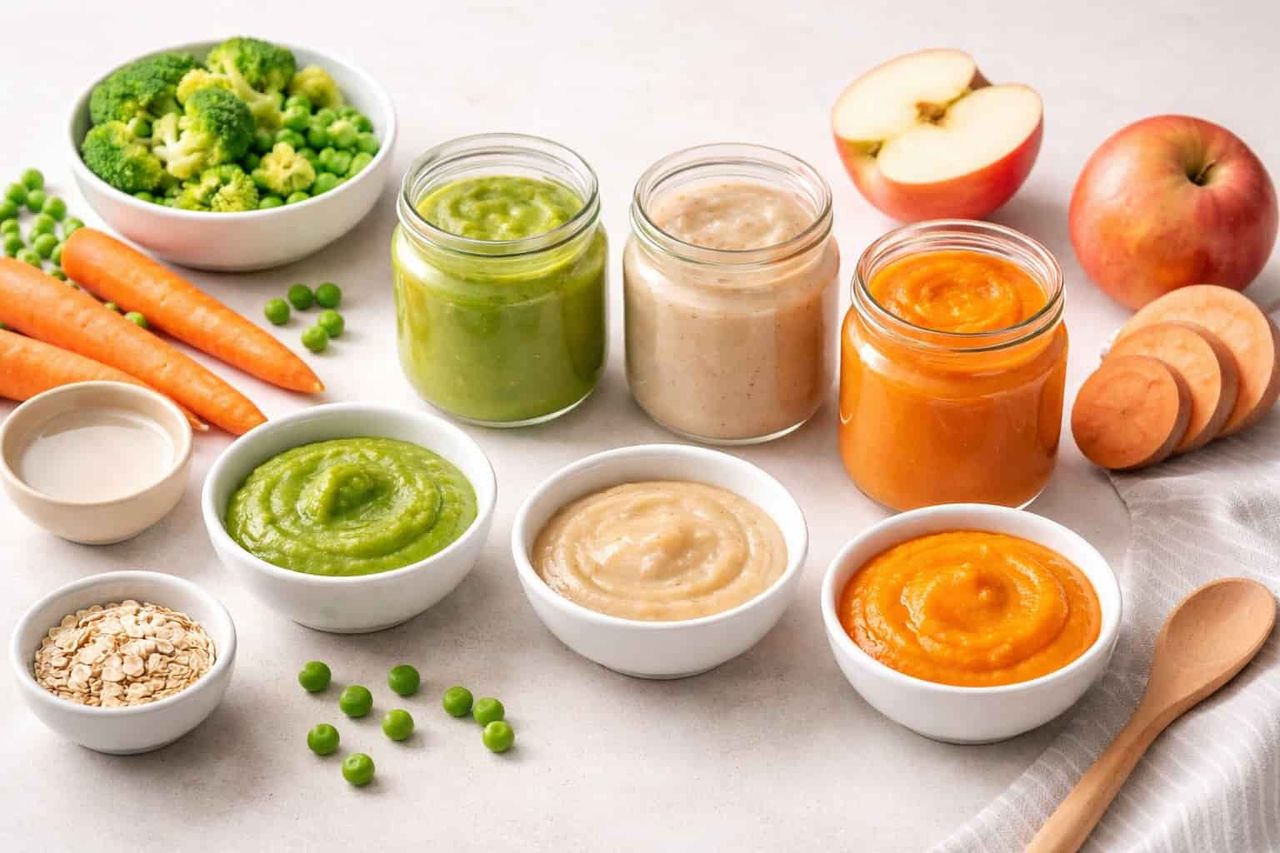
Learning how to make baby food puree at home is one of the most rewarding things you can do for your baby. It gives you full control over ingredients, helps your baby explore real flavors early on, and can even save money in the long run.
If you are just starting out, do not worry. Making baby food is much easier than it sounds. With a few simple tools and basic techniques, you can prepare healthy, delicious meals your baby will love.
In this guide, we will walk you through everything you need to know, from when to start, to the best way to make baby food, to step-by-step puree methods and storage tips.
When to Start Making Baby Purees
Before diving into how to make purees for baby, it is important to know when your baby is ready. Most babies are ready for solids around 6 months old, but instead of focusing only on age, look for these signs. For a detailed overview, check out our readiness signs guide:
- ▸ Can sit upright with minimal support
- ▸ Has good head and neck control
- ▸ Shows interest in food (watching you eat, reaching for food)
- ▸ No longer pushes food out with their tongue
If your baby checks these boxes, you are ready to begin your baby food prep journey.
Why Make Baby Food at Home?
Many parents wonder if it is worth the effort. The answer is yes, for several important reasons:
1. You Control the Ingredients
No added sugar, salt, or preservatives. You know exactly what goes into every bite.
2. Better Flavor Exposure
Homemade purees taste like real food, which helps babies develop healthy eating habits early.
3. Cost-Effective
Buying fresh produce and making batches is often cheaper than jars or pouches.
4. Flexible Textures
You can easily adjust consistency as your baby grows through different puree stages.
Essential Tools for Making Baby Purees
You do not need fancy equipment to start making baby purees, but a few basics will make things easier:
- ✓ Blender or food processor (best for smooth purees)
- ✓ Immersion (stick) blender (great for small batches)
- ✓ Fork or potato masher (for soft foods like banana)
- ✓ Steamer basket or pot
- ✓ Ice cube trays (for freezing portions)
- ✓ Glass containers or BPA-free storage jars
Best Way to Make Baby Food (Cooking Methods)
When learning how to make baby puree at home, cooking method matters. It affects both nutrition and taste.
Steaming (Best Overall)
- ▸ Keeps nutrients intact
- ▸ Softens food perfectly for blending
- ▸ Ideal for vegetables like carrots, broccoli, and sweet potatoes
Roasting (Best for Flavor)
- ▸ Enhances natural sweetness
- ▸ Great for pumpkin, sweet potato, and carrots
Boiling (Quick but Less Ideal)
- ▸ Easy but may lose nutrients into the water
No Cooking Needed
- ▸ Foods like banana, avocado, and ripe pear can be mashed directly
Tip: Steaming is usually the best way to make baby food if you want both nutrition and simplicity.
Step-by-Step: How to Make Baby Food Puree
Here is a simple process you can follow every time:
Step 1: Choose Fresh Ingredients
Pick ripe fruits or vegetables without bruises.
Step 2: Wash and Peel
Remove skins, seeds, and pits.
Step 3: Cook if Needed
Steam, roast, or boil until soft enough to mash.
Step 4: Blend or Mash
Use a blender or fork depending on the food.
Step 5: Adjust Consistency
Add breast milk, formula, or water to make it smooth and easy to swallow.
Step 6: Cool and Serve
Always test the temperature before feeding.
Easy First Purees to Try
If you are just starting with making baby food, these are perfect beginner options. You can find more inspiration in our baby puree recipes guide:
Fruits
- Apple (steamed)
- Pear (steamed)
- Banana (mashed)
- Avocado (mashed)
Vegetables
- Carrot
- Sweet potato
- Pumpkin
- Zucchini
Proteins (After a Few Weeks)
- Chicken
- Lentils
- Beans
How to Puree Food for Infants (Texture Guide)
Texture is just as important as ingredients when learning how to puree food for infants. Gradually reducing smoothness helps your baby develop eating skills.
Stage 1 (6 Months)
Very smooth and thin, almost liquid consistency. Learn more in our stage 1 puree guide.
Stage 2 (7 to 9 Months)
Slightly thicker, may include mixed ingredients.
Stage 3 (9 to 10+ Months)
Soft lumps, encourages chewing.
Baby Food Prep Tips for Busy Parents
You do not have to cook every day. Smart baby food prep can save tons of time.
- ▸ Batch cooking: Prepare multiple meals at once and freeze them.
- ▸ Use ice cube trays: Each cube equals about 1 ounce, making portion control easy.
- ▸ Label everything: Include the food type and the date.
- ▸ Cook once, eat twice: When making dinner, set aside a portion for your baby before adding salt or spices.
Safe Storage and Reheating
Homemade baby food does not contain preservatives, so proper storage matters. For a complete guide, see our freezing baby food guide.
In the Fridge
- Fruits and veggies: up to 48 hours
- Meat: up to 24 hours
In the Freezer
- Lasts 1 to 3 months
Reheating Tips
- Warm gently
- Stir well to avoid hot spots
- Always test temperature
Important: Never reuse food that has already been in your baby's mouth.
Safety Tips Every Parent Should Know
When learning how to make purees, safety is just as important as nutrition.
- ✗ Avoid honey (under 1 year): It can cause serious illness in infants.
- ✓ Wash hands and surfaces: Keep everything clean before and after prep.
- ✓ Cook food thoroughly: Especially meat, eggs, and fish.
- ✗ Be careful with choking hazards: Always remove seeds, skins, and bones.
Introducing New Foods and Allergens
Modern guidance suggests introducing a variety of foods early. For more on this topic, read our starting solids guide.
- ▸ Try one new food at a time: Wait 3 to 5 days before introducing another.
- ▸ Watch for reactions: Look for rash, vomiting, or swelling.
- ▸ Do not avoid common allergens: Foods like eggs, peanut (in safe forms), and yogurt can be introduced early unless advised otherwise.
Flavor Tips: Do Not Be Afraid to Mix It Up
A common myth is that baby food should be bland, but that is not true. You can safely add mild flavors like:
- ▸ Cinnamon
- ▸ Garlic
- ▸ Herbs (such as basil, thyme, or parsley)
This helps babies accept a wider variety of foods later.
Sample Weekly Baby Food Plan
Here is a simple idea for making baby purees throughout the week:
- Mon: Apple puree
- Tue: Carrot puree
- Wed: Sweet potato puree
- Thu: Pear and banana mix
- Fri: Lentil puree
- Weekend: Batch cook and freeze
Build Your Own Weekly Puree Plan in the App
Instead of keeping recipes and ingredients in your head, the Grubsy app helps you plan weeks like this one, find recipes matched to your baby's puree stage, and generate a shopping list automatically.
Helpful External Resources
Here are five reliable guides to support your journey:
Final Thoughts
Learning how to make baby food puree does not require special skills, just a little time, planning, and care.
Start simple, keep it safe, and focus on variety. As your baby grows, you will naturally move from smooth purees to more textured foods, helping them build confidence with eating.
Whether you are making a quick mashed banana or preparing a week's worth of meals, every effort you make supports your baby's healthy development.