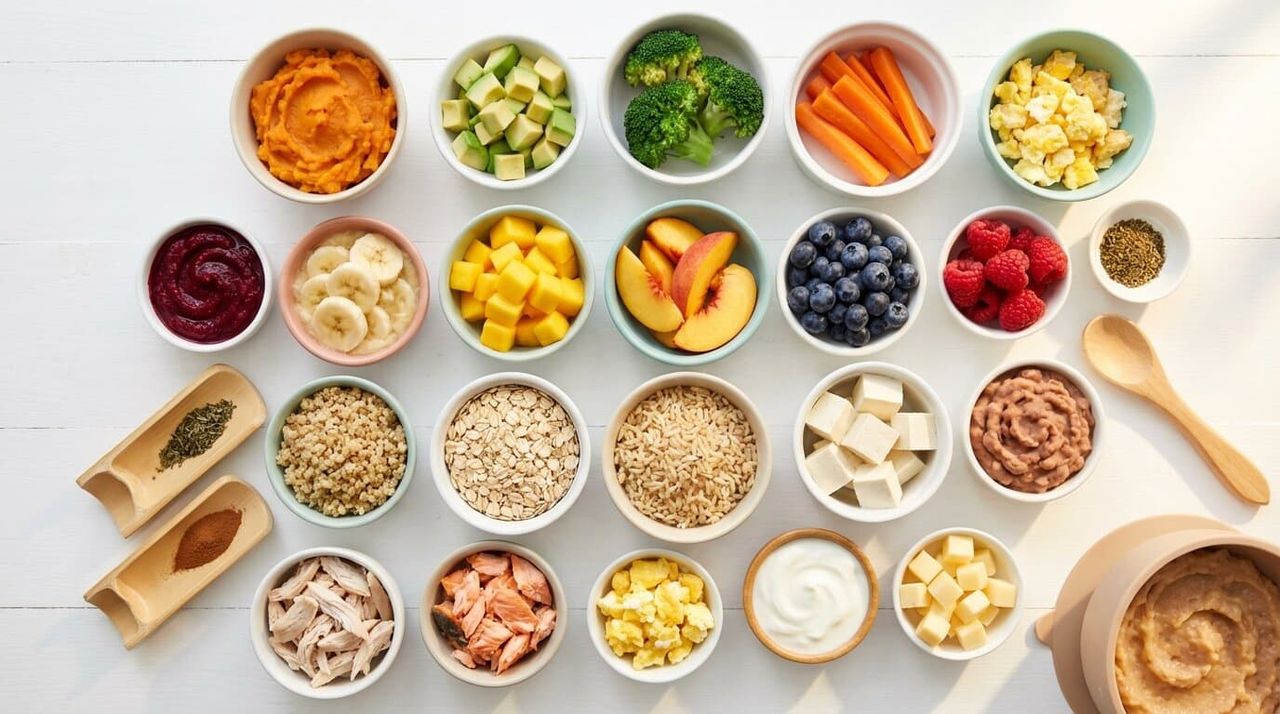
The idea behind 100 foods before 1 has become increasingly popular among parents looking for a practical, variety-focused way to introduce solids. While the exact number isn't the goal, the philosophy centers around building confidence, curiosity, and comfort with a wide range of flavors and textures during the earliest months of eating.
This guide is clear, friendly, and focused on what actually matters – readability and usefulness for real parents navigating the first year of food.
Key Takeaways
- ▸ The 100 foods idea encourages variety, not perfection
- ▸ Babies between 6–12 months are naturally open to exploring new flavors
- ▸ A balanced checklist covers vegetables, fruits, proteins, grains, dairy, and spices
- ▸ Early allergen introduction is now widely recommended
- ▸ Whether you reach 40, 80, or 100 foods – the real goal is positive eating habits
Why Families Explore the 100 Foods Before One Idea
Starting solids is one of the biggest transitions in a baby's first year. Many caregivers find themselves overwhelmed by mixed advice, especially around timing, allergens, and texture. The 100 foods before one approach gives structure without being rigid. It gently encourages variety rather than relying on the same few favorites.
Between about 6–12 months, babies are naturally open to exploring new flavors. Many parents describe this time as a "flavor window," where babies haven't yet entered the picky toddler stage and are curious about whatever is on the table. A wide food list – whether it reaches 100 or not – helps babies develop confidence and familiarity with the foods they'll see throughout childhood. For a complete overview of how to begin, check out our starting solids guide.
Knowing When Your Baby Is Ready
Age is helpful, but readiness cues are even better. Most babies begin solids around six months when they can:
- ▸ Sit with minimal support
- ▸ Hold their head steady
- ▸ Show interest in your meals
- ▸ Reach for objects
- ▸ Move food around in their mouth without pushing it out
These signals suggest that the baby can safely explore textures beyond milk. For a detailed breakdown, see our guide on complementary feeding readiness signs.
Building a Varied Baby Food Checklist
Parents often ask what foods "count" toward the 100 first foods idea. The answer: anything safe, age-appropriate, and varied. Many families aim for a balance across fruits, vegetables, proteins, grains, and fats. Some also include herbs and spices to build flavor exposure early on.
Here's a simple structure commonly used in 100 foods before 1 checklists:
Vegetables (20+)
Focus on color and flavor variety: sweet potato, broccoli, zucchini, bell pepper, carrots, kale, beets.
Fruits (20+)
Ripe, soft, and easy to mash: banana, pear, mango, berries, melon, kiwi, papaya.
Proteins (15–20)
Essential sources for iron and zinc: chicken, turkey, beef, lamb, lentils, tofu, salmon, beans.
Grains & Starches (10–15)
A great base for meals: oats, quinoa, rice, pasta, couscous, barley, polenta.
Dairy & Healthy Fats (5–10)
Full-fat options support growth: yogurt, cottage cheese, ricotta, avocado, olive oil.
Herbs & Spices (10+)
Gentle flavor-building additions: cinnamon, basil, turmeric, ginger, oregano, garlic.
Track your 100 foods without the spreadsheet
Log every new food in the app and watch your baby's variety grow, with prep tips and allergen info for every ingredient.
Texture Progression: BLW, Purees, or Blended Approaches
Whether you follow baby-led weaning (BLW), spoon-feeding, or a mix, texture progression is key. Babies learn chewing skills long before they have teeth, and offering different textures helps them practice. If you're interested in the BLW approach specifically, our baby-led weaning guide covers it in detail.
Typical texture stages:
- 1. Smooth textures – early tastes and simple mixtures
- 2. Thicker mashed foods – more complex textures
- 3. Soft lumps and fork-mashed foods – introducing variety
- 4. Finger foods and modified family meals – joining the family table
Looking for finger food ideas? Check out our BLW snacks and finger food guide for age-appropriate suggestions.
Allergens: Introducing Them Early and Calmly
A major component of today's feeding guidance is the early introduction of allergens such as peanut, egg, dairy, soy, wheat, and fish. Modern recommendations shift away from delaying allergens and instead suggest introducing them alongside other foods once the baby shows readiness.
Tip
After a food is introduced and tolerated, most experts recommend keeping it in the rotation regularly. Consistency helps maintain tolerance.
Gagging vs. Choking: The Concern Most Parents Have
It's natural to worry, especially for those trying BLW-style feeding. Understanding the difference helps build confidence. For a deeper look at this topic, read our article on baby gagging during feeding.
Gagging
A protective reflex. Babies may cough, turn red, or make noise. This is normal and part of learning.
Choking
Silent and requires emergency action. Always know what to do before starting solids.
Key tips for safer feeding:
- • Sit baby upright
- • Avoid round, hard, or sticky foods
- • Ensure foods pass the "squish test" (soft enough to smush)
- • Cut foods into safe shapes
- • Never leave baby unattended
Is this food safe? Check it in seconds
For every ingredient, the app shows the right age, allergen status, choking risk and how to prepare it safely, plus an allergen-introduction tracker.
Practical Ways to Reach 100 Foods Before One
Some parents follow a weekly plan, such as:
- ▸ Monday – new fruit
- ▸ Tuesday – new vegetable
- ▸ Wednesday – new grain or starch
- ▸ Thursday – new protein
- ▸ Friday – new potential allergen
Others simply introduce new foods whenever it fits into family meals. Many also enjoy using 100 foods before 1 printable checklists or apps for tracking. The goal isn't perfection – it's exploration.
Refusing Food Is Normal
Babies often make faces, spit food out, or touch before tasting. These behaviors are part of sensory learning, not signs that the food is disliked. It may take several exposures for true acceptance.
Responsive feeding works best:
- ▸ Offer without pressure
- ▸ Follow hunger and fullness cues
- ▸ Let the baby lead the pace
- ▸ Model enjoyment by eating with your baby
Over time, exposure builds familiarity, which leads to comfort and acceptance.
Food Safety Basics
Keep meals safe and stress-free:
- • Wash and prepare foods carefully
- • Cook meats, eggs, and fish thoroughly
- • Offer leftovers within 2–3 days
- • Skip salt, sugar, honey, whole nuts, popcorn, and round foods
- • Offer water in small amounts once solids begin
Conclusion
The key points at a glance:
- ✓ The 100 foods before 1 idea is about experiences, not numbers
- ✓ Each new food helps babies learn to chew, swallow, explore, and enjoy mealtime
- ✓ A balanced checklist across food groups builds variety and confidence
- ✓ Early allergen introduction is widely recommended
- ✓ Whether you get to 40, 80, or all 100 – the real success is positive, relaxed eating habits