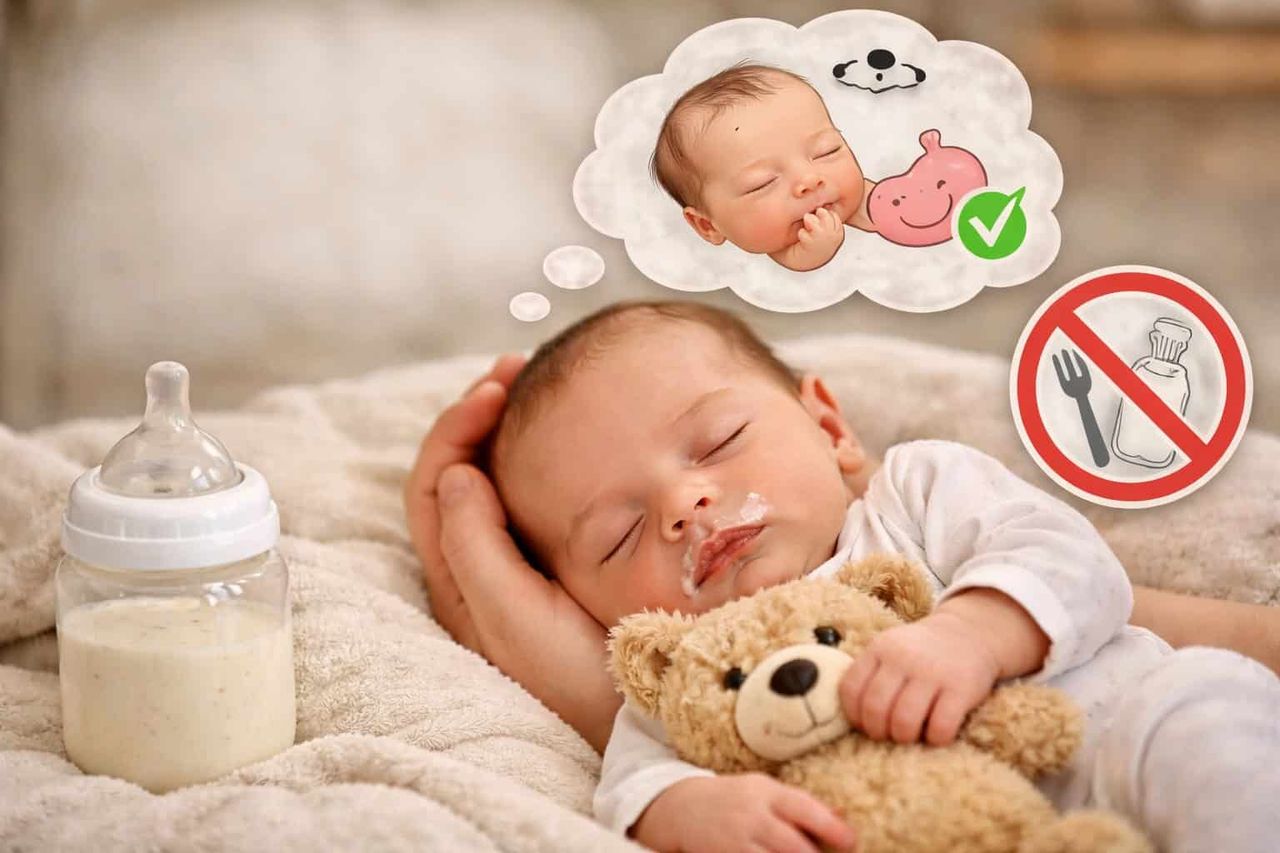
If you are a new parent, one of the most common worries is feeding: Will a newborn stop eating when full? Or on the flip side: Can a newborn eat too much?
You might find yourself asking questions like: Is my newborn eating too much? Why is my baby eating so much? Do newborns know when to stop eating? Can infants eat too much? These are completely normal concerns. Feeding is one of the biggest parts of caring for a newborn, and it can feel confusing, especially when your baby seems to want to eat all the time.
This guide will walk you through everything in a clear, simple way so you can feel more confident and less stressed.
Key Takeaways
- ▸ Most newborns are born with the ability to stop eating when full (self-regulation)
- ▸ Breastfed babies are very difficult to overfeed because they control the flow
- ▸ Bottle-fed babies are slightly more at risk of overfeeding due to faster, steadier milk flow
- ▸ Frequent feeding is usually normal and caused by growth spurts, cluster feeding, or small stomach size
- ▸ Responsive feeding, following hunger and fullness cues, is the best approach
Do Newborns Know When to Stop Eating?
The short answer is: yes, most newborns are born with the ability to stop eating when they are full.
This ability is called self-regulation. It means your baby can feel hunger, start feeding, recognize fullness, and stop eating. This system is built into your baby from birth. It is part of how babies grow safely and get the nutrition they need.
But here is the important part: even though babies can stop when full, this system works best when caregivers follow their cues. Learning to read hunger and fullness signals is one of the most valuable skills a new parent can develop. If you are looking for general guidance on early feeding, our tips for infants guide covers many of the basics.
Will a Newborn Stop Eating When Full?
In many cases, especially with breastfeeding, the answer is yes. Breastfed babies are usually very good at controlling how much they eat because they control the flow of milk, they can pause whenever they want, and the feeding naturally slows down over time.
That is why it is often said that breastfed babies are hard to overfeed. However, things can be a bit different with bottle feeding.
Breastfeeding
- • Very unlikely to overfeed
- • Baby controls intake naturally
- • Feeding slows as baby gets full
Bottle Feeding (Formula or Expressed Milk)
- • More likely to overfeed
- • Milk flows faster and more steadily
- • Caregivers may encourage finishing the bottle
So while babies can stop when full, sometimes the feeding method can override their natural signals. For families who combine both methods, our article on combining breastfeeding and formula offers helpful advice on managing both approaches.
Can a Newborn Eat Too Much?
This is where things get more nuanced. Can a newborn eat too much? Yes, but it depends on how they are fed.
With breastfeeding it is very unlikely. The baby controls the pace, and the feeding naturally slows as the baby fills up. With bottle feeding, it is more possible because milk flows steadily from the bottle, and babies may keep drinking even past fullness simply because the flow continues.
The key point is this: babies do not usually choose to overeat. Overfeeding often happens because of how feeding is managed, not because of the baby's appetite.
Why Is My Baby Eating So Much?
If your baby seems to be eating constantly, do not panic. There are several completely normal reasons for this.
1. Small Stomach Size
Newborn stomachs are tiny at first. This means they fill up quickly and get hungry again quickly. In the early days, frequent feeding is completely normal.
2. Growth Spurts
Babies go through rapid growth phases where they suddenly need more milk. Common times include around 2–3 weeks, around 6 weeks, and around 3 months. During these times, your baby may seem extra hungry all the time.
3. Cluster Feeding
Cluster feeding is when your baby wants to eat many times close together. This often happens in the evening and during the early weeks. It can feel like your baby is never full, but it is actually normal and temporary.
4. Comfort Feeding
Sometimes babies feed not just for hunger but for comfort. They may want to be close to you, soothe themselves, or relax and fall asleep. This is especially common in newborns.
Is My Newborn Eating Too Much?
Most of the time, the answer is no. But here are signs to help you understand what is going on.
Signs Your Baby Is Eating a Normal Amount
- • Steady weight gain
- • Calm and content after feeding
- • Regular wet and dirty diapers
- • Feeds 8–12 times per day during the newborn stage
Signs Your Baby Might Be Eating Too Much
- • Frequent large spit-ups after feeding
- • Fussiness right after eating
- • Gassiness or bloating
- • Very rapid weight gain
- • Always finishing bottles even when relaxed or sleepy
If you notice several of these signs together, it might be worth adjusting feeding habits. These are more common with bottle feeding.
Can Infants Eat Too Much?
Yes, infants can eat too much, but again, it depends on the situation. Common reasons overfeeding can happen include fast milk flow from bottles, pressure to finish the bottle, feeding too quickly, and missing fullness cues.
The key point is this: babies do not usually choose to overeat. Overfeeding often happens because of how feeding is managed. Understanding how much your baby needs at different stages is important. Our guide on how often a baby drinks at 3 months provides helpful benchmarks for early feeding frequency.
Hunger and Fullness Cues: What to Watch For
Babies show when they are hungry and when they are full through signals, not words. Learning these signals is one of the most important parenting skills.
Hunger Cues (Early Signs)
- ▸ Lip smacking
- ▸ Turning head side to side (rooting)
- ▸ Bringing hands to mouth
- ▸ Stirring or waking from sleep
Fullness Cues (Very Important)
- ▸ Slowing down sucking
- ▸ Turning head away from the breast or bottle
- ▸ Relaxed hands and body
- ▸ Falling asleep at the breast or bottle
- ▸ Pushing the nipple or bottle away
When you see these fullness signs, your baby is telling you: "I am full." Respecting these cues is the foundation of responsive feeding.
See the pattern behind every feed
Log breastfeeding and bottle sessions in the Beikost App to track how your baby's hunger and fullness cues evolve over days and weeks.
Feeding a Newborn Too Much: Why It Happens
Overfeeding is more likely in certain situations. Understanding the causes helps you avoid them.
- 1. Bottles are used, Milk flows easily, and babies may keep drinking even if they are full.
- 2. Caregivers focus on quantity, It is tempting to think "they should finish this amount" or "they didn't drink enough," but babies follow their bodies, not strict numbers.
- 3. Feeding too fast, If feeding happens quickly, the body does not have time to signal fullness.
Does My Newborn Eat Too Much or Is It Something Else?
Sometimes what looks like overfeeding is actually something else entirely. Here are common mix-ups that parents experience.
Reflux
Spitting up, fussiness, and arching the back can look like overfeeding but may be gastroesophageal reflux. This is common in young babies and usually resolves on its own.
Gas
Crying after feeds, a tight belly, and squirming can mimic signs of overfeeding. Proper burping and paced feeding often help.
Growth Spurts
A sudden increase in feeding is often just a temporary phase. Your baby genuinely needs more calories during rapid growth. If you are concerned about your baby eating less rather than more, our article on newborn eating less than usual may be helpful.
If you are unsure whether your baby is overeating or experiencing something else, it is always okay to check with a healthcare provider.
How to Avoid Overfeeding Your Baby
Here are simple, practical tips that work for both breastfeeding and bottle-feeding families.
1. Follow Your Baby's Cues
This is the most important rule. Feed when your baby shows hunger cues. Stop when your baby shows fullness cues. Do not try to follow a rigid schedule or force a specific amount.
2. Slow Down Bottle Feeding
Try paced bottle feeding: hold the baby more upright, keep the bottle more horizontal, and take breaks during feeding. This helps mimic natural breastfeeding rhythm and gives the baby time to register fullness.
3. Do Not Force Finishing
It is perfectly okay if your baby leaves milk in the bottle. Forcing a baby to finish teaches them to ignore their own fullness signals.
4. Watch Behavior, Not Volume
Every baby is different. Focus on comfort, growth, and wet diapers rather than exact milliliters or ounces consumed.
Why Is My Baby Eating So Much All the Time?
If you are thinking this daily, you are not alone. Here is the reassuring truth: a newborn eating a lot is usually completely normal.
Your baby is growing rapidly, adjusting to the world, and building feeding patterns. Frequent feeding does not mean something is wrong. In fact, in the early weeks, feeding 8–12 times per day is considered healthy and expected.
As your baby grows, feeding patterns will gradually become more predictable. The intense newborn phase does not last forever.
Long-Term Importance of Letting Babies Self-Regulate
Allowing your baby to stop when full helps them develop healthy eating habits that last well beyond infancy. Babies who are encouraged to self-regulate learn to trust their body signals and are less likely to overeat later in life.
When babies are pressured to eat more than they want, they may gradually lose touch with their natural fullness signals over time. This can contribute to unhealthy eating patterns in childhood and beyond.
Responsive feeding, where you follow your baby's lead, sets the foundation for a positive relationship with food from the very beginning.
When to Be Concerned
While most feeding patterns are normal, you should speak to a healthcare professional if your baby:
- • Is vomiting large amounts frequently (not just small spit-ups)
- • Is extremely fussy after every single feed
- • Has poor weight gain or excessively rapid weight gain
- • Shows signs of dehydration such as very few wet diapers
- • Refuses to feed or shows sudden changes in feeding behavior
Conclusion
The key points at a glance:
- ✓ Do newborns know when to stop eating?, Yes, most of the time
- ✓ Can a newborn eat too much?, Sometimes, especially when bottle-fed
- ✓ Is my infant eating too much?, Usually not, but watch for warning signs
- ✓ Why is my baby eating so much?, Growth spurts, development, cluster feeding, or normal patterns
- ✓ Responsive feeding, following cues, not schedules, prevents most feeding problems
Final Thought
Feeding your newborn is not about perfect amounts or strict schedules. It is about paying attention, responding to your baby's signals, and trusting the process. Your baby already has a built-in system for knowing when they are hungry and when they are full. Your role is simply to listen to it.