Rice for Babies
Baby Food Guide from 6 Months
Puree
6+
Months
BLW
6+
Months
Choking Hazard
Moderate
Allergen
No
Key Nutrients
Carbohydrates • Iron (in fortified rice) • B Vitamins
Can Babies Eat Rice?
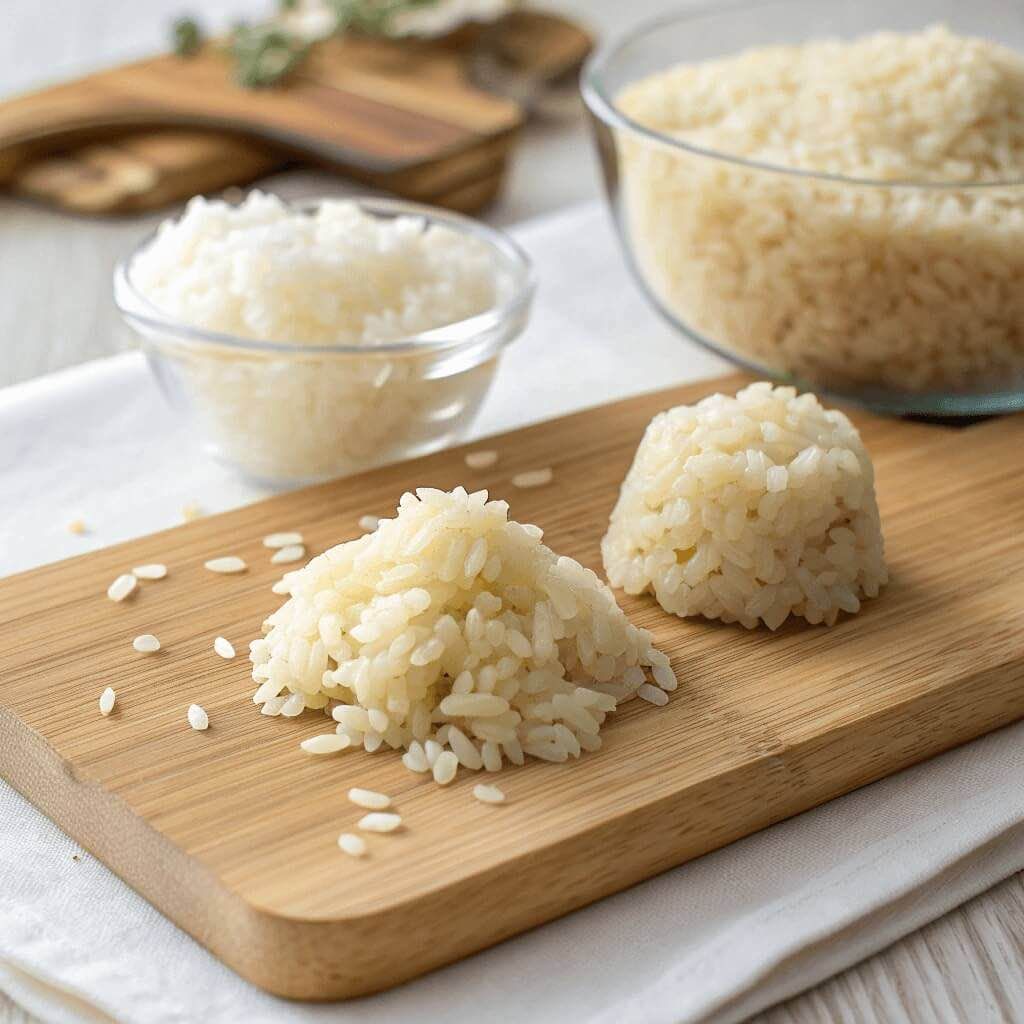
Rice has been a classic first grain for a reason: it's soft, easy to digest, and one of the least allergenic foods you can offer. White rice is milder and gentler on a new digestive system, while brown rice keeps more fiber and vitamins since it hasn't had the bran polished off.
Iron-fortified rice cereal used to be the default first food, and it's still a fine option since a baby's iron stores start dropping around 6 months. But it's no longer considered essential. Iron-rich purees like meat or lentils work just as well, often better, alongside it.
One practical note: rice naturally absorbs arsenic from soil and water, so it's worth rinsing it before cooking, varying grains rather than relying on rice for every meal, and not overdoing rice cereal specifically. Otherwise it's an easy, versatile food, soft for purees, formed into balls for early finger food, or cooked sticky enough for a fork later on.
Rice Baby Food: How to Prepare It
Puree from 6+ Months
Cook rice until very soft and puree with cooking liquid, breast milk, or formula until smooth. Can make congee by cooking with extra liquid for a naturally smooth consistency.
BLW from 6+ Months
Mix into sauces or liquids for scooping. Make congee or porridge. Form into large soft balls.
BLW from 9+ Months
Individual grains of soft-cooked rice perfect for pincer grasp precision.
BLW from 12+ Months
Serve as desired with utensils. Make rice stickier for utensil success.
Nutritional Benefits
Rice is a mild, gluten-free, easily digestible staple that fuels growth and supports digestive comfort. Iron-fortified varieties help prevent anemia during crucial development.
Key Nutrients
Carbohydrates
Provide energy for growth and activity.
Iron (in fortified rice)
Supports healthy blood and brain development.
B Vitamins
Aid metabolism and cellular growth.
Magnesium
Supports bone and nerve function.
Selenium
Acts as an antioxidant to protect cells.
Allergen & Choking Information
Not a Common Allergen
Rice is not a common allergen. Ensure soft, well-cooked consistency—avoid dry or loose grains. Vary grain sources and limit rice cereal frequency to manage arsenic exposure.
Frequently Asked Questions
When can babies eat Rice?
Around 6 months (well-cooked and soft)
How do I prepare Rice puree for my baby?
Cook rice until very soft and puree with cooking liquid, breast milk, or formula until smooth. Can make congee by cooking with extra liquid for a naturally smooth consistency.
What are the nutritional benefits of Rice?
Rice is a mild, gluten-free, easily digestible staple that fuels growth and supports digestive comfort. Iron-fortified varieties help prevent anemia during crucial development.
Sources & Related Resources
Get Personalized Guidance for Every Feeding Stage
Download the Grubsy app to track meals, get tailored recommendations, and explore foods like Rice plus hundreds more, all in one place.
Disclaimer: This information is for educational purposes only and does not replace professional medical advice.