Watermelon for Babies
Baby Food Guide from 6 Months
Puree
6+
Months
BLW
6+
Months
Choking Hazard
Moderate
Allergen
No
Key Nutrients
Water Content • Vitamin C • Antioxidants (Lycopene)
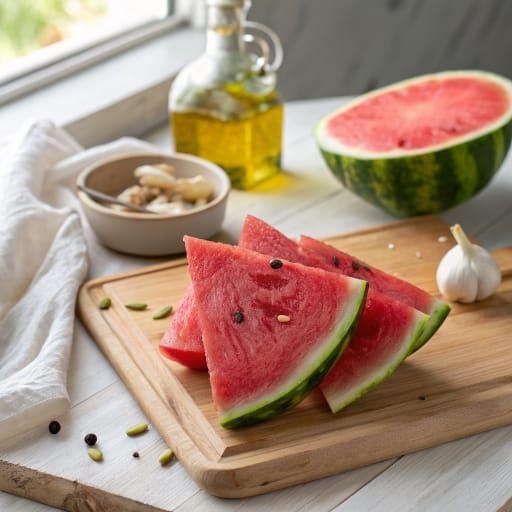
Can Babies Eat Watermelon?
Watermelon is mostly water, over ninety percent, which makes it one of the most hydrating foods a baby can eat, especially useful in warm weather. Along with all that water, the pink flesh carries real nutrition too: vitamin C, potassium, and the antioxidants that give it its color.
Watermelon isn't a common allergen, so the safety considerations here are texture and seeds rather than allergy. The mix of firm flesh and loose juice can cause gagging if a piece is the wrong size or shape, and every seed needs to come out before it reaches your baby, since seeds are a genuine choking hazard. Seedless varieties make this much easier.
Because watermelon is naturally so soft, it needs almost no preparation beyond deseeding and cutting into age-appropriate sticks or chunks. Well-chilled watermelon, or even a frozen piece of rind, can be especially soothing on teething days, offering the same refreshment in a cooler, more numbing form.
Watermelon Baby Food: How to Prepare It
Puree from 6+ Months
Remove every seed, then mash or blend the seedless flesh into a thin, juicy puree. The texture is naturally loose and runny, so it is usually served on its own.
BLW from 6+ Months
Offer a thick piece of rind with the flesh scraped down to a thin layer for gnawing, or firm rectangular batons of seedless flesh about two finger-widths across with the rind removed. Remove all seeds first.
BLW from 9+ Months
Continue offering sticks, or move to small, seedless, bite-sized chunks once the pincer grasp develops. A piece of rind to gnaw on still works well. Keep removing every seed.
BLW from 12+ Months
Offer small, seedless, bite-sized chunks, or wedge-shaped slices left attached to the rind for babies who bite and chew well. Continue removing every single seed before serving.
Nutritional Benefits
Watermelon's exceptional water content makes it one of the most hydrating foods a baby can eat, while its vitamin C, lycopene, and potassium add real nutritional value to a naturally sweet treat.
Key Nutrients
Water Content
Provides excellent hydration, especially in warm weather.
Vitamin C
Boosts immune function and helps the body absorb iron.
Antioxidants (Lycopene)
Protects growing cells and gives watermelon its color.
Potassium
Supports healthy muscle and heart function.
Allergen & Choking Information
Not a Common Allergen
Watermelon is not a common allergen. The mix of solid flesh and abundant juice can cause gagging if pieces are too large, and every seed must be removed before serving, a genuine choking risk if missed.
Frequently Asked Questions
When can babies eat Watermelon?
Around 6 months (seedless puree or age-appropriate sticks)
How do I prepare Watermelon puree for my baby?
Remove every seed, then mash or blend the seedless flesh into a thin, juicy puree. The texture is naturally loose and runny, so it is usually served on its own.
What are the nutritional benefits of Watermelon?
Watermelon's exceptional water content makes it one of the most hydrating foods a baby can eat, while its vitamin C, lycopene, and potassium add real nutritional value to a naturally sweet treat.
Sources & Related Resources
Get Personalized Guidance for Every Feeding Stage
Download the Grubsy app to track meals, get tailored recommendations, and explore foods like Watermelon plus hundreds more, all in one place.
Disclaimer: This information is for educational purposes only and does not replace professional medical advice.