Walnut for Babies
Baby Food Guide from 6 Months
Puree
6+
Months
BLW
6+
Months
Choking Hazard
High
Allergen
Yes
Key Nutrients
Omega-3 Fatty Acids • Healthy Fats • Fiber
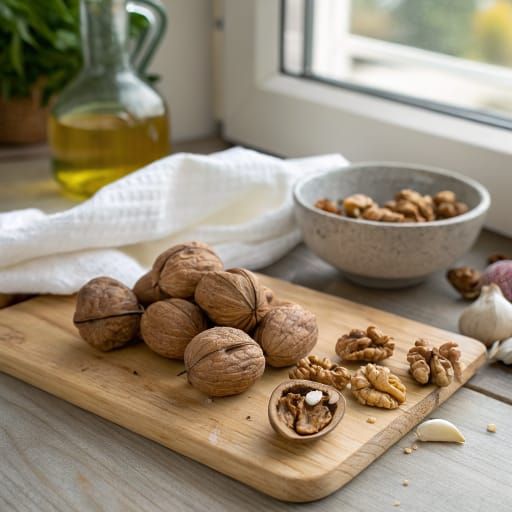
Can Babies Eat Walnut?
Walnuts are one of the few nuts that offer a real amount of plant-based omega-3 fats, which support brain development, alongside calorie-dense healthy fats, fiber, and iron, a nutrient lineup that's hard to match in such a small portion. Their brain-like shape is just a coincidence of nature, but the nutrition behind their reputation is genuine.
Walnuts are a tree nut and a major allergen, so they're worth introducing thoughtfully and one at a time. The bigger everyday issue, though, is choking: whole or chopped walnuts are dangerous for babies and toddlers at any age, so the only safe forms are finely ground walnut or a smooth, well-thinned, honey-free butter loosened until it's drippy rather than sticky.
Stir ground walnut or thinned butter into oatmeal, yogurt, or mashed avocado for an easy nutrition boost. Whole walnuts should wait until a toddler has genuinely mature chewing skills, generally not before age two, and even then only seated and closely supervised.
Walnut Baby Food: How to Prepare It
Puree from 6+ Months
Grind walnuts in a food processor until completely fine, or thin smooth, honey-free walnut butter with breast milk, formula, or applesauce until drippy. Stir into warm cereal or mash with avocado.
BLW from 6+ Months
Spread smooth, honey-free walnut butter in a thin layer on soft foods, or sprinkle completely fine ground walnuts over warm cereal or soft foods like avocado. Offer water in an open cup alongside.
BLW from 9+ Months
Continue offering thinly spread walnut butter or finely ground walnut mixed into soft, familiar foods. Avoid any thick globs or clumps, which can stick and cause choking.
BLW from 12+ Months
Keep sprinkling ground walnuts over fruit, vegetables, yogurt, and cereal. Walnut milk can be introduced occasionally. Whole walnuts must wait until at least age 2, and even then only seated and closely supervised.
Nutritional Benefits
Walnuts are one of the richest plant sources of omega-3 fatty acids, and their concentrated calories, fiber, and iron make even a small, well-prepared serving nutritionally worthwhile.
Key Nutrients
Omega-3 Fatty Acids
Supports healthy brain and eye development.
Healthy Fats
Provide concentrated calories in small, nutrient-dense portions.
Fiber
Supports healthy digestion.
Iron
Supports healthy blood and cognitive development.
Allergen & Choking Information
Common Allergen
Walnuts are tree nuts, a major allergen. Introduce as finely ground walnut or thin, well-diluted walnut butter under supervision. Never offer whole or chopped walnuts to babies or young toddlers, a severe choking hazard.
Frequently Asked Questions
When can babies eat Walnuts?
Around 6 months (finely ground or as thin, smooth walnut butter only)
How do I prepare Walnuts puree for my baby?
Grind walnuts in a food processor until completely fine, or thin smooth, honey-free walnut butter with breast milk, formula, or applesauce until drippy. Stir into warm cereal or mash with avocado.
What are the nutritional benefits of Walnuts?
Walnuts are one of the richest plant sources of omega-3 fatty acids, and their concentrated calories, fiber, and iron make even a small, well-prepared serving nutritionally worthwhile.
Sources & Related Resources
Get Personalized Guidance for Every Feeding Stage
Download the Grubsy app to track meals, get tailored recommendations, and explore foods like Walnut plus hundreds more, all in one place.
Disclaimer: This information is for educational purposes only and does not replace professional medical advice.