Turnip for Babies
Baby Food Guide from 6 Months
Puree
6+
Months
BLW
6+
Months
Choking Hazard
High (raw); Low (cooked soft)
Allergen
No
Key Nutrients
Fiber • Vitamin C • Potassium
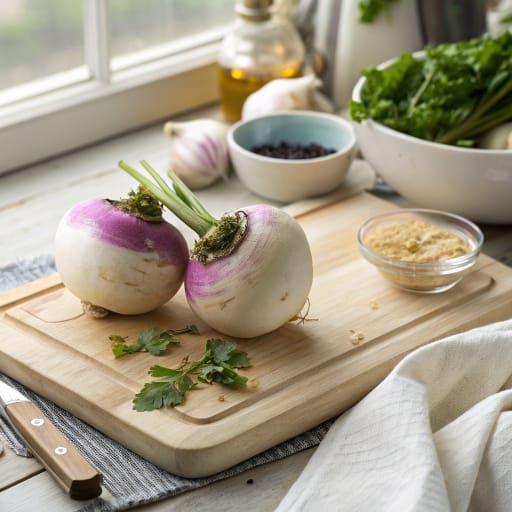
Can Babies Eat Turnip?
Turnip is an often-overlooked root vegetable, related to cabbage and broccoli but far milder, especially once cooked down, when its natural peppery bite mellows into something sweet and earthy. Its standout nutrient is fiber, which supports a baby's developing digestion and helps with the constipation that often comes with starting solids, plus vitamin C, potassium, and folate.
Turnip isn't a common allergen. The real safety consideration is texture, not allergy: raw or undercooked turnip is firm and dense enough to be a genuine choking risk, so it always needs a thorough, soft cook before it's safe to serve.
Once soft, turnip mashes easily and works well folded into fritters, meatballs, or pancakes to share in family meals. It pairs particularly well with other root vegetables like carrot and parsnip, and its mild sweetness when roasted makes it an easy addition to a mixed vegetable mash, a good way to introduce a slightly different flavor early on.
Turnip Baby Food: How to Prepare It
Puree from 6+ Months
Cook turnip until very soft, then mash until smooth and spoonable, easy for baby to take from a spoon or scoop up by hand.
BLW from 6+ Months
Serve large wedges of turnip cooked until soft enough to squish between two fingers, or offer the soft mash for baby to scoop up independently.
BLW from 9+ Months
Cut cooked, soft turnip into small, bite-sized pieces roughly the width of a finger, suited to the emerging pincer grasp.
BLW from 12+ Months
Continue bite-sized pieces or large cooked wedges. Once baby bites and chews well, finely shredded or very thinly sliced raw turnip can be introduced, and mashed turnip works well folded into fritters, meatballs, or pancakes.
Nutritional Benefits
Turnip's standout nutrient is fiber, which helps keep a baby's digestion comfortable and regular, rounded out by vitamin C, potassium, and folate for broader everyday support.
Key Nutrients
Fiber
Supports healthy digestion and helps ease constipation.
Vitamin C
Boosts immune function and helps the body absorb iron.
Potassium
Supports healthy muscle and nerve function.
Folate
Supports cell growth during a period of rapid development.
Allergen & Choking Information
Not a Common Allergen
Turnip is not a common allergen. Raw or undercooked turnip is firm and dense, a genuine choking risk, so it must always be cooked until truly soft before it is served.
Frequently Asked Questions
When can babies eat Turnips?
Around 6 months (as a soft, smooth mash)
How do I prepare Turnips puree for my baby?
Cook turnip until very soft, then mash until smooth and spoonable, easy for baby to take from a spoon or scoop up by hand.
What are the nutritional benefits of Turnips?
Turnip's standout nutrient is fiber, which helps keep a baby's digestion comfortable and regular, rounded out by vitamin C, potassium, and folate for broader everyday support.
Sources & Related Resources
Get Personalized Guidance for Every Feeding Stage
Download the Grubsy app to track meals, get tailored recommendations, and explore foods like Turnip plus hundreds more, all in one place.
Disclaimer: This information is for educational purposes only and does not replace professional medical advice.