Trout for Babies
Baby Food Guide from 6 Months
Puree
6+
Months
BLW
6+
Months
Choking Hazard
Low (when thoroughly deboned)
Allergen
Yes
Key Nutrients
Omega-3 Fatty Acids (DHA & EPA) • Protein • Vitamin D
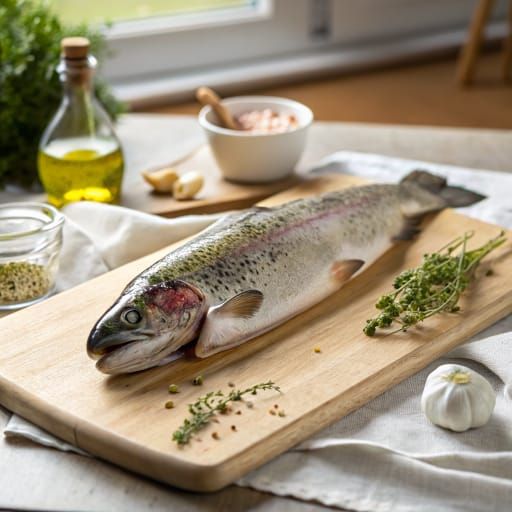
Can Babies Eat Trout?
Trout is a mild, freshwater relative of salmon, sharing the same pink-orange flesh and a soft, flaky texture once cooked, which makes it an easy first oily fish. It's especially valuable for DHA and EPA, the omega-3 fats central to brain and eye development, along with complete protein, vitamin D, B12, and selenium, a lot of developmental benefit packed into a small, easy-to-eat portion.
Fish is one of the major food allergens, so trout is worth introducing thoughtfully, a small amount first. In practice, though, the bigger everyday task is bones rather than allergy: even fillets sold as boneless can hide thin pin bones, so it's worth checking the flesh carefully before serving.
Once properly checked and cooked through, trout flakes apart easily and rarely causes texture-based choking on its own. It has a milder flavor than salmon, which many babies find an easier introduction to fish, and serving it regularly is a simple way to keep the omega-3 supply steady during a period of fast brain growth.
Trout Baby Food: How to Prepare It
Puree from 6+ Months
Cook trout through until it flakes easily, then remove all skin and every bone. Flake and stir into mashed potato, vegetable puree, or yogurt for a smooth, spoonable texture.
BLW from 6+ Months
Serve a thin, fully cooked fillet about the size of two adult fingers pressed together, with every bone and the skin removed. You can also flake it into a soft side like mashed potato.
BLW from 9+ Months
Move to bite-sized pieces around the size of a large knuckle as the pincer grasp develops, or keep offering strips. Homemade fish cakes or patties made from flaked trout work well at this stage.
BLW from 12+ Months
Serve trout on its own, mixed into family meals, as finger food, or with a fork to practice utensils and keep building familiarity with fish.
Nutritional Benefits
Trout is a concentrated source of brain-building omega-3 fatty acids and easily digested protein, delivered in a mild, soft-flaking fish babies tend to accept well.
Key Nutrients
Omega-3 Fatty Acids (DHA & EPA)
Central to brain and eye development.
Protein
Supports rapid growth with easily digested amino acids.
Vitamin D
Supports bone development and immune function.
Vitamin B12
Supports nerve health and red blood cell formation.
Selenium
Acts as an antioxidant to protect cells.
Allergen & Choking Information
Common Allergen
Fish is one of the nine major allergens. Even fillets labeled boneless can hide thin pin bones, so run fingers carefully along the cooked flesh, ideally checking twice, and remove the skin for younger babies.
Frequently Asked Questions
When can babies eat Trout?
Around 6 months (fully cooked, flaked, and deboned)
How do I prepare Trout puree for my baby?
Cook trout through until it flakes easily, then remove all skin and every bone. Flake and stir into mashed potato, vegetable puree, or yogurt for a smooth, spoonable texture.
What are the nutritional benefits of Trout?
Trout is a concentrated source of brain-building omega-3 fatty acids and easily digested protein, delivered in a mild, soft-flaking fish babies tend to accept well.
Sources & Related Resources
Get Personalized Guidance for Every Feeding Stage
Download the Grubsy app to track meals, get tailored recommendations, and explore foods like Trout plus hundreds more, all in one place.
Disclaimer: This information is for educational purposes only and does not replace professional medical advice.