Swiss Chard for Babies
Baby Food Guide from 6 Months
Puree
6+
Months
BLW
6+
Months
Choking Hazard
Low (when cooked soft and chopped)
Allergen
No
Key Nutrients
Iron • Calcium • Fiber
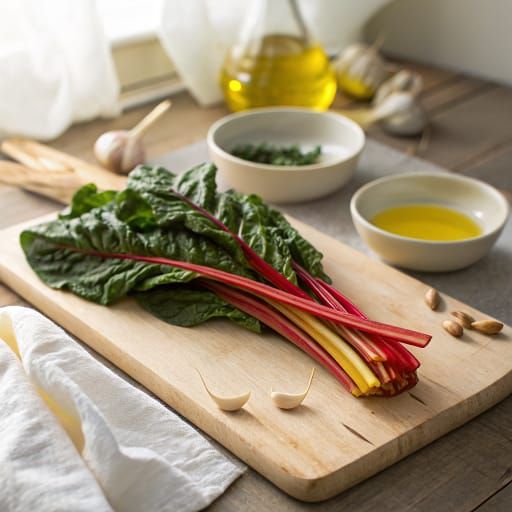
Can Babies Eat Swiss Chard?
Swiss chard is a leafy green related to beets, with tender leaves and firm, colorful stalks that range from white to vivid pink or yellow. It's particularly valuable for iron, which matters a lot in the second half of a baby's first year as birth iron stores start running low. Chard also offers calcium for bone growth, fiber, and vitamins A and K. Pairing it with a vitamin C food, like tomato or a squeeze of citrus, helps the body absorb more of that iron.
Chard isn't a common allergen, so the real thing to plan around is texture. The leaves cook down soft quickly, but the stalks stay noticeably firmer and need longer cooking or smaller cutting before they're safe to chew.
Once cooked, chard has an earthy, slightly mineral flavor with a mild bitterness that mellows a lot, pairing nicely with garlic or a squeeze of lemon. It's a practical, low-waste way to introduce a slightly more grown-up flavor alongside the sweeter vegetables babies usually meet first.
Swiss Chard Baby Food: How to Prepare It
Puree from 6+ Months
Wash well, cook the leaves until very tender, and blend smooth on their own or with a mild vegetable like potato or sweet potato. Finely chopped cooked chard also stirs easily into porridge or yogurt.
BLW from 6+ Months
Mix finely chopped, well-cooked chard leaves into porridge, yogurt, or other scoopable foods. A whole softened stalk with the leafy part removed can also be offered as a teether to gnaw on under supervision.
BLW from 9+ Months
Offer soft cooked pieces or small ribbons of leaf once the pincer grasp emerges. Keep mixing chopped chard into familiar dishes too.
BLW from 12+ Months
Serve chopped cooked chard on its own or in mixed dishes. Work up toward bigger pieces, and eventually raw stalks, as chewing skills mature over the following months.
Nutritional Benefits
Swiss chard is an iron- and calcium-rich leafy green that, paired with a vitamin C source, helps babies absorb more of the iron they need in the second half of their first year.
Key Nutrients
Iron
Supports healthy blood and brain development as birth iron stores decline.
Calcium
Supports rapid bone growth during infancy.
Fiber
Aids healthy digestion.
Vitamin A
Supports eye health and immune function.
Vitamin K
Plays a role in healthy blood clotting.
Allergen & Choking Information
Not a Common Allergen
Swiss chard is not a common allergen. The main consideration is texture: leaves cook soft quickly, but the firmer stalks need extra cooking time and should be cut small or reserved for babies with more developed chewing skills.
Frequently Asked Questions
When can babies eat Swiss Chard?
Around 6 months (as a smooth puree of well-cooked leaves)
How do I prepare Swiss Chard puree for my baby?
Wash well, cook the leaves until very tender, and blend smooth on their own or with a mild vegetable like potato or sweet potato. Finely chopped cooked chard also stirs easily into porridge or yogurt.
What are the nutritional benefits of Swiss Chard?
Swiss chard is an iron- and calcium-rich leafy green that, paired with a vitamin C source, helps babies absorb more of the iron they need in the second half of their first year.
Sources & Related Resources
Get Personalized Guidance for Every Feeding Stage
Download the Grubsy app to track meals, get tailored recommendations, and explore foods like Swiss Chard plus hundreds more, all in one place.
Disclaimer: This information is for educational purposes only and does not replace professional medical advice.