Spelt for Babies
Baby Food Guide from 6 Months
Puree
6+
Months
BLW
6+
Months
Choking Hazard
Low (when cooked soft)
Allergen
Yes
Key Nutrients
Fiber • Plant-Based Protein • Complex Carbohydrates
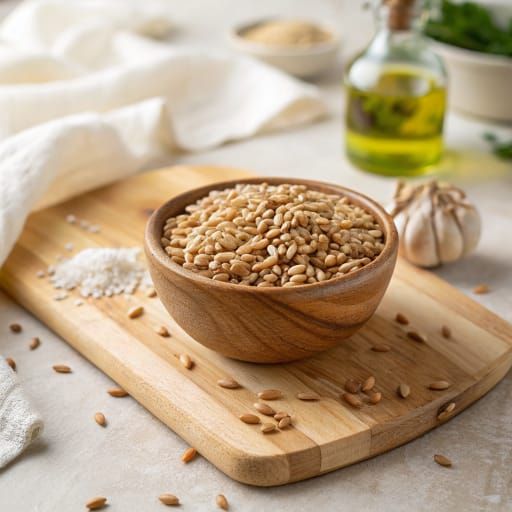
Can Babies Eat Spelt?
Spelt is an ancient relative of wheat, grown for thousands of years and often marketed as a gentler, more digestible alternative to modern wheat. That reputation is mostly marketing: spelt is still wheat at its core and contains gluten, carrying the same allergen status. Cooked into a soft porridge, though, it's a genuinely good source of fiber and plant protein, more of both than refined wheat flour, plus B vitamins and minerals like manganese that support digestion and steady energy.
Because it's wheat, introduce spelt the same cautious way: a small amount first, then regular servings once it's tolerated well. The other thing to watch for is texture, since loose cooked grains are small and slippery and should be mashed or flattened for younger babies rather than left whole.
Spelt has a mild, nutty, faintly sweet flavor that works equally well in savory dishes and sweeter ones, and it's available as whole grains, flour, or pasta, an easy way to add variety to a diet built mostly around rice and oats.
Spelt Baby Food: How to Prepare It
Puree from 6+ Months
Cook spelt grains or spelt flour into a smooth, soft porridge using a flavorful liquid such as coconut milk or vegetable stock. Thin to a texture your baby can easily manage.
BLW from 6+ Months
Serve as a smooth spelt porridge, or stir cooked spelt into mashed vegetables or ground meat and shape into soft balls or fritters baby can hold. Flatten or mash any loose grains to reduce the risk of inhaling them.
BLW from 9+ Months
Offer spelt porridge, or soft fritters and meatballs made with cooked spelt. Once the pincer grasp develops, add loose cooked grains or a simple grain salad.
BLW from 12+ Months
Serve cooked spelt as finger food, tossed into a grain salad, or stirred into other soft, scoopable dishes. From around 18 months, let your toddler practice scooping it with a small spoon.
Nutritional Benefits
As a whole grain, spelt offers more fiber and protein than refined wheat, along with steady energy and B vitamins that support an active, growing baby.
Key Nutrients
Fiber
Supports healthy digestion and regular bowel movements.
Plant-Based Protein
Contributes amino acids for growth alongside other foods.
Complex Carbohydrates
Provide steady, sustained energy.
Manganese
Supports bone development and metabolism.
B Vitamins (Niacin & Thiamine)
Help convert food into usable energy.
Allergen & Choking Information
Common Allergen
Spelt is a wheat relative and contains gluten, so it carries the same allergen status as wheat. Introduce a small amount first and watch for reaction, then offer regularly if tolerated. Mash or flatten loose cooked grains for younger babies to reduce aspiration risk.
Frequently Asked Questions
When can babies eat Spelt?
Around 6 months (as a smooth, thinned porridge)
How do I prepare Spelt puree for my baby?
Cook spelt grains or spelt flour into a smooth, soft porridge using a flavorful liquid such as coconut milk or vegetable stock. Thin to a texture your baby can easily manage.
What are the nutritional benefits of Spelt?
As a whole grain, spelt offers more fiber and protein than refined wheat, along with steady energy and B vitamins that support an active, growing baby.
Sources & Related Resources
Get Personalized Guidance for Every Feeding Stage
Download the Grubsy app to track meals, get tailored recommendations, and explore foods like Spelt plus hundreds more, all in one place.
Disclaimer: This information is for educational purposes only and does not replace professional medical advice.