Sesame for Babies
Baby Food Guide from 6 Months
Puree
6+
Months
BLW
6+
Months
Choking Hazard
Moderate
Allergen
Yes
Key Nutrients
Calcium • Iron • Healthy Fats
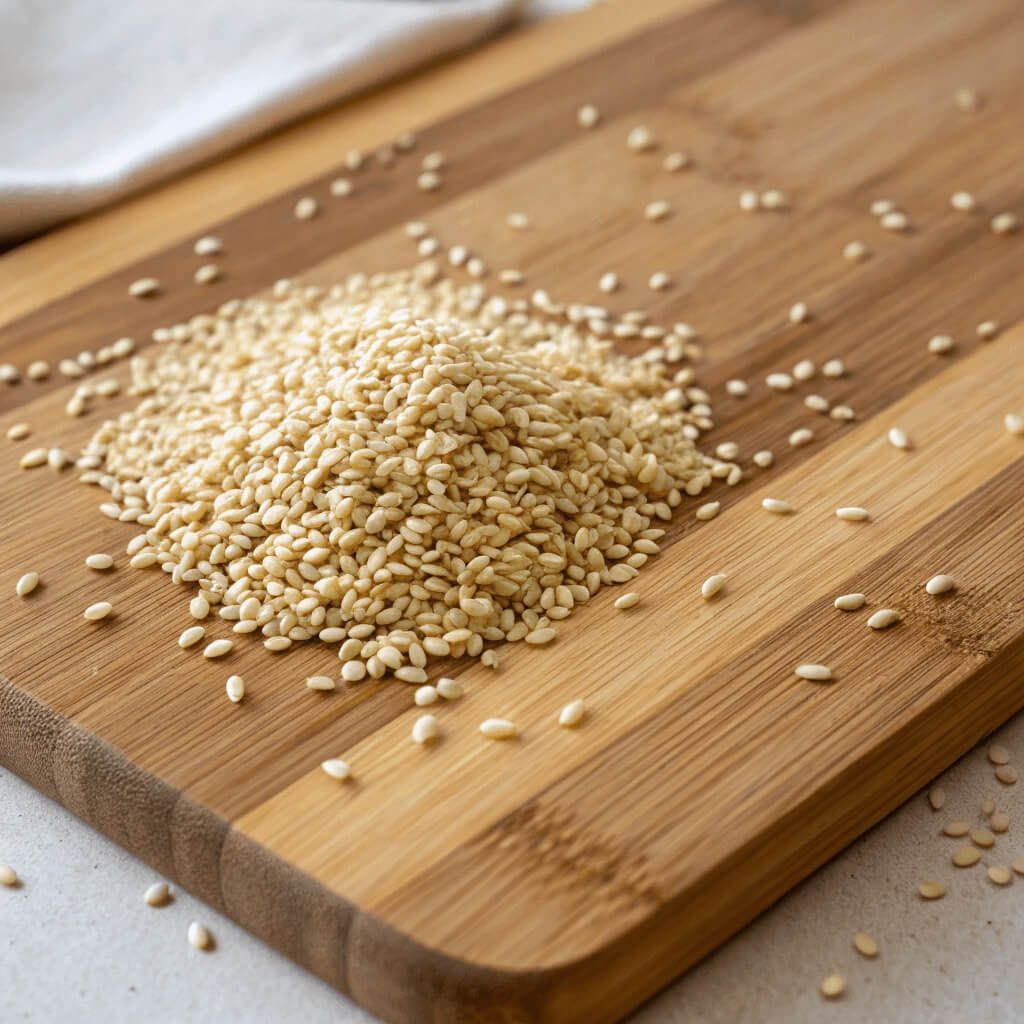
Can Babies Eat Sesame?
Sesame, usually offered as tahini, is a genuine calcium standout: spoon for spoon it contains more calcium than most dairy products, alongside healthy fats and plant protein. It's also one of the major food allergens, so like peanut, current guidance favors introducing it early, around 6 months, rather than waiting.
Whole sesame seeds are too small and hard for babies to chew properly. They're a choking risk and tend to pass through undigested, so tahini is the practical way in. Thinned with water or breast milk, it stirs easily into purees, yogurt, or oatmeal, and most babies take well to its mild, nutty flavor.
Beyond calcium, sesame contributes iron, zinc, and vitamin E, useful additions to a growing diet. Once babies are eating more textures, tahini also becomes the base for hummus and dips, an easy way to keep serving it as a regular food rather than a one-time trial.
Sesame Baby Food: How to Prepare It
Puree from 6+ Months
Mix 1-2 teaspoons tahini with water or breast milk until smooth and thin, creating a drippy consistency. Serve as a dip or mix into vegetable purees like sweet potato or carrot for first introduction.
BLW from 6+ Months
Add a small amount of tahini to thick yogurt or cooked oatmeal for a nutty flavor boost and extra nutrition. Mix well to ensure smooth consistency throughout.
BLW from 9+ Months
Offer smooth hummus (chickpeas blended with tahini) or sesame-flavored dishes for dipping soft-cooked vegetables or soft bread strips. Ensure hummus is smooth without chunks.
BLW from 12+ Months
Use tahini as a creamy sauce for pasta, rice, or roasted vegetable dishes. If using sesame seeds, ensure they're finely ground into foods rather than whole. Mix into baked goods for variety.
Nutritional Benefits
Sesame adds rich, nutty flavor and nutrients to your baby's diet while promoting healthy growth and early allergen exposure. Excellent source of plant-based calcium.
Key Nutrients
Calcium
Promotes strong bones and teeth.
Iron
Supports blood and brain development.
Healthy Fats
Provide energy and brain support.
Protein
Builds muscle and tissue.
Zinc
Supports immune system and growth.
Allergen & Choking Information
Common Allergen
Sesame is a known allergen. Introduce small amounts of diluted tahini or hummus first, monitoring for reactions. Never offer whole sesame seeds to babies—choking hazard.
Frequently Asked Questions
When can babies eat Sesame?
Around 6 months
How do I prepare Sesame puree for my baby?
Mix 1-2 teaspoons tahini with water or breast milk until smooth and thin, creating a drippy consistency. Serve as a dip or mix into vegetable purees like sweet potato or carrot for first introduction.
What are the nutritional benefits of Sesame?
Sesame adds rich, nutty flavor and nutrients to your baby's diet while promoting healthy growth and early allergen exposure. Excellent source of plant-based calcium.
Sources & Related Resources
Get Personalized Guidance for Every Feeding Stage
Download the Grubsy app to track meals, get tailored recommendations, and explore foods like Sesame plus hundreds more, all in one place.
Disclaimer: This information is for educational purposes only and does not replace professional medical advice.