Raspberry for Babies
Baby Food Guide from 6 Months
Puree
6+
Months
BLW
6+
Months
Choking Hazard
Moderate
Allergen
No
Key Nutrients
Fiber • Vitamin C • Manganese
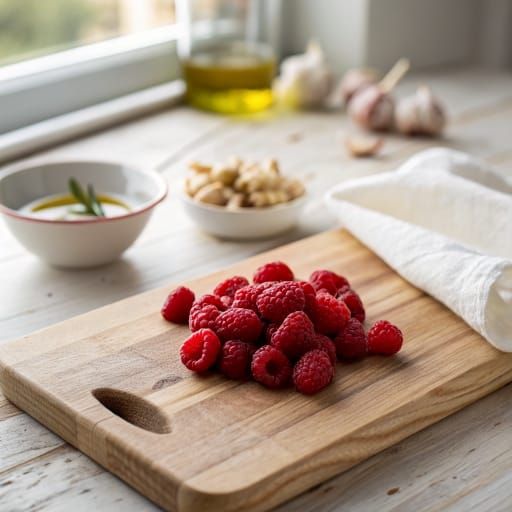
Can Babies Eat Raspberry?
Raspberry is a delicate cluster of dozens of tiny, juice-filled drupelets around a hollow center, with a flavor that's bright, sweet, and pleasantly tart all at once. Unlike firmer berries, a ripe raspberry yields to the lightest touch and practically falls apart when pressed, exactly the quality that makes it such a workable early fruit for babies once it's handled with a little care.
Its nutrition profile is genuinely impressive for something so small. Raspberries are one of the higher-fiber fruits available by volume, thanks largely to their tiny seeds and clustered structure. They also bring vitamin C, manganese for healthy bone development, and a strong dose of antioxidants like anthocyanins and ellagic acid.
Raspberries are highly perishable and bruise easily once wet, so it's best to rinse them gently right before serving rather than well ahead of time. Raspberry isn't a common allergen; the main consideration is that a whole berry is roughly the size known to pose choking risk, so mashing or flattening suits younger babies best.
Raspberry Baby Food: How to Prepare It
Puree from 6+ Months
Mash ripe raspberries thoroughly with a fork and stir into porridge, cereal, or yogurt. No cooking is needed; strain through a sieve first if you'd like fewer seeds.
BLW from 6+ Months
Mash thoroughly or flatten with clean fingers or a fork, then mix into porridge, cereal, or yogurt.
BLW from 9+ Months
Gently flatten soft, ripe berries and let baby pick them up for excellent pincer grasp practice. Mashing still works just as well.
BLW from 12+ Months
Whole raspberries are fine once they're ripe and soft. Keep flattening any firmer berries.
Nutritional Benefits
Raspberries are one of the higher-fiber fruits by volume and bring vitamin C, manganese, and antioxidants, all wrapped in a naturally soft texture once mashed.
Key Nutrients
Fiber
One of the higher-fiber fruits, supporting healthy digestion.
Vitamin C
Supports immune function and helps the body absorb iron.
Manganese
Supports healthy bone development and metabolism.
Antioxidants
Anthocyanins and ellagic acid help protect growing cells.
Omega-3 (ALA)
A small plant-based source of omega-3 fatty acids from the seeds.
Allergen & Choking Information
Not a Common Allergen
Raspberry is not a common allergen. A whole berry is a choking risk, especially if firm or underripe, so mash or flatten raspberries for younger babies and offer whole ones only once they're very ripe and soft.
Frequently Asked Questions
When can babies eat Raspberries?
Around 6 months (mashed or flattened)
How do I prepare Raspberries puree for my baby?
Mash ripe raspberries thoroughly with a fork and stir into porridge, cereal, or yogurt. No cooking is needed; strain through a sieve first if you'd like fewer seeds.
What are the nutritional benefits of Raspberries?
Raspberries are one of the higher-fiber fruits by volume and bring vitamin C, manganese, and antioxidants, all wrapped in a naturally soft texture once mashed.
Sources & Related Resources
Get Personalized Guidance for Every Feeding Stage
Download the Grubsy app to track meals, get tailored recommendations, and explore foods like Raspberry plus hundreds more, all in one place.
Disclaimer: This information is for educational purposes only and does not replace professional medical advice.