Radish for Babies
Baby Food Guide from 6 Months
Puree
6+
Months
BLW
6+
Months
Choking Hazard
High (raw, unless finely grated or very thin); Low (cooked soft)
Allergen
No
Key Nutrients
Vitamin C • Antioxidants • Fiber
Can Babies Eat Radish?
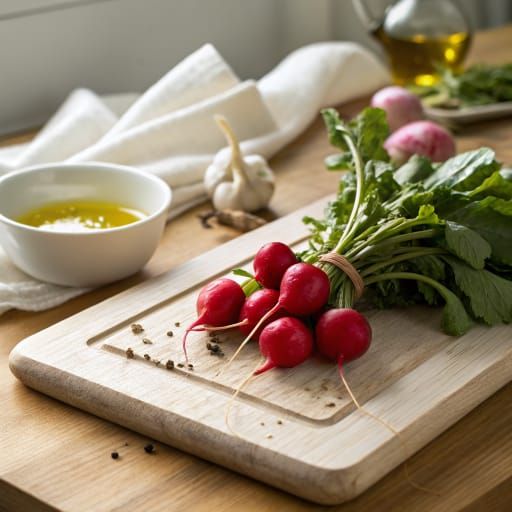
Radish is a crisp, peppery root vegetable, usually small and round, with skin in shades of red, pink, or white around sharp-tasting white flesh. Adults often reach for it raw in salads for that very crunch, but that same crunch is exactly why radish needs real adapting before it suits a baby, making it a food where preparation matters more than almost anything else.
Nutritionally, radish is more honest than flashy. It's mostly water and lower in calories and nutrients than many other vegetables, though it still contributes vitamin C, antioxidants like the anthocyanins that color red varieties, fiber, and potassium.
Milder varieties like daikon or watermelon radish can be a gentler starting point than sharp small red ones, and cooking mellows the peppery bite considerably either way. Radish isn't a common allergen; the whole safety story is texture, since raw radish is hard and crisp enough to be a real choking risk until it's very finely grated or sliced paper-thin.
Radish Baby Food: How to Prepare It
Puree from 6+ Months
Cook radish until it's soft enough to pierce easily with a fork, then mash it and serve it as is.
BLW from 6+ Months
Cook radish until very soft and mash it, or offer large soft-cooked slices or wedges for baby to gnaw on.
BLW from 9+ Months
Serve soft, cooked radish in quarters or thin slices. A small amount of finely grated raw radish can be introduced too.
BLW from 12+ Months
Offer raw radish that's finely grated or sliced very thin, or continue with bite-sized pieces of soft, cooked radish.
Nutritional Benefits
Radish offers vitamin C, antioxidants, and fiber in a low-calorie package, valued as much for building an adventurous palate as for its nutrient content.
Key Nutrients
Vitamin C
Supports immune health and helps the body absorb iron.
Antioxidants
Anthocyanins in red-skinned varieties help protect cells.
Fiber
Supports healthy digestion.
Potassium
Helps maintain healthy fluid balance and muscle function.
Allergen & Choking Information
Not a Common Allergen
Radish is not a common allergen. Raw radish is hard and crisp, a genuine choking risk, so serve it raw only finely grated or sliced paper-thin; cooked until soft, it is low-risk.
Frequently Asked Questions
When can babies eat Radishes?
Around 6 months (cooked until soft and mashed)
How do I prepare Radishes puree for my baby?
Cook radish until it's soft enough to pierce easily with a fork, then mash it and serve it as is.
What are the nutritional benefits of Radishes?
Radish offers vitamin C, antioxidants, and fiber in a low-calorie package, valued as much for building an adventurous palate as for its nutrient content.
Sources & Related Resources
Get Personalized Guidance for Every Feeding Stage
Download the Grubsy app to track meals, get tailored recommendations, and explore foods like Radish plus hundreds more, all in one place.
Disclaimer: This information is for educational purposes only and does not replace professional medical advice.