Pumpkin Seeds for Babies
Baby Food Guide from 6 Months
Puree
6+
Months
BLW
6+
Months
Choking Hazard
High
Allergen
No
Key Nutrients
Protein • Magnesium • Zinc
Can Babies Eat Pumpkin Seeds?
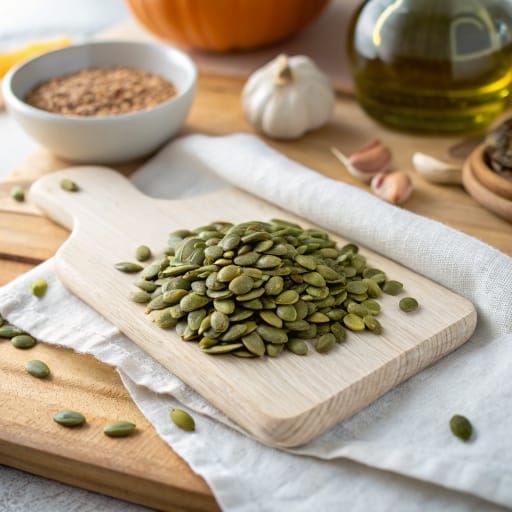
Pumpkin seeds, often sold hulled under their Spanish name, pepitas, are the flat, oval seeds found inside pumpkins and other winter squash. Cleaned of their outer shell, they're a nutrient-dense pantry staple that keeps well and can be worked into a baby's meals in small amounts long before whole seeds are anywhere close to appropriate.
They're worth the effort. Pumpkin seeds are a good source of plant protein and one of the richest natural sources of magnesium, plus zinc, iron, fiber, and healthy unsaturated fats that support brain development. That combination makes them a genuinely useful boost for babies eating little or no meat, since iron and zinc can be trickier to cover on a plant-forward menu.
A small spice or coffee grinder makes quick, consistent work of grinding seeds fine enough for baby, far finer than a standard blender usually manages. They aren't classed among the major allergens, but a whole seed is a genuine choking hazard well into toddlerhood, so seeds need to stay finely ground or well-thinned into a seed butter until around 24 months.
Pumpkin Seeds Baby Food: How to Prepare It
Puree from 6+ Months
Finely grind shell-less pumpkin seeds (pepitas) and stir into purees, porridge, or yogurt, or thin smooth pumpkin seed butter with water, breast milk, formula, or a fruit or veggie puree until no clumps remain.
BLW from 6+ Months
Sprinkle finely ground pepitas over yogurt, cereal, or other soft foods, or blend well-thinned pumpkin seed butter into porridge or yogurt. Grind fine enough that no chunks remain, and loosen the butter so it isn't sticky.
BLW from 9+ Months
Continue offering finely ground pepitas mixed into a wider range of soft foods, plus smooth, well-thinned seed butter stirred in with no thick clumps.
BLW from 12+ Months
Keep serving finely ground pepitas and thinned seed butter mixed into foods, never a plain spoonful on its own. Whole shell-less pepitas can wait until around 24 months, once molars are in, offered one at a time while baby sits still and unhurried.
Nutritional Benefits
Pumpkin seeds are a concentrated source of plant protein, magnesium, zinc, and iron, nutrients that can be harder to come by in a baby's early plant-forward meals.
Key Nutrients
Protein
Supports muscle growth and overall development.
Magnesium
Supports bone development, muscle, and nerve function.
Zinc
Supports immune function, growth, and wound healing.
Iron
Supports healthy blood and cognitive development.
Healthy Fats
Unsaturated fats support brain development and nutrient absorption.
Allergen & Choking Information
Not a Common Allergen
Pumpkin seeds are not among the major recognized allergens. Whole seeds are a serious choking hazard until around 24 months, so offer only finely ground seeds or well-thinned, not sticky, seed butter before then.
Frequently Asked Questions
When can babies eat Pumpkin Seeds?
Around 6 months (finely ground or as thinned seed butter)
How do I prepare Pumpkin Seeds puree for my baby?
Finely grind shell-less pumpkin seeds (pepitas) and stir into purees, porridge, or yogurt, or thin smooth pumpkin seed butter with water, breast milk, formula, or a fruit or veggie puree until no clumps remain.
What are the nutritional benefits of Pumpkin Seeds?
Pumpkin seeds are a concentrated source of plant protein, magnesium, zinc, and iron, nutrients that can be harder to come by in a baby's early plant-forward meals.
Sources & Related Resources
Get Personalized Guidance for Every Feeding Stage
Download the Grubsy app to track meals, get tailored recommendations, and explore foods like Pumpkin Seeds plus hundreds more, all in one place.
Disclaimer: This information is for educational purposes only and does not replace professional medical advice.