Pomegranate for Babies
Baby Food Guide from 6 Months
Puree
6+
Months
BLW
6+
Months
Choking Hazard
High
Allergen
No
Key Nutrients
Vitamin C • Fiber • Antioxidants (Polyphenols)
Can Babies Eat Pomegranate?
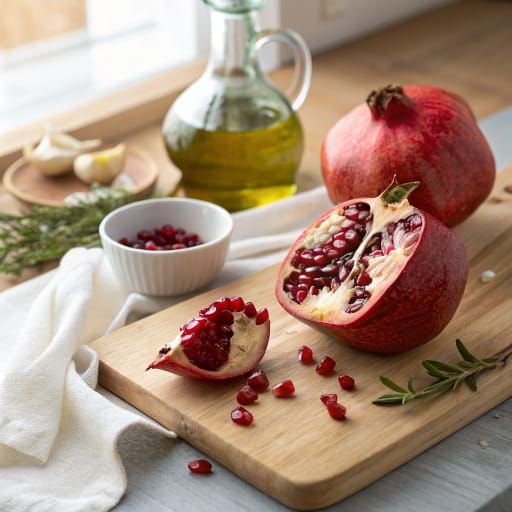
Pomegranate is built almost like a puzzle: a tough, leathery rind protects hundreds of jewel-bright seeds, called arils, each packed with tart-sweet juice and held inside pale, bitter pith. It's in season through autumn and winter, and while it takes more effort to eat than an apple, few fruits match its burst of flavor and color, and babies tend to find it just as striking as adults do.
Its real standout is antioxidants. Pomegranate contains punicalagins and other polyphenols at some of the highest concentrations found in any fruit, alongside a solid dose of vitamin C, fiber, and potassium. Whole seeds are the better everyday choice over juice, even 100% juice, which skips the fiber and delivers a concentrated dose of natural sugar instead.
The easiest way to deseed one is underwater in a bowl, since the arils sink while the bitter white pith floats, a trick that also avoids pomegranate's notorious staining. Pomegranate isn't a common allergen, but each aril is small, firm, and slippery, so whole seeds are a genuine choking hazard and always need crushing or flattening first.
Pomegranate Baby Food: How to Prepare It
Puree from 6+ Months
Crush the seeds and press them through a fine sieve to catch hard kernel fragments. Stir the juice and crushed pulp into yogurt, warm cereal, or a fruit puree.
BLW from 6+ Months
Crush or fully flatten each seed before stirring it into a sauce or a scoopable food like warm cereal or yogurt. Never serve whole seeds at this age.
BLW from 9+ Months
Offer crushed or flattened seeds on their own for baby to pick up with fingers, or keep mixing them into scoopable foods if that works better.
BLW from 12+ Months
Whole seeds are appropriate only once a toddler chews thoroughly and doesn't stuff their mouth. Offer just a few at a time and stay close by.
Nutritional Benefits
Pomegranate seeds pack a concentrated dose of vitamin C, fiber, and some of the most potent antioxidants found in any fruit, once prepared safely.
Key Nutrients
Vitamin C
Supports immune health and helps the body absorb iron.
Fiber
Aids digestion and helps keep bowel movements regular.
Antioxidants (Polyphenols)
Punicalagins and other polyphenols help protect cells from damage.
Potassium
Supports healthy muscle and heart function.
Folate
Supports healthy cell growth and development.
Allergen & Choking Information
Not a Common Allergen
Pomegranate is not a common allergen. The seeds are small, firm, and round, a genuine choking hazard whole, so they must always be crushed or fully flattened for babies and only offered whole to toddlers who chew thoroughly.
Frequently Asked Questions
When can babies eat Pomegranate?
Around 6 months (seeds crushed or fully flattened)
How do I prepare Pomegranate puree for my baby?
Crush the seeds and press them through a fine sieve to catch hard kernel fragments. Stir the juice and crushed pulp into yogurt, warm cereal, or a fruit puree.
What are the nutritional benefits of Pomegranate?
Pomegranate seeds pack a concentrated dose of vitamin C, fiber, and some of the most potent antioxidants found in any fruit, once prepared safely.
Sources & Related Resources
Get Personalized Guidance for Every Feeding Stage
Download the Grubsy app to track meals, get tailored recommendations, and explore foods like Pomegranate plus hundreds more, all in one place.
Disclaimer: This information is for educational purposes only and does not replace professional medical advice.