Pollock for Babies
Baby Food Guide from 6 Months
Puree
6+
Months
BLW
6+
Months
Choking Hazard
Low
Allergen
Yes
Key Nutrients
Omega-3 Fatty Acids • Protein • Vitamin B12
Can Babies Eat Pollock?
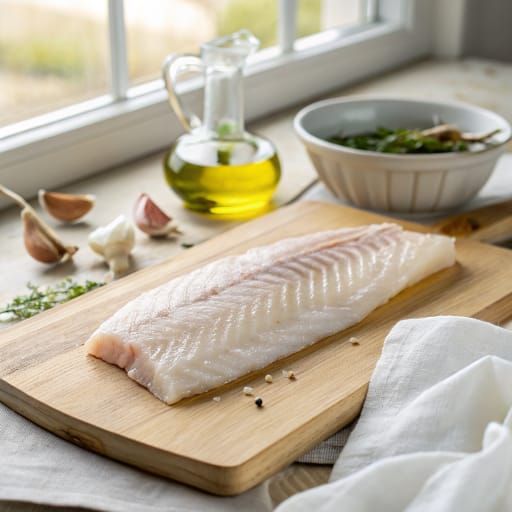
Pollock is a mild, flaky white fish from the cold waters of the North Atlantic and Pacific, closely related to cod and often the fish behind familiar products like fish sticks and breaded fillets. Served plain, it has a delicate flavor and tender texture that make it a genuinely good first fish, and it's usually more affordable than salmon or cod while still being widely available fresh or frozen.
Nutritionally, it punches above its reputation. Alongside high-quality, complete protein, pollock delivers omega-3s that support a baby's rapid brain and eye development, vitamin B12, selenium, and iodine, a nutrient that's often genuinely hard to get enough of in an early diet. It also tends to be lower in mercury than large predatory fish.
Look for wild-caught Alaska or Pacific pollock, widely certified as a sustainable choice and easy to find as plain, unseasoned fillets in the freezer aisle. Fish is a common allergen, so it's worth introducing gradually like any other, and any fillet deserves a quick check for stray bones before it's served.
Pollock Baby Food: How to Prepare It
Puree from 6+ Months
Flake fully cooked, carefully deboned pollock and blend or mash it with avocado, a little olive oil, or plain yogurt until smooth. Offer on a pre-loaded spoon.
BLW from 6+ Months
Offer large strips of cooked, deboned fish, roughly the width and length of two adult pinky fingers, for baby to gnaw and self-feed. Mashed pollock spread on a rice cake also works well.
BLW from 9+ Months
Continue with soft flaked or strip-shaped pollock, checked thoroughly for bones, mixed into soft foods or offered on its own for baby to pick up.
BLW from 12+ Months
Serve cooked, deboned pollock as strips, homemade fish cakes, or flaked onto toast. Confident eaters can practice spearing bite-sized pieces with a fork.
Nutritional Benefits
Pollock delivers lean, high-quality protein alongside omega-3 fats, B12, and selenium, making it a nutrient-dense, budget-friendly way to introduce fish early.
Key Nutrients
Omega-3 Fatty Acids
Support brain and eye development during a critical growth window.
Protein
Provides the building blocks for muscles and tissue growth.
Vitamin B12
Supports nervous system development and red blood cell formation.
Selenium
Supports immune function and thyroid health.
Iodine
Essential for healthy thyroid function and brain development.
Allergen & Choking Information
Common Allergen
Fish, including pollock, is one of the nine major food allergens, so introduce it like any other allergen and watch for reactions. Always check thoroughly for small bones before serving, even in fillets labeled boneless.
Frequently Asked Questions
When can babies eat Pollock?
Around 6 months (fully cooked, deboned, and flaked)
How do I prepare Pollock puree for my baby?
Flake fully cooked, carefully deboned pollock and blend or mash it with avocado, a little olive oil, or plain yogurt until smooth. Offer on a pre-loaded spoon.
What are the nutritional benefits of Pollock?
Pollock delivers lean, high-quality protein alongside omega-3 fats, B12, and selenium, making it a nutrient-dense, budget-friendly way to introduce fish early.
Sources & Related Resources
Get Personalized Guidance for Every Feeding Stage
Download the Grubsy app to track meals, get tailored recommendations, and explore foods like Pollock plus hundreds more, all in one place.
Disclaimer: This information is for educational purposes only and does not replace professional medical advice.