Plum for Babies
Baby Food Guide from 6 Months
Puree
6+
Months
BLW
6+
Months
Choking Hazard
Moderate
Allergen
No
Key Nutrients
Fiber • Vitamin C • Vitamin A
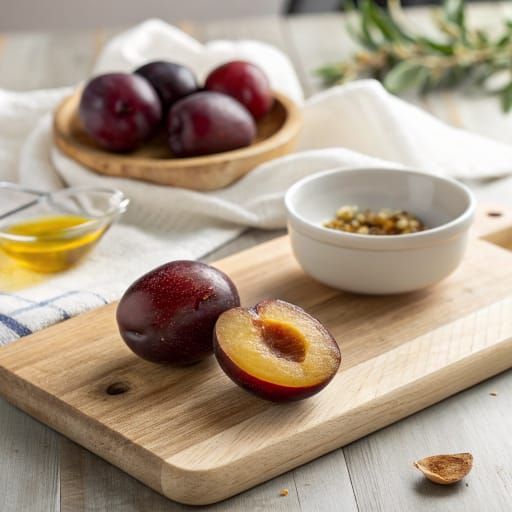
Can Babies Eat Plum?
Plum is a soft stone fruit with sweet-tart flesh under a thin, edible skin that ranges from deep purple to golden depending on the variety. Fully ripe, it's naturally soft, which makes it one of the easier fruits to turn into a baby's very first meals, and its bright flavor tends to win over even cautious eaters.
It earns its place nutritionally too. Plum is a good source of fiber and, like its dried cousin the prune, is well known for easing constipation, thanks to a combination of fiber and natural sorbitol. It also brings vitamin C, some vitamin A, and potassium, along with antioxidants concentrated mostly in the skin.
Small, dense Italian or prune-type plums cook down into an especially smooth, spoonable puree, while the larger juicy varieties in most supermarkets work well mashed or sliced. Plum isn't a common allergen; the one thing to always double check is that the pit is fully removed, since underripe flesh can also be firm and slippery.
Plum Baby Food: How to Prepare It
Puree from 6+ Months
Mash a very ripe, pitted plum with a fork until smooth, or blend it fully. Stir into plain yogurt, warm porridge, or baby cereal. No cooking is needed when the fruit is soft and ripe.
BLW from 6+ Months
Offer a soft, ripe plum half with the pit removed and the skin left on for grip. If it slips out of baby's hands, peel it and roll the cut side in finely ground nuts or seeds for extra traction.
BLW from 9+ Months
Cut soft, ripe plum into thin slices, with or without skin. If baby isn't managing slices well yet, go back to offering halves.
BLW from 12+ Months
Serve thin slices, halves for biting practice, or bite-sized pieces pre-loaded onto a fork for utensil practice. Around 18 months, a whole ripe plum works too, while you show baby how to eat around the pit.
Nutritional Benefits
Plums combine fiber and natural sorbitol with vitamin C and antioxidants, making them a gentle, effective way to support digestion while offering real nutritional value.
Key Nutrients
Fiber
Supports regular digestion and helps relieve constipation.
Vitamin C
Boosts immune function and helps the body absorb iron from food.
Vitamin A
Supports healthy vision and skin.
Potassium
Helps maintain fluid balance and healthy muscle function.
Antioxidants
Polyphenols in the skin help protect growing cells.
Allergen & Choking Information
Not a Common Allergen
Plum is not a common allergen. The pit must always be removed, and the flesh can be firm and slippery when underripe, so only offer very ripe, soft plum.
Frequently Asked Questions
When can babies eat Plums?
Around 6 months (as ripe, pitted, and mashed or sliced)
How do I prepare Plums puree for my baby?
Mash a very ripe, pitted plum with a fork until smooth, or blend it fully. Stir into plain yogurt, warm porridge, or baby cereal. No cooking is needed when the fruit is soft and ripe.
What are the nutritional benefits of Plums?
Plums combine fiber and natural sorbitol with vitamin C and antioxidants, making them a gentle, effective way to support digestion while offering real nutritional value.
Sources & Related Resources
Get Personalized Guidance for Every Feeding Stage
Download the Grubsy app to track meals, get tailored recommendations, and explore foods like Plum plus hundreds more, all in one place.
Disclaimer: This information is for educational purposes only and does not replace professional medical advice.