Pistachio for Babies
Baby Food Guide from 6 Months
Puree
6+
Months
BLW
6+
Months
Choking Hazard
High
Allergen
Yes
Key Nutrients
Fiber • Iron • Protein
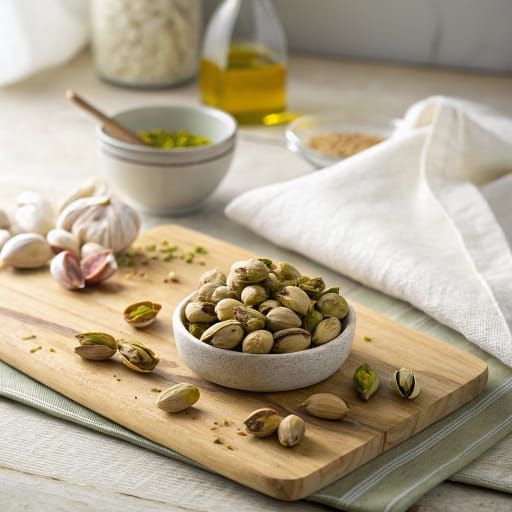
Can Babies Eat Pistachio?
Pistachios are a vibrant green tree nut with a distinctive, slightly sweet flavor, and like other tree nuts, they're one of the nine major food allergens. Current guidance generally supports introducing them early, often around 6 months once your baby is comfortable on solids, since early, regular exposure seems to help the immune system tolerate these foods rather than react to them. Whole pistachios are always a choking hazard, so they're only ever offered finely ground or thinned into a smooth butter.
Pistachios stand out nutritionally for lutein and zeaxanthin, plant pigments linked to eye health that few other nuts offer, alongside fiber, iron, plant protein, and vitamin B6 for brain development.
One thing worth knowing: pistachios are botanically related to cashews, and allergists sometimes see a higher chance of cross-reactivity between the two than with less closely related tree nuts, one more reason each nut is usually introduced on its own.
Pistachio Baby Food: How to Prepare It
Puree from 6+ Months
Blitz shelled pistachios into a fine, powdery grind with no lingering chunks and stir a pinch into yogurt, warm cereal, or another puree baby already eats. Alternatively, thin smooth pistachio butter with water, breast milk, or formula and blend it in.
BLW from 6+ Months
Offer only finely ground pistachio or a thinned pistachio butter, never whole nuts. Dust a small amount over yogurt, warm cereal, or mashed vegetables, or mix thinned pistachio butter into other soft foods.
BLW from 9+ Months
Continue mixing finely ground pistachio or thinned pistachio butter into soft cooked grains, yogurt, and other foods baby is already eating well.
BLW from 12+ Months
Sprinkle finely ground pistachios over fruit and vegetables, or stir pistachio butter into yogurt and warm cereal. Unsweetened pistachio milk can be offered occasionally as a drink.
Nutritional Benefits
Pistachios combine fiber, iron, and plant-based protein with healthy fats and vitamin B6, plus the eye-supporting pigments lutein and zeaxanthin, making them a nutrient-dense addition once safely ground or thinned into butter.
Key Nutrients
Fiber
Supports healthy digestion.
Iron
Supports healthy blood as baby's natural stores decline after 6 months.
Protein
Provides plant-based building blocks for growth.
Vitamin B6
Supports brain development and red blood cell formation.
Healthy Fats
Contribute to brain development.
Lutein & Zeaxanthin
Support healthy eye and vision development.
Allergen & Choking Information
Common Allergen
Pistachios are tree nuts, a major allergen. Offer only finely ground pistachio or thinned, unsweetened pistachio butter, and watch closely for reactions. Whole pistachios are a serious choking hazard and should be avoided until around age 3, with continued caution after that.
Frequently Asked Questions
When can babies eat Pistachios?
Around 6 months (as smooth pistachio butter or finely ground)
How do I prepare Pistachios puree for my baby?
Blitz shelled pistachios into a fine, powdery grind with no lingering chunks and stir a pinch into yogurt, warm cereal, or another puree baby already eats. Alternatively, thin smooth pistachio butter with water, breast milk, or formula and blend it in.
What are the nutritional benefits of Pistachios?
Pistachios combine fiber, iron, and plant-based protein with healthy fats and vitamin B6, plus the eye-supporting pigments lutein and zeaxanthin, making them a nutrient-dense addition once safely ground or thinned into butter.
Sources & Related Resources
Get Personalized Guidance for Every Feeding Stage
Download the Grubsy app to track meals, get tailored recommendations, and explore foods like Pistachio plus hundreds more, all in one place.
Disclaimer: This information is for educational purposes only and does not replace professional medical advice.