Parsley for Babies
Baby Food Guide from 6 Months
Puree
6+
Months
BLW
6+
Months
Choking Hazard
Low
Allergen
No
Key Nutrients
Vitamin K • Vitamin C • Vitamin A
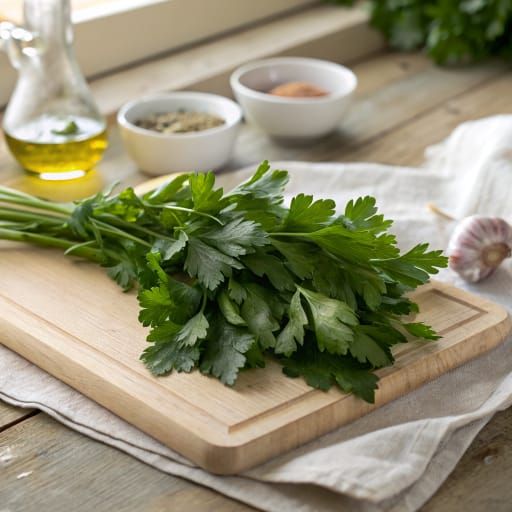
Can Babies Eat Parsley?
Parsley is a bright, leafy herb that most babies first meet not as a food on its own but as a seasoning, stirred into purees, sauces, and soft finger foods for a fresh, slightly peppery note. There's no known allergen risk, which makes it an easy way to start building a taste for herbs early.
Weight for weight, parsley is remarkably nutrient-dense. It's one of the richest plant sources of vitamin K, plus a good source of vitamin C, iron, and folate. Because it's used in small seasoning amounts rather than eaten by the spoonful, a single meal won't deliver huge quantities, but small regular servings add up.
At 6 months, a pinch of finely minced fresh parsley or crumbled dried parsley stirred into a puree or sauce is all you need. It's rarely served as a puree on its own, since a spoonful of straight herb offers little practical nutrition and an oddly intense flavor for a young baby.
Parsley Baby Food: How to Prepare It
Puree from 6+ Months
Mix a small amount of finely minced fresh parsley, or a pinch of crumbled dried parsley, into a smooth vegetable or grain puree for flavor. Parsley works as a seasoning, not as a puree on its own.
BLW from 6+ Months
Finely mince fresh parsley, or crumble the dried form, and stir a small amount into sauces, purees, and soft grabbable foods such as tender meatballs.
BLW from 9+ Months
Stir finely cut fresh parsley, raw or lightly cooked, through a meal. Offer a small sip of water alongside to help wash down any pieces that cling.
BLW from 12+ Months
Continue stirring chopped parsley through meals, dressings, and sauces. Offer small amounts as a garnish on familiar dishes.
Nutritional Benefits
Parsley is remarkably nutrient-dense for a leafy herb, offering vitamin K, vitamin C, and folate. Used in small seasoning amounts, it adds gentle nutrition while helping babies build a taste for herbs and greens early on.
Key Nutrients
Vitamin K
Supports healthy blood clotting and bone development.
Vitamin C
Supports immune function.
Vitamin A
Supports healthy eyes and skin.
Iron
Contributes to healthy blood, especially when paired with vitamin C-rich foods.
Folate
Supports healthy cell growth during a period of rapid development.
Allergen & Choking Information
Not a Common Allergen
Parsley is not a common allergen. Because it is used in small, finely minced amounts as a seasoning rather than eaten in large pieces, choking risk is low; a whole raw leaf can be offered once baby chews confidently, around two years old.
Frequently Asked Questions
When can babies eat Parsley?
Around 6 months (finely minced, used as a seasoning)
How do I prepare Parsley puree for my baby?
Mix a small amount of finely minced fresh parsley, or a pinch of crumbled dried parsley, into a smooth vegetable or grain puree for flavor. Parsley works as a seasoning, not as a puree on its own.
What are the nutritional benefits of Parsley?
Parsley is remarkably nutrient-dense for a leafy herb, offering vitamin K, vitamin C, and folate. Used in small seasoning amounts, it adds gentle nutrition while helping babies build a taste for herbs and greens early on.
Sources & Related Resources
Get Personalized Guidance for Every Feeding Stage
Download the Grubsy app to track meals, get tailored recommendations, and explore foods like Parsley plus hundreds more, all in one place.
Disclaimer: This information is for educational purposes only and does not replace professional medical advice.