Papaya for Babies
Baby Food Guide from 6 Months
Puree
6+
Months
BLW
6+
Months
Choking Hazard
Low
Allergen
No
Key Nutrients
Vitamin C • Vitamin A • Fiber
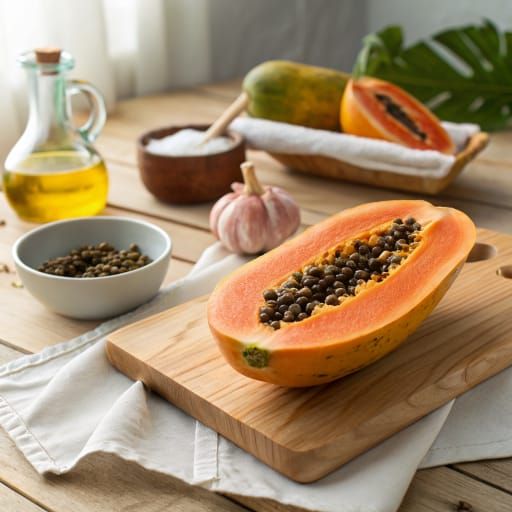
Can Babies Eat Papaya?
Papaya is a soft, sweet tropical fruit with vibrant orange flesh that's naturally smooth enough to serve raw from a baby's very first taste of solid food, no cooking needed. Fully ripe, it has an almost custard-like texture, and there's no known allergen risk to consider.
The real challenge isn't safety, it's grip. Ripe papaya is genuinely slippery, and a wedge can slide right out of small hands before it reaches the mouth. Rolling pieces in a fine coating, like baby cereal or finely ground nuts once those allergens are established, gives little fingers something to hold onto.
Nutritionally, papaya is an excellent source of vitamin C, unusually generous for a fruit, plus vitamin A, fiber, and folate, and it contains papain, a natural enzyme sometimes credited with easing digestion. Look for fruit that's mostly yellow or orange and yields to gentle thumb pressure; unripe green papaya is firm and starchy. That gentle profile also makes ripe papaya a good fallback whenever baby is teething or getting over a stomach bug.
Papaya Baby Food: How to Prepare It
Puree from 6+ Months
Blend very ripe papaya flesh, with skin and seeds removed, until smooth. No cooking needed. Stir into yogurt or oatmeal, or mix with other soft fruits.
BLW from 6+ Months
Offer large wedges or crescent-shaped slices of ripe papaya with skin and seeds removed. If the fruit is too slippery to hold, roll pieces in baby cereal, finely shredded coconut, or another fine coating for grip.
BLW from 9+ Months
Cut into bite-sized pieces for pincer grasp practice, dusting with a grip coating if pieces keep slipping away. Larger wedges are still fine for babies who prefer a whole-hand grip.
BLW from 12+ Months
Offer bite-sized pieces of soft, ripe papaya for baby to eat with fingers or a pre-loaded fork. No special modifications are needed at this age.
Nutritional Benefits
Papaya delivers an excellent dose of vitamin C along with vitamin A, fiber, and folate, all in a soft, easy-to-digest texture that makes it one of the gentlest fruits to introduce early on.
Key Nutrients
Vitamin C
Supports immune health and helps the body absorb iron from other foods.
Vitamin A
Supports healthy eyes and skin through beta-carotene.
Fiber
Supports healthy, comfortable digestion.
Folate
Supports healthy cell growth during a period of rapid development.
Potassium
Helps regulate fluid balance and muscle function.
Allergen & Choking Information
Not a Common Allergen
Papaya is not a common allergen. Its main risk is its slippery texture, which can make pieces hard for young babies to grip or could let a piece slide down before being chewed; always remove the skin and seeds and offer a grip coating if needed.
Frequently Asked Questions
When can babies eat Papaya?
Around 6 months (ripe, mashed, or as soft wedges)
How do I prepare Papaya puree for my baby?
Blend very ripe papaya flesh, with skin and seeds removed, until smooth. No cooking needed. Stir into yogurt or oatmeal, or mix with other soft fruits.
What are the nutritional benefits of Papaya?
Papaya delivers an excellent dose of vitamin C along with vitamin A, fiber, and folate, all in a soft, easy-to-digest texture that makes it one of the gentlest fruits to introduce early on.
Sources & Related Resources
Get Personalized Guidance for Every Feeding Stage
Download the Grubsy app to track meals, get tailored recommendations, and explore foods like Papaya plus hundreds more, all in one place.
Disclaimer: This information is for educational purposes only and does not replace professional medical advice.