Okra for Babies
Baby Food Guide from 6 Months
Puree
6+
Months
BLW
6+
Months
Choking Hazard
Low (when cooked until very soft)
Allergen
No
Key Nutrients
Fiber • Vitamin C • Vitamin K
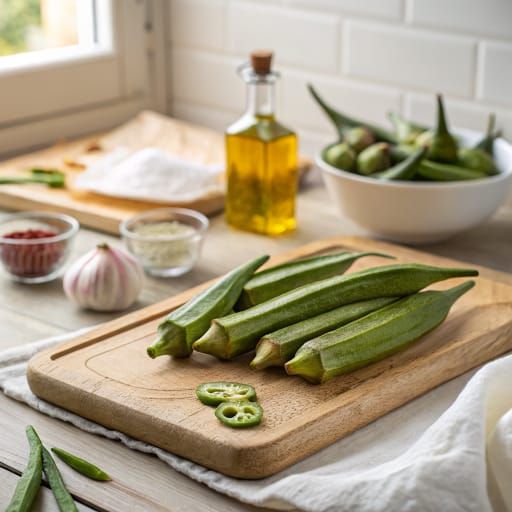
Can Babies Eat Okra?
Okra is a green, ridged pod vegetable known for turning slightly sticky and mucilaginous once it's cooked, a texture some adults avoid but that often works in a baby's favor by making it easy to gum and swallow. It's a staple across West African, Southern American, Middle Eastern, and South Asian cooking, with a mild, grassy flavor and a solid dose of fiber.
There's no known allergen risk with okra, so the one thing that actually matters is cooking it properly. It needs to be genuinely soft, not just tender-crisp, since firm or undercooked okra turns fibrous and is much harder for a baby to manage safely.
Beyond fiber, okra offers vitamin C, vitamin K, and folate. A whole cooked pod with the stem trimmed off also makes a naturally easy first finger food, since its shape is simple for little hands to grip and gnaw on even before a proper pincer grasp develops.
Okra Baby Food: How to Prepare It
Puree from 6+ Months
Cook okra until very soft, then chop or mash it and stir into a thick soup, stew, or porridge. A piece should give way easily under light finger pressure.
BLW from 6+ Months
Offer a whole large cooked pod with the stem trimmed off for gnawing, or mix soft, chopped, cooked okra into spoonable dishes baby already eats.
BLW from 9+ Months
Cut soft, cooked okra into small discs or crescent slices with the stem removed. If pieces are too slippery to hold, roll them in breadcrumbs for extra grip.
BLW from 12+ Months
Offer soft, cooked okra chopped or in longer strips your toddler can bite into and pull apart themselves, adjusting the shape to whatever they manage best.
Nutritional Benefits
Okra is a fiber-rich vegetable that also supplies vitamin C, vitamin K, and folate, all wrapped in a soft, mucilaginous texture that is naturally easy for babies to gum and swallow when well cooked.
Key Nutrients
Fiber
Supports healthy, regular digestion.
Vitamin C
Supports immune function and skin health.
Vitamin K
Plays a role in healthy blood clotting and bone development.
Folate
Supports healthy cell growth during a period of rapid development.
Magnesium
Supports muscle and nerve function.
Allergen & Choking Information
Not a Common Allergen
Okra is not a common allergen. The main risk comes from serving it undercooked, since firm okra is fibrous and hard to gum. Cook until very soft, and trim the stem before serving to babies.
Frequently Asked Questions
When can babies eat Okra?
Around 6 months (cooked until very soft)
How do I prepare Okra puree for my baby?
Cook okra until very soft, then chop or mash it and stir into a thick soup, stew, or porridge. A piece should give way easily under light finger pressure.
What are the nutritional benefits of Okra?
Okra is a fiber-rich vegetable that also supplies vitamin C, vitamin K, and folate, all wrapped in a soft, mucilaginous texture that is naturally easy for babies to gum and swallow when well cooked.
Sources & Related Resources
Get Personalized Guidance for Every Feeding Stage
Download the Grubsy app to track meals, get tailored recommendations, and explore foods like Okra plus hundreds more, all in one place.
Disclaimer: This information is for educational purposes only and does not replace professional medical advice.