Nectarine for Babies
Baby Food Guide from 6 Months
Puree
6+
Months
BLW
6+
Months
Choking Hazard
Low (when very ripe, soft, and pitted)
Allergen
No
Key Nutrients
Vitamin C • Vitamin A • Potassium
Can Babies Eat Nectarine?
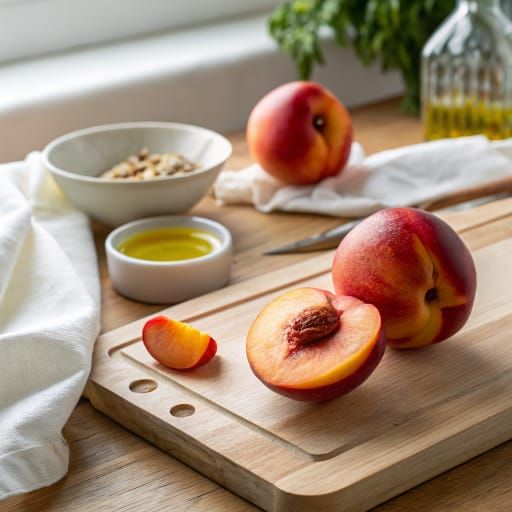
Nectarines are the smooth-skinned cousin of the peach, with the same juicy sweetness but none of the fuzzy skin that some babies, and parents, find off-putting. A truly ripe one practically falls apart at the touch, which makes it one of the easiest first stone fruits to serve, whether pureed or handed over as a soft BLW half.
There's no known allergen concern here, so timing is flexible. The only real rule is ripeness: pick fruit that gives slightly to pressure, since underripe nectarine is firm and tricky for a baby to gum safely, and always remove the pit first, which is a genuine choking hazard.
Nutritionally, nectarines bring vitamin C, which helps the body absorb iron from other foods on the plate, plus potassium and a high water content that many parents find genuinely useful during bouts of constipation. For BLW, leaving the skin on actually helps, since it gives baby something to grip on fruit that's otherwise quite slippery.
Nectarine Baby Food: How to Prepare It
Puree from 6+ Months
Peel a very ripe, soft nectarine, remove the pit, and mash the flesh until smooth. Stir into porridge or yogurt, or serve on its own on a pre-loaded spoon.
BLW from 6+ Months
Halve a very ripe, soft nectarine, remove the pit, and leave the skin on for grip. Offer the half whole for gnawing, or mash and stir into another soft food.
BLW from 9+ Months
Cut into thin, soft slices with the peel on or off depending on what baby manages best. Halves can still be offered if preferred.
BLW from 12+ Months
Offer thin slices, halves, or small bite-sized pieces baby can pick up independently. Fruit should still be very ripe and soft.
Nutritional Benefits
Nectarines offer vitamin C, vitamin A, and potassium in a naturally sweet, soft package that is gentle on a baby's digestion. Their fiber and water content make them a favorite for easing constipation.
Key Nutrients
Vitamin C
Supports immune health and helps the body absorb iron from other foods.
Vitamin A
Contributes to healthy skin and eye development.
Potassium
Helps regulate fluid balance and muscle function.
Fiber
Supports gentle, regular digestion.
Antioxidants
Help protect growing cells from everyday damage.
Allergen & Choking Information
Not a Common Allergen
Nectarines are not a common allergen. The main risk is the pit, which must always be removed, and firm, underripe fruit, which can be difficult for a baby to gum safely. Choose very ripe, soft fruit and cut appropriately for baby's age.
Frequently Asked Questions
When can babies eat Nectarines?
Around 6 months (very ripe, soft, and pitted)
How do I prepare Nectarines puree for my baby?
Peel a very ripe, soft nectarine, remove the pit, and mash the flesh until smooth. Stir into porridge or yogurt, or serve on its own on a pre-loaded spoon.
What are the nutritional benefits of Nectarines?
Nectarines offer vitamin C, vitamin A, and potassium in a naturally sweet, soft package that is gentle on a baby's digestion. Their fiber and water content make them a favorite for easing constipation.
Sources & Related Resources
Get Personalized Guidance for Every Feeding Stage
Download the Grubsy app to track meals, get tailored recommendations, and explore foods like Nectarine plus hundreds more, all in one place.
Disclaimer: This information is for educational purposes only and does not replace professional medical advice.